



The Playbook for Kane Footwear
Kane has a clear product truth: active recovery works best when it is specific to the moment (post-run vs post-hike vs long retail shift), and it is trusted because it comes from people who actually do the activities. The current gap most brands face with influencer/affiliate traffic is that the click lands on a generic store experience. Even if the creator is great, the on-site experience does not carry their story, their picks, or their credibility. That shows up as lower conversion, lower AOV, and weaker repeat buying.
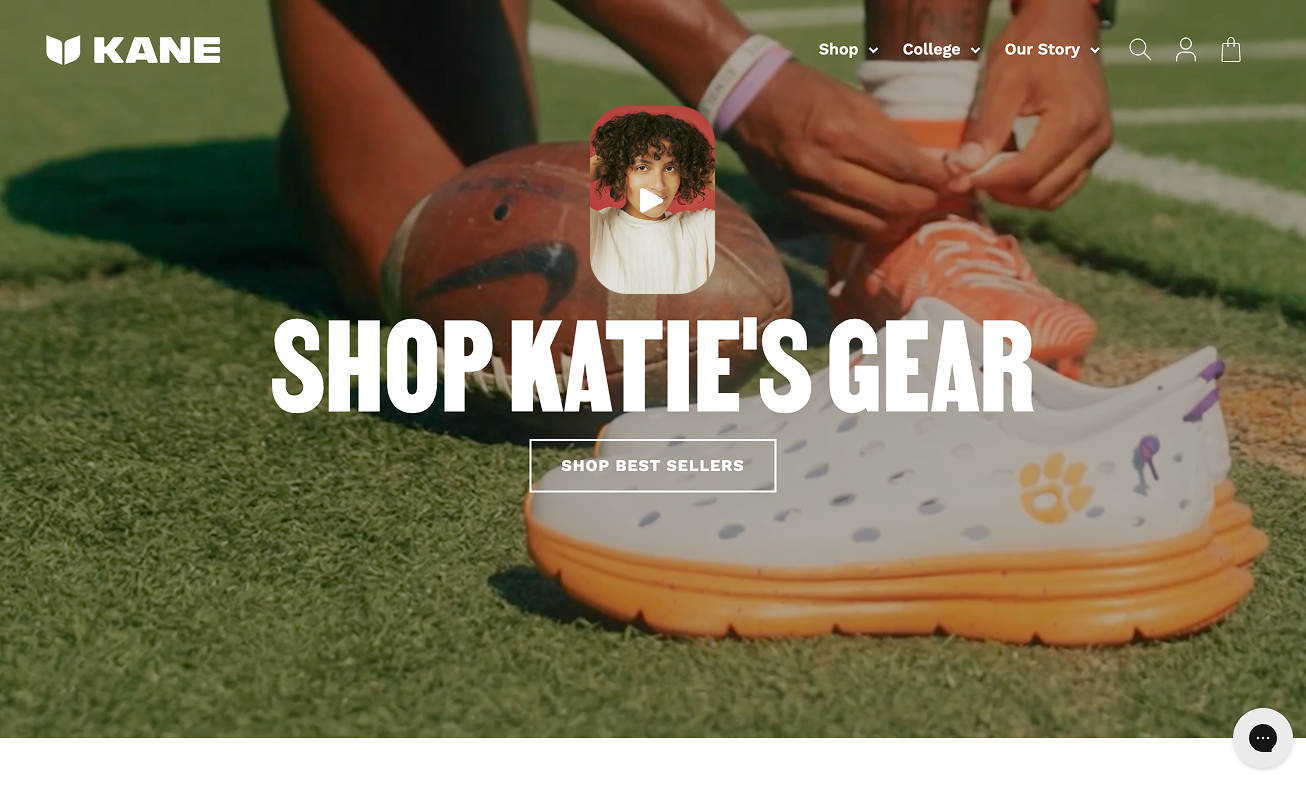
CreatorCommerce is designed to fix that by turning each GRIN partner into a co-branded shopping experience on Kane.com. Instead of a link, the creator gets a storefront they can own: products, bundles, UGC, FAQs, and an auto-applied offer. This typically produces 30%+ higher conversion rate and 67% higher AOV vs regular affiliate links because customers feel guided, not dropped into a catalog. The goal for Kane is not just to create more creator pages; it is to create more outdoor-specific shopping moments and a retention loop that keeps both customers and partners coming back.
Step 0: Segment Strategy (who to win, and why)
Kane should treat segmentation as the foundation, because different partner types need different storefront structures and different offers. For a sustainable outdoor footwear brand with a flagship recovery slip-on, the strongest segments are the ones where recovery is already part of the culture.
Segment A: Outdoor activity influencers (hiking, trail running, fishing, camping). These partners win because they can credibly explain where the Revive fits in the day: camp mornings, post-hike reset, boat ramps, after long days on feet. Their storefronts should be built around use-case kits (not just product grids) and seasonal collections.
Segment B: Athlete ambassadors (runners, lacrosse, gym/strength). These partners win with routine-based storytelling: warm-up, training, recovery, travel. Their storefronts should emphasize performance recovery, durability, washability, and multiple-pair logic (home pair + gym bag pair).
Segment C: Workwear comfort creators (retail, nurses, hospitality, coaches). Kane already resonates with long-day wear. This segment converts well when the storefront reduces anxiety about fit, cleaning, and durability. Their pages should focus on all-day comfort, waterproof/washable proof points, and simple bundles.
Segment D: Small businesses and specialty retail partners (outdoor shops, run clubs, guides). If relevant to Kane’s growth goals, this is where B2B-like collaboration can happen: co-branded landing pages for a run club, an outfitter, or a fishing guide service. These pages can behave like a lightweight wholesale or referral funnel while staying on your Shopify theme.
Recommendation: start with Segments A and B for the first 60 days (highest story depth + highest appetite for building), then add Segment C for scalable volume, then selectively roll in Segment D for deeper partnerships and local moats.
Step 1: Partner Enrollment (how Kane could recruit more, faster)
Enrollment should be built to answer one question for the creator: “What do I get that I do not get elsewhere?” With co-branded storefronts, Kane’s pitch becomes tangible: a creator gets their own Kane.com shop, an auto-applied discount, and a place to send their audience that feels like their world.
Product seeding with a storefront attached: Instead of shipping product and hoping for content, Kane could seed with a clear CTA: “Your storefront is ready; here is your link; here are 3 content prompts; here is your personalized bundle.” The storefront itself becomes the asset that increases participation.
Inbound capture: Add an “Apply to Collaborate” flow that asks only what is needed to generate a good first version (activity type, audience, size, preferred colorways, and one short ‘why Kane’ sentence). The rest can be inferred or generated for a first draft storefront.
Targeted outreach: Build lists by outdoor vertical (hiking, fishing, trail running) and prioritize micro and mid-tier creators who post consistently and have strong comments, not just followers. The outreach offer is specific: “We’ll build your Kane hiking recovery shop on Kane.com with your picks and a discount your audience can use automatically.”
CC’s partner apps can power these flows so enrollment and storefront creation are tied together. The key is that Kane recruits into a better experience, not into a link.
Step 2: Partner Activation by Segment (turn new partners into sellers)
Activation is where most programs lose momentum. The fix is to remove setup work and give partners a page that already looks finished, then let them personalize in small, high-leverage ways.
Shock-and-awe offer: Within 24 hours of approval, a creator should receive: (1) their Kane.com storefront link, (2) an auto-applied discount, (3) a pre-built ‘starter kit’ bundle aligned to their segment, and (4) 3 content prompts for the next 10 days. This eliminates the “what do I do now?” pause.
Forms + automation + AI for first draft pages: For Kane’s ~500 products, do not ask creators to browse the full catalog. Collect minimal preferences (activity, top 3 use cases, color preferences, men’s/women’s sizing split of audience if known). Use that to generate a first draft assortment and messaging, then let the creator adjust. If you have partial data (past orders, UGC captions, or public content), use it to pre-fill product picks and positioning.
Segment-specific content extraction: Outdoor creators should be asked for: a short trail story, a gear list (3–6 items), and 5 photos/video clips that show the Revive in context (camp, parking lot post-hike, boat deck). Athlete ambassadors should be asked for: a training week routine and a recovery checklist. Workwear creators should be asked for: ‘day on feet’ proof and cleaning/washability proof.
Whitelisted Meta ads (paid scaling without losing authenticity): For top partners, Kane could offer a one-click ad authorization flow so you can run paid social from the creator handle to their co-branded storefront. This often outperforms brand-handle ads because it matches the trust source to the purchase page. The point is not to “boost everything,” but to identify the 10–20 partners whose storefronts already convert and then scale the winners.
Step 3: Co-branded Storefronts & Funnels (what the pages should look like)
The storefront should not be a generic creator page. It should behave like a small, focused shop with a story, curated products, and a clear next action. For Kane, each storefront can be themed by outdoor segment and season.
Storefront templates Kane could standardize:
1) Hiking Recovery Shop: Header: “Post-hike reset.” Sections: ‘My go-to pair,’ ‘Camp + travel essentials,’ ‘Best for wet trails,’ ‘How I clean them,’ ‘Sizing notes.’ Add a short trail story + UGC carousel.
2) Fishing Weekend Shop: Header: “Boat days + dock days.” Sections: waterproof/washable proof, quick slip-on convenience, ‘two-pair setup’ (home + truck/boat). Include a packing list block that feels native to fishing content.
3) Athlete Recovery Shop: Header: “Training week recovery.” Sections: prehab/recovery narrative, durability, ‘my routine,’ and a bundle that increases AOV (two pairs or gift + gear accessories if applicable).
4) All-day Comfort Shop: Header: “Long shifts.” Sections: comfort proof points, easy-clean, most popular colors, simple FAQ.
Funnel tests Kane could run (choose 2–3 at a time):
UGC-first vs product-first layout: Some creators will convert better when the page starts with a video. Others will convert better when the page starts with the hero product and the offer. Test by segment.
Curated set vs single hero: For an AOV around $200, test whether a two-pair recommendation (home + travel) increases AOV without hurting conversion. Present it as a practical logic, not as upsell.
Colorway storytelling: For footwear, color choice can slow purchasing. Reduce mental load with “Top 3 colorways I wear most” plus a short explanation for each.
Social proof blocks: Add creator-specific Q&A and Kane-wide reviews. The combo helps: “people like me” proof plus “everyone” proof.
Step 4: Funnel Details (beyond the landing page)
The most valuable improvements often happen deeper in the funnel, where brands typically lose attribution and the creator’s influence disappears.
Auto-applied discounts: Remove mental math. If the creator has an offer, it should be applied automatically on landing, product page, and cart. Reinforce it visually: “Jim’s Kane Offer applied.” This increases conversion and reduces support tickets about codes.
Co-branded product pages: When a shopper clicks into the Revive, keep the creator present: a small module with the creator image/name, their sizing tip, and their short ‘why I wear these’ quote. This is where trust matters most.
Co-branded cart: Keep attribution and lift AOV with relevant add-ons: extra pair, gift option, care/cleaning accessories if sold, or a ‘family pair’ suggestion. Cart-based attribution can capture orders that would otherwise be misattributed when shoppers continue browsing.
Pop-ups that feel helpful: Use a co-branded pop-up as an assistant, not a blocker. Examples: “Need help choosing your size? Here’s how I sized mine.” Or: “Want my hiking reset checklist? Enter email.” This supports both conversion and list growth.
Post-purchase ‘what next’: After purchase, show a co-branded page that encourages UGC and repeat buying: cleaning tips, how to use for recovery, and a simple referral CTA tied to the same creator (or allow the buyer to choose another creator if you want to encourage community).
Step 5: Launch & Track (how Kane could go live inside GRIN without disruption)
Kane could launch without changing how partners share links. The goal is to keep GRIN as the system of record while upgrading the destination experience.
Implementation approach: Integrate with Shopify theme so storefronts live in Liquid and match Kane’s design. Map GRIN links to CC storefront destinations so every existing partner link can route to a co-branded page (or a subset for the pilot). This reduces operational change and accelerates testing.
What to track weekly: conversion rate by segment, AOV by template, revenue per click by partner cohort, returning customer rate from creator storefront traffic, and partner retention (partners who post again in 30/60/90 days). Also track content production: how many partners submit UGC and how often it is refreshed.
Pilot structure: Start with 25–50 creators across hiking/trail running/fishing. Build 3 templates. Pick 5 top partners for whitelisted ads tests. Evaluate results after 2–4 weeks, then scale to 200+.
Step 6: Optimize (campaigns, tests, and retention loops)
Optimization should be driven by content and seasonal outdoor moments. The big unlock is to treat storefronts as living assets that get refreshed, not one-time pages.
Must-have retention: co-branded cart abandonment: Send abandon emails/SMS that keep the creator present: “Your Kane cart is saved. Jim’s offer is still applied.” Include the creator’s top FAQ answer (size/fit, cleaning, waterproof) to reduce friction.
Must-have retention: co-branded post-purchase flows: 7–10 days after delivery, send: how to clean, how to use for recovery, and request UGC. 21–30 days after purchase, send: “Second pair logic” (home + travel) or “gift a pair” if seasonally relevant.
Seasonal campaign calendar (outdoor-specific):
Spring: “Trail season reset” storefront refresh; hiking guides share their ‘first hike of the year’ kit. Run a UGC challenge: muddy trail cleanup proof.
Summer: “Waterproof/washable season” with fishing + lake/boat creators; emphasize quick dry, easy rinse, and travel.
Fall: “Hunt/camp weekends” and “long day on feet” (coaches, retail). Add warmth/sock pairing content if relevant.
Holiday: gift storefronts by creator type (“For the runner,” “For the hiker,” “For dad’s boat days”). Test bundles and multi-pair gifting.
Ongoing monthly cadence: “My top 3 colorways,” “What I pack,” “Recovery routine,” “How I clean them.” Each prompt becomes a storefront update and an email/social asset.
Step 7: Advanced (when Kane wants deeper partnerships)
For professional partners (guides, clubs, small specialty retailers, large publishers), Kane could offer deeper co-branding that goes beyond a simple page.
Whitelabel mini-sites on Kane.com: For a run club or a guide service, create a fuller experience that includes an event landing page, recommended gear list, and a storefront embedded into the club’s content. This can function like a membership perk: “Members get the club’s Kane offer.”
Product embeds for partner sites: If a partner already has a blog or gear list page, embed a curated Kane module (their picks, pricing, offer, and quick add-to-cart). This keeps conversion tight and attribution clean.
Local moat strategy: Partner with a few credible regional outdoor voices in the US and give them the best on-site experience. When consumers in that region think ‘recovery footwear,’ they see Kane connected to the people and places they trust.
What success could look like in 90 days
In 90 days, Kane could have a focused set of creator storefront templates for outdoor recovery, 200+ co-branded pages built from your GRIN program, and a repeatable activation system that turns new partners into sellers within 24 hours. The measurable goal is straightforward: increase revenue per click by lifting conversion rate (30%+ is common after implementation) and increasing AOV (67%+ is common) through curation, bundles, and reduced checkout friction. The strategic goal is longer-term: keep top creators loyal because they are not just affiliates; they are building their own Kane world on your domain.


%201.png)
%201.png)