

So, what was the post that I saw?
The headline?
"I eat a pint of ice cream every day."
Cue the collective gasp from health-conscious followers.
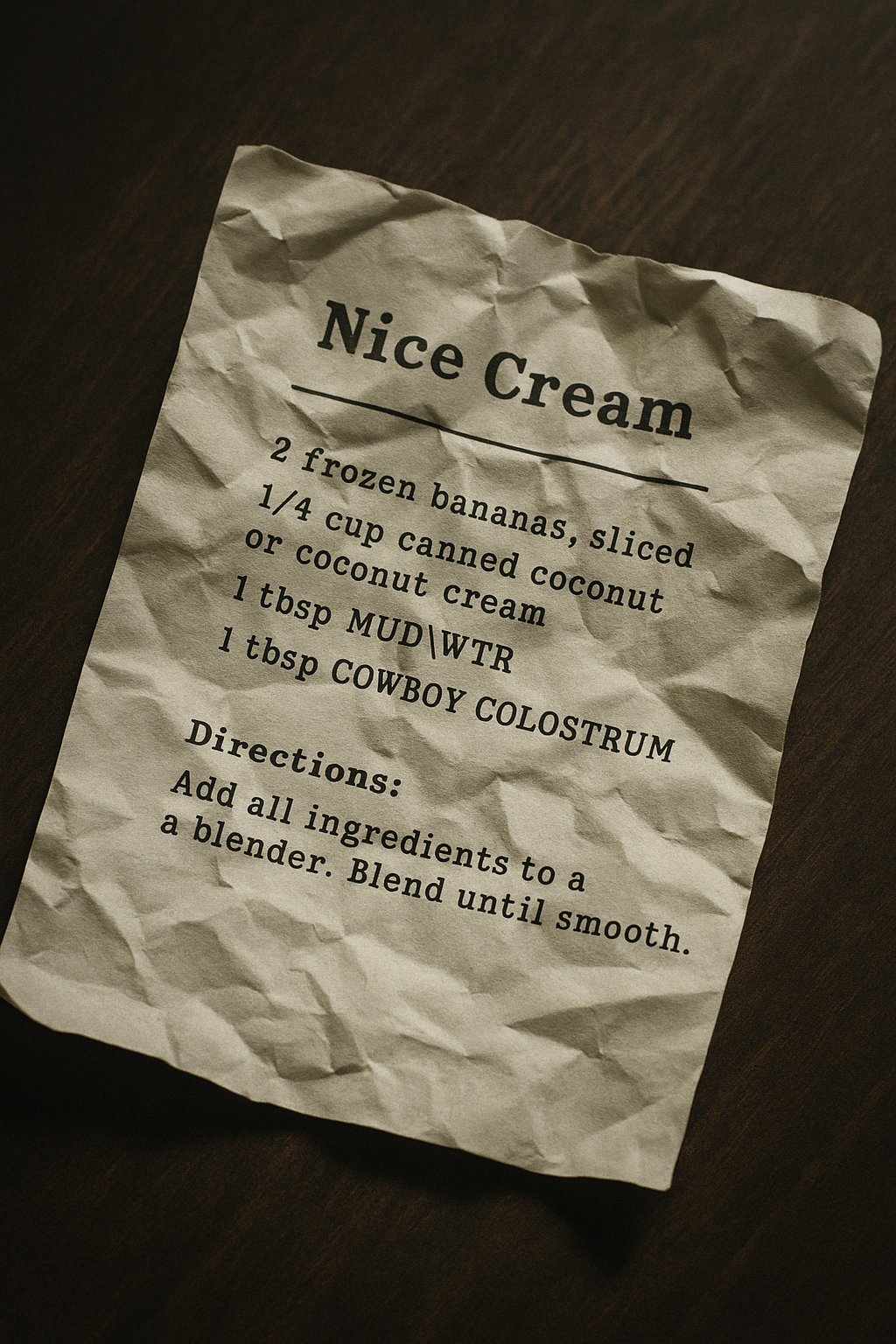
Then came the twist, it wasn’t your average ice cream. It was “nice cream,” packed with ingredients you’d want in your diet every day. In that list? MUD\WTR… and, tucked in at the end, Cowboy Colostrum.
It was brilliant. And it’s a case study every CPG brand should study.
Why This Post Worked So Well
It hit three perfect notes:
- Catchiness – An opener that makes you curious (or concerned) enough to read more.
- Value-add – A recipe you can actually try.
- Soft plugs – Products mentioned naturally within a useful, interesting context.
The result: people got value, brands got awareness, and the post didn’t feel like an ad.
How CPG Brands Can Turn This Into a Funnel
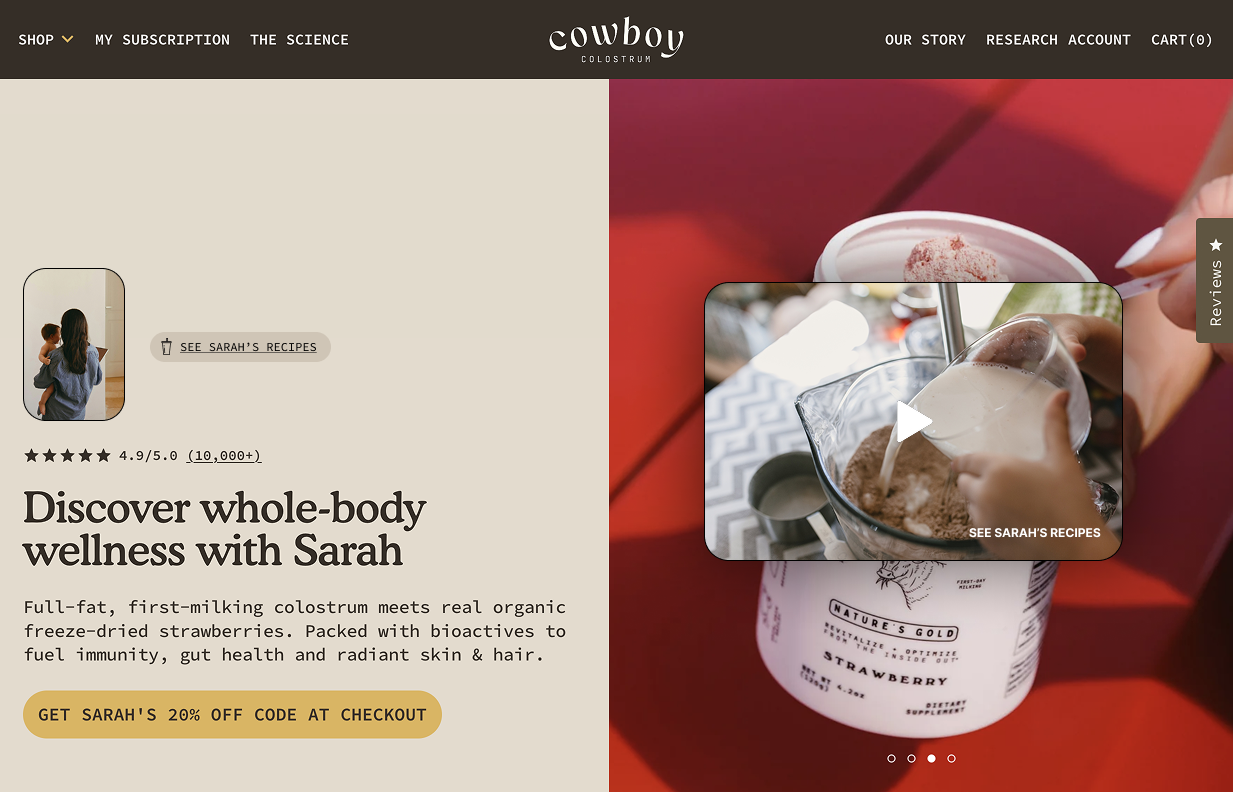
Here’s the thought experiment: what if Shane had been an affiliate for Cowboy Colostrum?
Instead of readers closing the post and moving on, they could’ve:
- Clicked a link to a co-branded shopping page.
- Stayed in the story context and seen the recipe in action.
- Shopped the exact products from the post (Shane’s “bundle”).
- Gotten a clear discount for completing checkout.
The beauty here is that the story becomes the shopping experience. You don’t lose momentum between inspiration and purchase.
Features That Make This Even Stronger
If you’re a brand setting this up, consider adding:
- “Copy Recipe to Clipboard” button for easy sharing.
- “Search All Creator Recipes” page — build a library of content like this.
- Product callouts for each SKU used in the recipe.
- Creator’s before/after comments — what’s changed and why it works.
- Post-purchase creator email — from Shane (or your creator) asking for a review and more love for the brand.
The Big Takeaway
This isn’t just about recipes.
It’s about structuring creator content so it’s:
- Hook-first (stop the scroll).
- Value-packed (earn attention).
- Conversion-ready (make it effortless to act).
When you bridge the gap between social content and a co-branded shopping experience, you’re not just running an ad. You’re creating a seamless story-to-checkout journey that makes buying feel like the natural next step.
And that’s where creator partnerships move from awareness plays to revenue drivers.
Related Articles
- Social Snowball Analytics: How to Track the Full Affiliate Funnel on Shopify
- Shopify Collabs Analytics: How to Track the Full Creator Funnel on Shopify
- GRIN Analytics: How to Track the Full Influencer Funnel on Shopify
- Affiliate Marketing Lived in the Cracks of Instagram. That Era Is Over.
Frequently asked questions
How can recipe posts drive sales for CPG brands?
Recipe posts create natural product integration points where readers expect ingredients. By turning a recipe post into a co-branded storefront, you let readers shop the exact products mentioned while staying in the content experience. This removes friction between inspiration and purchase, increasing conversion rates significantly compared to standard affiliate links.
What makes a recipe post high-converting for affiliate sales?
High-converting recipe posts combine three elements: a catchy, curious headline that stops the scroll; genuine recipe value that readers can actually try; and natural product mentions woven throughout rather than heavy-handed plugs. When readers see products mentioned authentically within a useful context, the post feels informative rather than promotional.
Can creators turn recipe content into affiliate income?
Yes. Creators already post recipes their audiences love. Adding co-branded shopping capabilities transforms passive content into revenue-generating funnels. Readers click through from the recipe, land on a creator-branded shopping page, and purchase products directly from the post context. This benefits creators through affiliate commissions, readers through curated recommendations, and brands through authentic endorsements.
Does recipe-based shopping work better than traditional affiliate links?
Recipe-based shopping significantly outperforms traditional affiliate links because it keeps readers in the story context. Instead of clicking to a generic product page, shoppers see the recipe and products together. This maintains the relationship between creator and customer while guiding them to checkout. Brands using co-branded recipe funnels report 2-3x higher conversion rates.




%201.png)
%201.png)
