


Zenbodi, a women-led wellness brand, replaced their out-of-the-box Shopify theme template with three end-to-end AI creator storefront themes built on CreatorCommerce. The result: a social-native storefront purpose-built for creator and athlete traffic, $4,000 per month in developer savings on outsourced theme development, and theme management down to roughly ten minutes a month: the time it takes to write a prompt.
CreatorCommerce is a Shopify-native platform that helps DTC brands build co-branded creator storefronts - personalized shopping pages that live on the brand's own domain, not a third-party marketplace. For Zenbodi, those storefronts now ship as fully realized themes, not patched-on landing pages.
AI creator storefront: A Shopify theme generated from a brand prompt that includes co-branded creator pages, product detail pages, and lifecycle surfaces — built and tested by CreatorCommerce's AI rather than a development agency.
What Zenbodi Looked Like Before
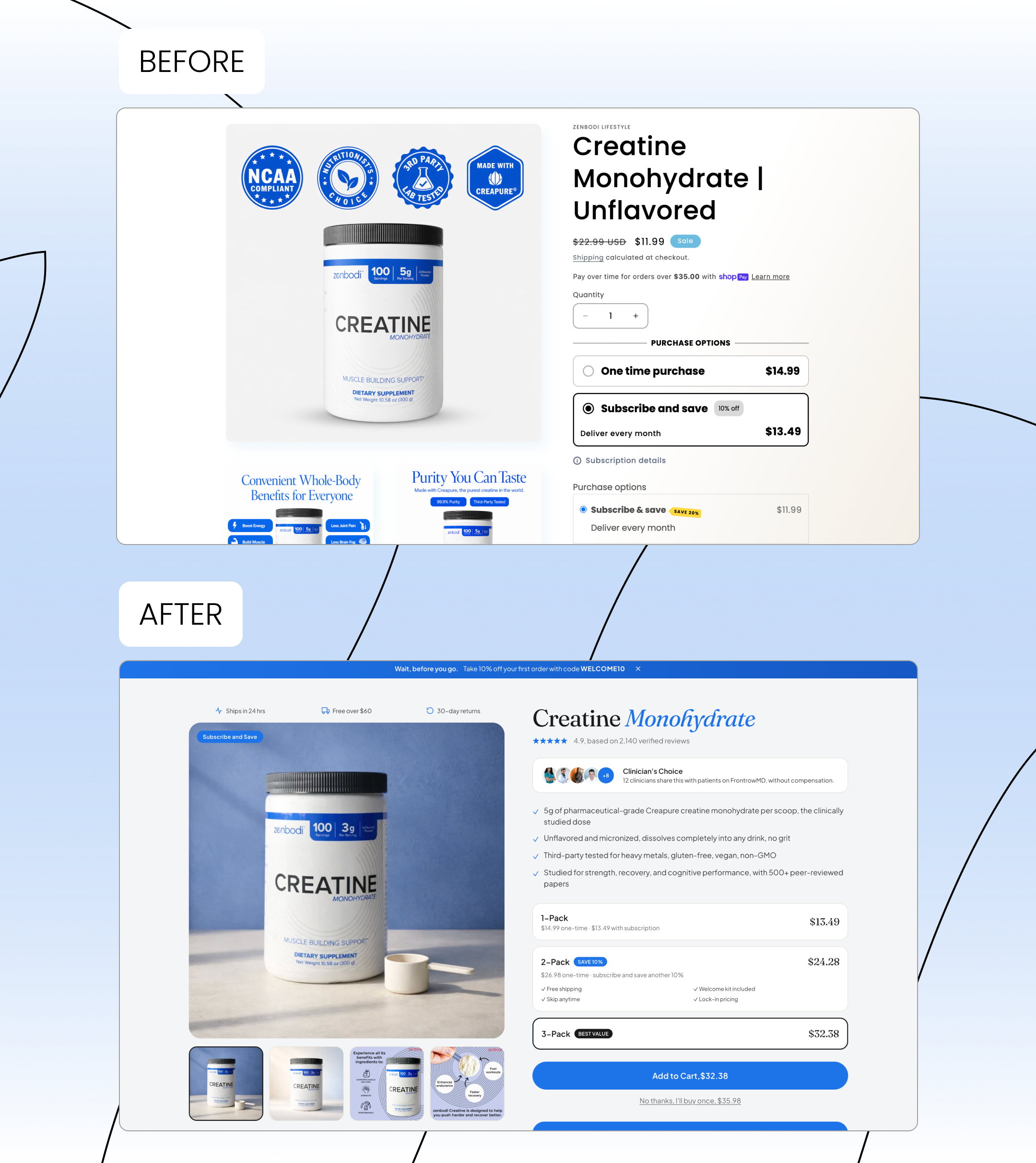
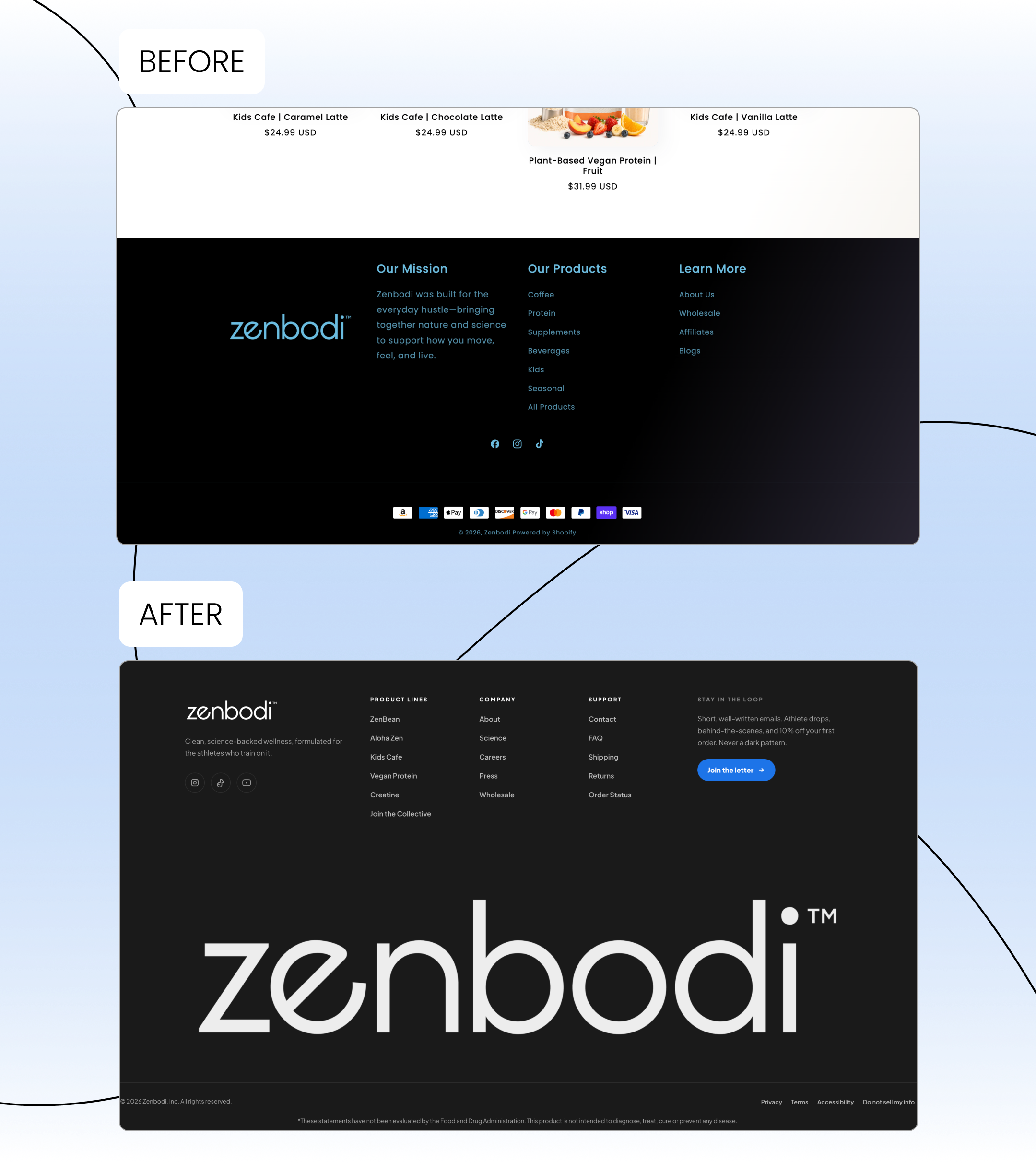
Zenbodi had a problem most growing wellness brands have: the website was a placeholder. They were running a stock Shopify theme with a card-and-stock-photo hero, generic supplement-aisle PDPs covered in trust-badge clip art, and a footer that was little more than a directory.
The product was clinically formulated and the brand had a real audience. The storefront didn't reflect either.
Three things were broken at once:
The product page leaned on logos and bullet points instead of the proof Zenbodi's audience actually responds to — clinician endorsement, third-party testing, real reviews. The hero treated the homepage like a brochure rather than a video-first experience that mirrors how their customers find the brand on Instagram and TikTok. And the key elements from navigation, to the footer, to informational elements on the store missed the moment to establish a brand.
Rebuilding any one of those surfaces with an agency would have cost thousands. Rebuilding all three and keeping them in sync as the brand evolves is now a permanent line item on the roadmap.
How Did Zenbodi Replace 3 Themes Without a Dev Team?
They wrote prompts. CreatorCommerce's AI did the building.
Zenbodi briefed CreatorCommerce on what their site needed to do - pull creator-led video to the top, lead with clinician trust on PDPs, give every athlete partner a real home — and the platform generated three full themes covering the homepage, the PDP, and the footer/site chrome. Each theme is end-to-end: hero through cart, mobile through desktop, with the co-branded creator storefront sections wired in by default.
The "after" PDP shows the difference. A creator-led editorial title in the brand's serif, a "Clinician's Choice" trust block citing twelve named clinicians, a four-pack subscription stack with a clearly best-value option, and an exit-intent banner offering a first-order discount — all rendered as native theme sections, not third-party widgets. The homepage now opens on a "Trust your body" video, with a 50,000+ customer / 4.8 rating / 90-day guarantee bar that anchors the hero. The footer carries a zenbodi product-line architecture and a newsletter callout, which on social-native traffic does as much work as the menu bar.
This is what we mean by social-native storefront: a site designed around the way creator-driven shoppers actually arrive — short-form video first, trust signals upfront, subscription framed as the default — rather than a generic ecommerce template patched after the fact.
Social-native storefront: A storefront built to convert traffic that arrives from short-form video and creator links — leading with motion, social proof, and creator context above the fold instead of a static merchandising hero.
What Does Zenbodi's Theme Operation Look Like Now?
Roughly ten minutes a month.
That's the time the Zenbodi team spends writing prompts and reviewing the next round of theme updates. Once the brief is in, CreatorCommerce's AI generates the changes, the CreatorCommerce team handles QA across the build, and Zenbodi's job collapses to one final check: the happy-path purchase flow.

The $2,500/month figure is what Zenbodi was paying for a development relationship to maintain a single Shopify theme. That line is now zero. The theme they have today is not just maintained — it has been rebuilt three different ways.
How Does QA Work When CreatorCommerce Builds the Theme?
Zenbodi's QA scope shrunk to one path: can a customer add a product to cart, apply the discount, and check out cleanly? Everything else — visual regression, section-level behavior, mobile parity, accessibility basics, attribution — runs through CreatorCommerce's QA process before the theme reaches Zenbodi at all.
That works because CreatorCommerce already tests the same patterns across thousands of co-branded creator storefronts. When the AI builds Zenbodi a new PDP, the underlying section components have been validated everywhere else. Zenbodi only needs to confirm that the assembly behaves correctly inside their specific store — which is what happy-path testing is for.
The practical effect: QA stops being a release blocker. It becomes a safety net.
Why This Sets Up NIL - Thousands of Themes, Not Three
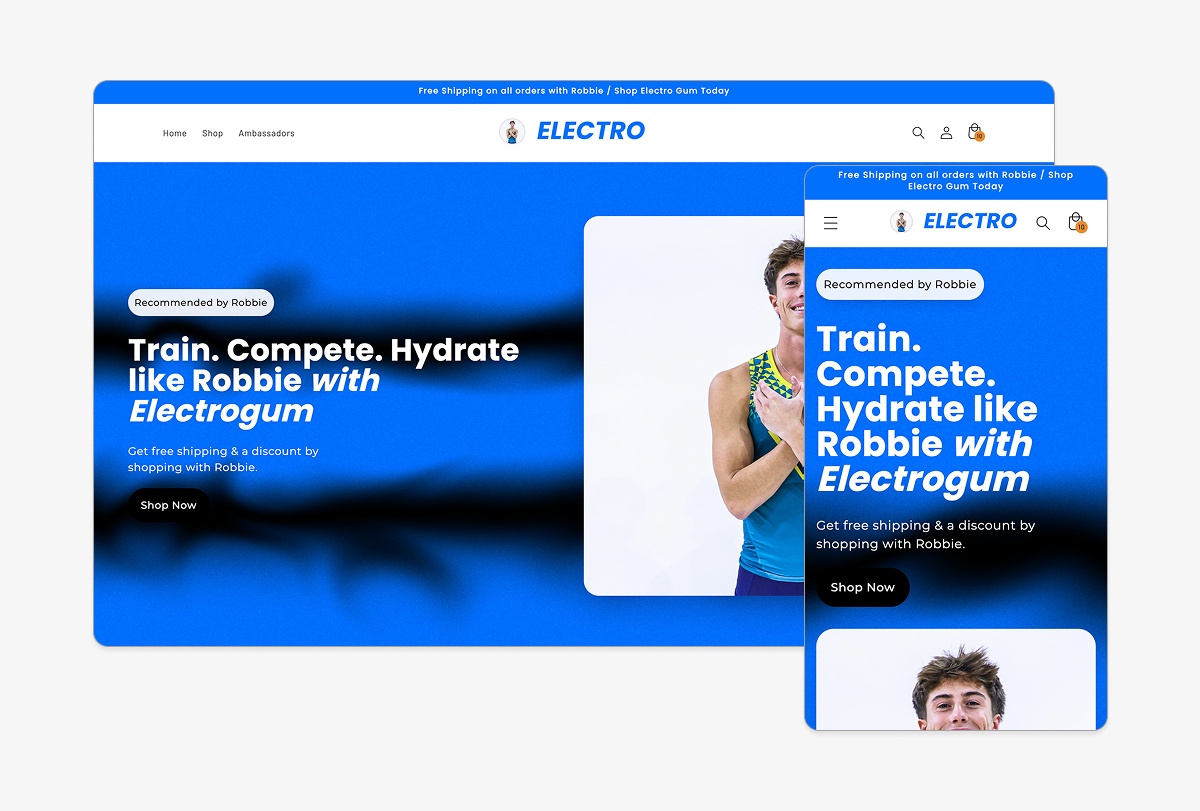
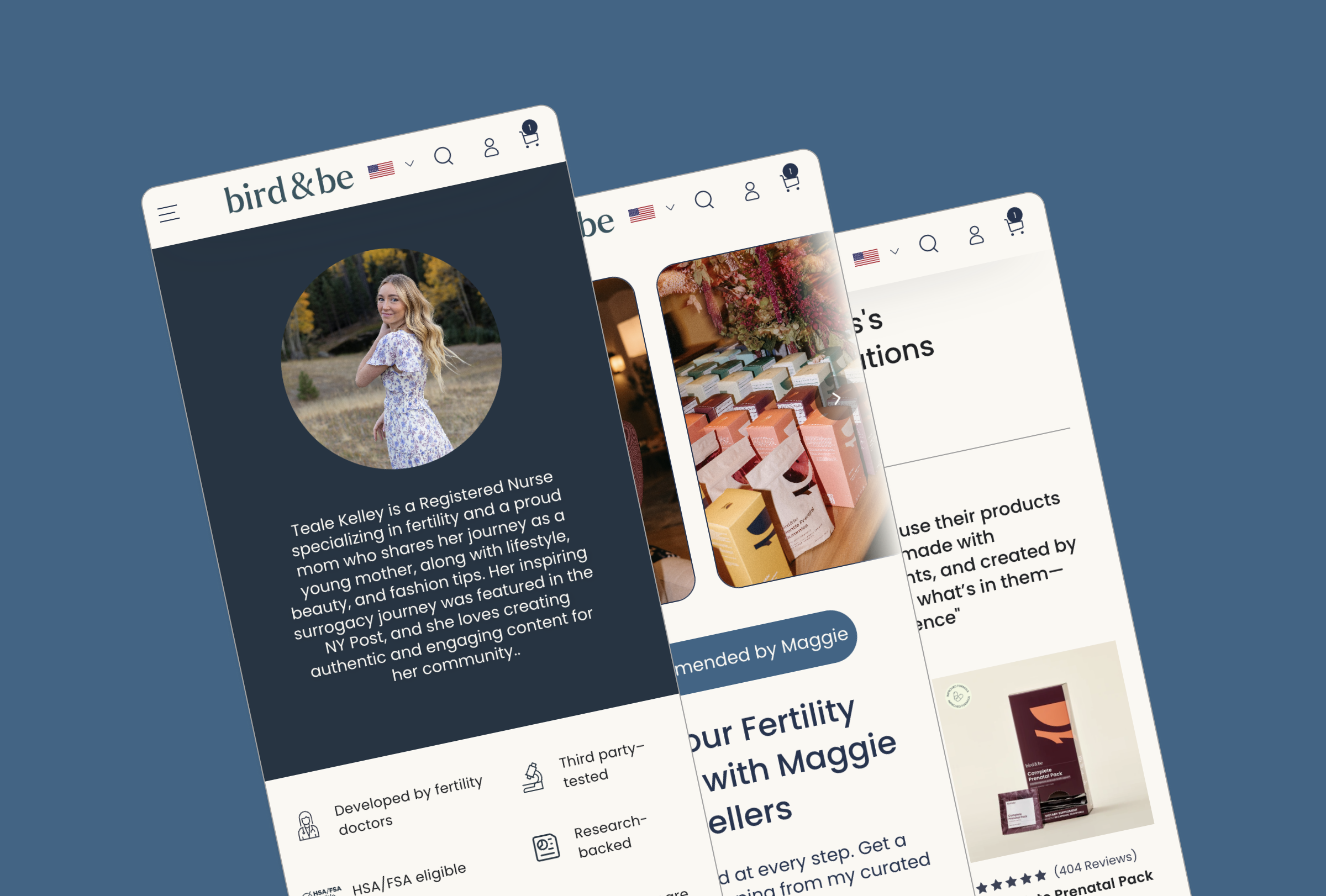
The reason this matters more than a dev cost line item: Zenbodi is leaning into NIL athlete partnerships, and NIL works best when every athlete gets a storefront that actually feels like theirs.
A college athlete with a regional following doesn't need a generic "shop my picks" page. They need a co-branded Zenbodi storefront with their own visual treatment — palette, hero video, curated drops, copy in their voice that looks like the brand built it for them. Multiplied across a roster of hundreds of athletes, that's thousands of theme variations a brand would never staff for under a traditional development model.
With AI-built themes, the unit economics flip. Each new athlete partner is a prompt, not a sprint. Zenbodi can spin up an athlete-specific variant of any of their three core themes in the same ten minutes it now takes to update the master theme. The athlete gets a storefront that looks personal. Zenbodi keeps the on-domain commerce, the attribution, and the subscription mechanics on every page.
This is a pattern other brands are already running on the human side. Cozy Earth has 600+ creators with their own co-branded storefronts on CreatorCommerce, with a 214% average CVR increase and 67.37% AOV lift versus standard affiliate links (source). Healf curated 1,700+ shoppable storefronts across its creator community (source). Zenbodi gets to start from that proof and pour AI throughput on top.
What This Means for Other Brands
The Zenbodi story is a preview, not an outlier.
Most growth-stage DTC brands are running some version of the holding-theme problem — the site is "good enough" but doesn't reflect the brand, and rebuilding it never quite makes the quarter. Add a creator program on top and the gap widens: every athlete or influencer is sending traffic to a page they had no part in shaping.
AI-built themes change two things simultaneously. They make the brand storefront properly social-native — the work an agency would have done, without the agency timeline or invoice. And they make per-creator and per-athlete co-branded creator storefronts a daily activity instead of a quarterly project.
Zenbodi's roadmap is: keep the master themes evolving in ten-minute prompt cycles, then spin up athlete-specific versions on the same engine as the NIL collective grows. None of that requires hiring a developer.
FAQ
How much does an AI creator storefront cost compared to agency development? Zenbodi was budgeted for $4k/mo in developer spend. After moving to CreatorCommerce, that line dropped to $0 because AI-built themes are part of the platform. CreatorCommerce starts at $500/month — for full pricing across plan tiers, book a demo.
How long does it take to ship a new AI creator storefront theme? For Zenbodi, the brand-side workload is roughly ten minutes per month — long enough to write a prompt and review the result. CreatorCommerce's AI handles the build and the CreatorCommerce team handles QA before the theme ships, so the brand's only remaining check is the happy-path purchase flow.
Can AI-built themes power NIL or athlete-specific storefronts? Yes. Because each theme is generated from a prompt, Zenbodi can produce per-athlete variants of any base theme on the same engine — palette, hero video, curated drops, voice — and serve a co-branded creator storefront for every athlete on their NIL roster without scaling headcount.
What does QA look like when CreatorCommerce builds the theme? CreatorCommerce QAs section-level behavior, mobile parity, accessibility basics, and attribution before handing the build back to the brand. The brand's QA scope shrinks to confirming the happy-path purchase flow inside their specific store. This works because the underlying section components are already validated across thousands of co-branded creator storefronts on the platform.
Is the AI-built theme just a landing page, or a full storefront? A full storefront. Zenbodi shipped three end-to-end themes — homepage, PDP, cart, mobile, footer, and site chrome — with co-branded creator storefront sections wired in by default. Co-branding extends through the product page, not just the landing page.
Ready to see what an AI-built co-branded creator storefront looks like for your brand and your creators? Book a demo with CreatorCommerce.




%201.png)
%201.png)