

Yes. An influencer storefront does increase sales, and the results are consistent across industries. Brands running co-branded creator storefronts have seen conversion rate improvements ranging from 30% to 214% versus standard affiliate links, with average order value increases as high as 78%. The data comes from five brands across fashion, beauty, health, and food: not theory, not projections, but measured outcomes.
CreatorCommerce is a Shopify-native platform that powers co-branded creator storefronts: personalized shopping pages that live on the brand's own domain, not a third-party marketplace. The results below come from brands using CreatorCommerce to replace generic affiliate link destinations with branded, creator-specific experiences.
Why Are Brands Rethinking the Standard Affiliate Link?
Standard affiliate links send creator-driven traffic to a generic homepage or product page. The shopper clicks a creator's recommendation, feels the trust and context of that endorsement, then lands somewhere with zero connection to the creator who sent them.
The conversion gap: The disconnect between a personalized, trust-driven creator recommendation and the generic, context-free landing destination. Every affiliate program that routes traffic to a homepage suffers from it.
This matters because creator-driven traffic behaves differently than paid ad traffic. These shoppers arrive with high intent and high trust. When the landing experience strips away the referral context, that trust dissipates, and the shopper bounces or browses without buying.
Co-branded influencer storefronts close this gap by giving every creator a personalized, branded shopping page (complete with their name, curated product selections, and visual identity) hosted on the brand's own domain.
What Is a Co-Branded Influencer Storefront?
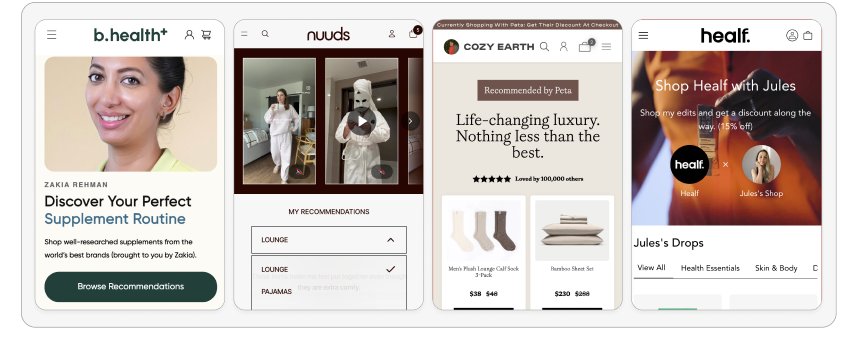
Co-branded influencer storefront: A personalized, brand-hosted shopping page that combines a creator's identity and curated product picks with the brand's full e-commerce experience. Unlike standard affiliate links that land on generic pages, co-branded storefronts maintain the trust and context of the creator's recommendation throughout the entire shopping journey.
These storefronts typically include the creator's name and imagery, hand-picked product selections, auto-applied discounts, and the full brand checkout experience. They live on the brand's domain, not a third-party platform, which means the brand retains full control over the customer experience and first-party data.
The Data: Five Brands, Five Results, One Pattern
Cozy Earth: 214% Higher Conversion Rate
Cozy Earth, a premium fashion and bedding brand, saw a 214% average CVR increase versus standard affiliate links after switching to co-branded creator storefronts. They also recorded a 67.37% average AOV increase, meaning shoppers who arrived via a creator storefront didn't just convert more often, they spent more per order. Over 600 creators launched their own storefronts, and link sharing grew 63.41% month-over-month in the first four months.
Healf: 40.8% Higher Conversion Rate
Healf, a UK health and wellness marketplace with thousands of products, faced a specific challenge: catalog decision fatigue. By launching 1,700+ co-branded storefronts through CreatorCommerce and Social Snowball, Healf gave every creator a curated "wellness lens" into their catalog. The result: 40.8% higher CVR versus traditional homepage affiliate traffic, plus 2,000+ creator-curated collections and 1,200+ UGC pieces generated as a by-product.
Buttah Skin: 30% Higher CVR, 78% Higher AOV
Buttah Skin, a beauty and cosmetics brand, saw a 30% CVR increase and 78% AOV increase with co-branded landing pages versus standard affiliate links. The AOV lift is the standout here: it demonstrates that creator context doesn't just drive more purchases, it drives bigger ones.
Crocs: 350,000 Sessions from a Single Storefront
Crocs used CreatorCommerce for both their "Crocs Your Way" micro-influencer program and high-profile collaborations. A single Crocs x Kai Cenat creator storefront generated 350,000 sessions: proof that influencer storefronts can serve as significant traffic events, not just persistent affiliate channels.
Electro: 81% of E-Commerce Revenue from Their Creator Program
Electro, a food and beverage brand, attributed 81% of total e-commerce revenue to their affiliate and creator program. This stat reframes the question entirely: influencer storefronts don't just increase sales. For some brands, they become the primary sales channel.
Results at a Glance
| Brand | Industry | CVR Impact | AOV Impact | Other Key Metric |
|---|---|---|---|---|
| Cozy Earth | Fashion | +214% vs. standard links | +67.37% | 600+ creator storefronts |
| Healf | Health & Wellness | +40.8% vs. homepage traffic | - | 1,700+ storefronts, 1,200+ UGC pieces |
| Buttah Skin | Beauty | +30% vs. standard links | +78% | - |
| Crocs | Fashion | - | - | 350K sessions from one storefront |
| Electro | Food & Beverage | - | - | 81% of ecom revenue from creator program |
What Does This Mean for Your Brand?
Three patterns stand out from this data.
The CVR lift is real and repeatable. Every brand that measured conversion rate saw meaningful improvement, from 30% (Buttah Skin) to 214% (Cozy Earth). The variation reflects differences in baseline performance, catalog complexity, and program maturity, but the direction is consistent.
AOV goes up, not just CVR. Both Cozy Earth (+67.37%) and Buttah Skin (+78%) saw higher average order values. When shoppers arrive through a trusted creator's curated page, they buy with more confidence, and they buy more.
The ceiling is higher than most brands realize. Electro generating 81% of e-commerce revenue through their creator program isn't an outlier to dismiss. It's a signal of what's possible when the infrastructure matches the ambition.
If your brand runs a creator or affiliate program and routes that traffic to a generic homepage, you're leaving measurable revenue on the table. The fix is a better destination for the traffic you already have, not more creators or better content.
Ready to see what co-branded storefronts can do for your brand? Book a Demo
Related Articles
- Names > Brands: The Influence Paradigm Shift Brands Need to Know to Thrive
- Rise of the Brand Cartel: Why collective influencer campaigns are the future
- Say hello to full-funnel storefront personalization for any collaboration [For Brands]
Frequently Asked Questions
Do influencer storefronts actually increase conversion rates?
Yes. Brands running co-branded influencer storefronts on CreatorCommerce have reported CVR increases between 30% and 214% compared to standard affiliate links. The improvement comes from maintaining creator context and trust throughout the shopping experience, rather than dropping visitors on a generic page.
How much does an influencer storefront cost?
CreatorCommerce plans start at $500/month. For specific pricing based on your program size and needs, book a demo to discuss options.
Can influencer storefronts work with my existing affiliate platform?
Yes. CreatorCommerce integrates with existing affiliate stacks including Superfiliate, Social Snowball, and Shopify's native tools. It adds a conversion layer on top of your current affiliate management, not a replacement for it.
Do influencer storefronts increase average order value?
The data says yes. Cozy Earth saw a 67.37% AOV increase and Buttah Skin saw a 78% AOV increase with co-branded landing pages versus standard affiliate links. When shoppers arrive via a curated, creator-specific page, they tend to buy more per order.
What makes a co-branded storefront different from a regular landing page?
A co-branded influencer storefront combines the creator's identity (name, imagery, curated product selections) with the brand's full e-commerce experience on the brand's own domain. Standard landing pages don't personalize the experience to each creator or maintain the referral context that drove the click.




%201.png)
%201.png)
