

Roster is a creator and ambassador program management platform built native to Shopify. It handles the entire ambassador lifecycle from recruitment and tiering through gifting, link generation, and commission tracking. Roster has been the backbone for dozens of scaled ambassador programs because it treats the ambassador relationship as a distinct workflow with its own approval flows, seeding workflows, and structured commission rules. What Roster's native dashboard shows is operational: which ambassadors are enrolled, which tier they're in, how much commission they've earned, and what volume they've driven. That's the program layer working exactly as intended. The gap that opens at scale isn't in what Roster tracks, it's in what happens between the ambassador's link click and the Shopify checkout: the storefront experience, the session behavior, and the on-site funnel that most ambassador programs treat as out of scope because it lives inside the brand's own commerce data. This post is a working guide to closing that gap: using Roster for the ambassador management and program reporting layers, and CreatorCommerce plus Shopify's native data model for the commerce and analytics layer on top. Expect a mental model, a comparison table, a case study powered by real Cozy Earth performance data, and the exact integration stack that turns Roster's ambassador dashboard into full-funnel Shopify-native ambassador analytics.
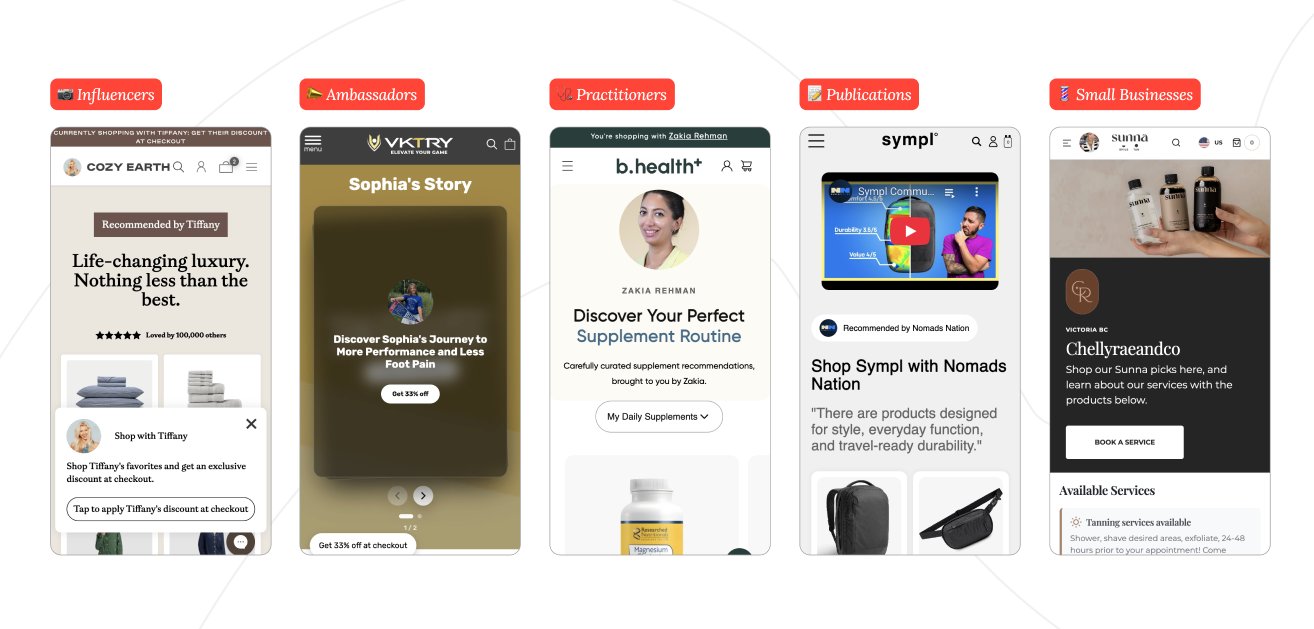
CreatorCommerce is a Shopify-native platform that helps DTC brands build co-branded creator storefronts, personalized pages that live on the brand's own domain. Every click from a Roster ambassador link can be routed through a CC storefront, which fires a native Shopify web pixel, writes cart attributes, and labels every downstream order with the originating ambassador. The result is full-funnel analytics that Roster's program dashboard pairs with, not competes against.
What Roster Tracks Natively
Roster's dashboard is built around the ambassador program itself. It answers the operational questions every program manager asks first: who are the ambassadors, which tier are they in, how much volume have they driven, what gifts have we sent them, and what's the commission owed. That's the core job of a Shopify-native ambassador management platform, and Roster has built a deep set of features around it.
Ambassador program tracking (Roster): The reports a Shopify brand gets from Roster out of the box: ambassador-level enrollment and tier assignment, link and code generation with per-ambassador customization, click tracking across all ambassador links and codes, order attribution to specific ambassadors, commission calculation and payout tracking, seeding and gifting workflows with request/approval cycles, and a self-service dashboard for ambassadors to view their links, performance, and earnings.
What this covers well:
- Ambassador enrollment with tiered structure: standard, premium, VIP, or custom tiers with tier-specific commission rules
- Automated link and discount code generation, tied to each ambassador's profile
- Click and conversion tracking across every ambassador link and code in real time
- Multi-tier commission structures with volume-based bonuses and tier-specific rates
- Seeding workflows: request-based gifting with inventory management and approval gates
- Ambassador self-service dashboard showing links, clicks, conversions, earnings, and tier status
- Built-in program reporting and integration with Shopify's admin and data layer
These reports are the correct default for a brand building a structured ambassador program: are we recruiting the right ambassadors, are they driving qualified volume, are we paying them cleanly, are the gifts landing on time. They're the program layer doing its job. The gap is in what most ambassador platforms have always treated as out of scope: the on-site experience and full-funnel behavior between the ambassador's link click and the Shopify checkout.
The Analytics Gap Most Roster Merchants Miss
Roster's operational dashboard is tuned for one audience: the program manager running the ambassador layer. That tuning is the reason it works so well: it's built from the ambassador inward. It also means the reporting, by design, stops at the edge of Shopify's admin order view.
The gap opens the moment a Roster program scales past a few dozen active ambassadors. The ambassador layer knows a link was clicked, a code was entered, and an order was attributed. The Shopify order table knows revenue landed and which customer placed it. What's in between (the session, the landing page, the product discovery, the cart behavior, the email captures, the abandons) lives in the brand's own analytics stack, and it isn't natively labeled with the ambassador who drove the visit.
The full-funnel ambassador analytics gap: The reporting blind spot that opens between an ambassador's link click and a Shopify order confirmation: session behavior, on-site engagement, product page conversions, cart activity, and post-purchase retention that most ambassador management platforms treat as out of scope because they live inside the brand's own commerce analytics and customer data model.
Concretely, a brand running Roster at scale tends to find that they can answer questions like which ambassadors drove the most sales last month or which tier is our highest-performing cohort, and struggle with questions like which ambassador's traffic actually converts on product pages versus bouncing, what's the AOV difference between an ambassador sending high volume versus one sending lower volume, which ambassadors are driving new customers versus reactivating dormant ones, or how does repeat purchase behavior differ by acquisition ambassador. None of these are Roster's job. They're the brand's job, and they require Shopify-native session and order data tagged with the ambassador who drove the visit, flowing into Shopify's existing analytics and segmentation tools.
Why Full-Funnel Ambassador Analytics Matters
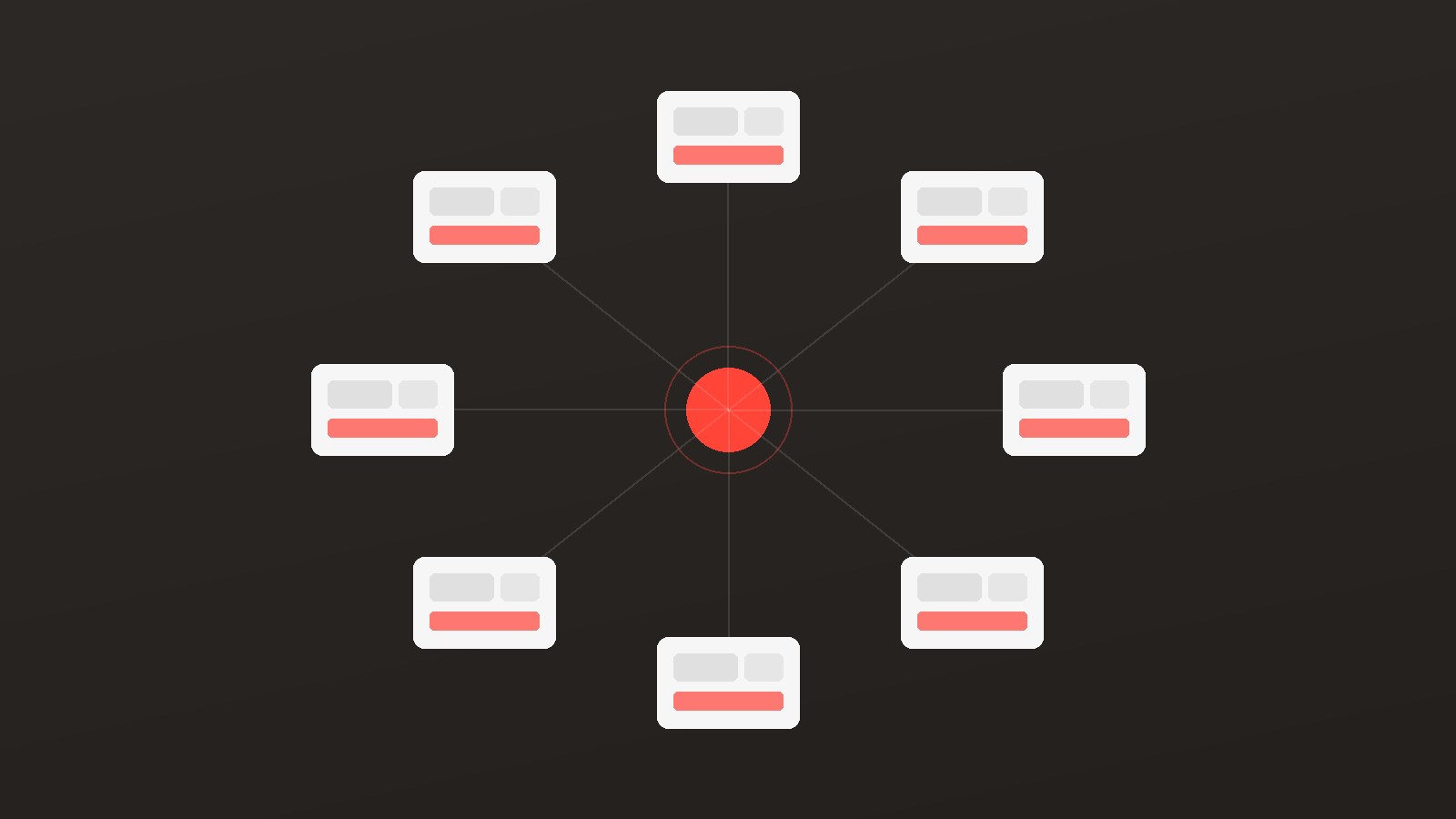
The reporting model that closes the gap is layered. The ambassador platform handles the program. Shopify handles the commerce. A storefront layer in between captures the session and stamps every event with the ambassador identity, so the Shopify analytics that brands already use start answering ambassador-aware questions natively.
Full-funnel ambassador analytics: The complete reporting model where every step from ambassador link click to product view, cart add, checkout, repeat purchase, and customer LTV is attributable to the originating ambassador, measured natively in Shopify (Shopify Analytics, Shopify segments, ShopifyQL Notebooks) rather than an ambassador dashboard alone.
The four layers, mapped cleanly:
| Layer | Tool | What It Sees |
|---|---|---|
| Program | Roster | Ambassadors, tiers, links, codes, commissions, seeding |
| Storefront + funnel | CreatorCommerce + Shopify Analytics | Co-branded landing page, product views, cart, checkout |
| Customer + retention | Shopify Customers + Klaviyo | Repeat purchase, LTV, segments by acquisition ambassador |
Each layer reports on what it owns. Roster doesn't try to become a CRO tool. CreatorCommerce doesn't try to become a commission engine. Shopify doesn't try to become an ambassador dashboard. They share one identifier, the ambassador handle, and that's what makes the funnel queryable end-to-end.
How CreatorCommerce Extends Roster's Analytics
CreatorCommerce sits between the ambassador click and the Shopify session. When a Roster ambassador link is routed through a CC storefront, three things happen automatically that Roster's dashboard alone doesn't track:
- A native Shopify web pixel fires with a
cc-{ambassador-handle}attribute, so every downstream Shopify event (product viewed, added to cart, checkout started, purchase) is labeled with the ambassador who drove the session. - A cart attribute is written, so the ambassador identity persists across product page → cart → checkout, even if the shopper takes a multi-session, multi-device journey.
- An order tag and customer tag are applied at checkout, making the data available in Shopify Admin filters, Shopify segments, ShopifyQL Notebooks, and any data warehouse fed by Shopify.
The result: the brand's existing Shopify Analytics dashboards start segmenting by ambassador without leaving Shopify. Every report a Shopify analyst already runs (funnel, AOV, new-vs-returning, retention cohorts) gains an ambassador dimension. Roster keeps doing its job at the program layer. The full ambassador funnel, end to end, becomes natively queryable.
For technical reference on how the dual-layer attribution works, see our affiliate link tracking reference.
Case Study: How a Cozy Earth-Style Ambassador Program Gets a 214% Conversion Lift From Co-Branded Storefronts
Cozy Earth is a premium sustainable bedding brand with a scaled ambassador program built on creator partnerships. Their program had the operational layer in place (outreach, tiered commissions, link tracking), and the program produced real attributed revenue. The question they couldn't answer cleanly was the one that breaks every lifestyle brand: once an ambassador's audience clicks the link, where do we send them, and how do we make that landing convert.
The default destination, the homepage or a generic product category, created friction. A bedding brand has choices (sheets, pillows, duvets, loungewear, sleep accessories), and no ambassador link carries the signal as to which product that specific ambassador actually uses or recommends. Ambassador dashboards reported the click and the eventual order. Conversion suffered between them.
The fix left the ambassador program alone. It gave every ambassador their own co-branded Cozy Earth storefront, a curated "sleep sanctuary" experience that loaded the specific products that ambassador personally recommended, alongside their story, their sleep philosophy, and their content. The same ambassador program kept running. The funnel below it got rebuilt.
The numbers from that rebuild, using CreatorCommerce storefronts to extend the ambassador program:
| Metric | Result |
|---|---|
| Conversion rate lift vs. generic link | 214% |
| Average order value lift | 67.37% |
| Co-branded storefronts deployed | 600+ |
The 214% CVR lift and 67.37% AOV lift are the storefront layer paying for itself immediately. Cozy Earth went from a generic "ambassador sends link" experience to a curated, branded, personalized recommendation landing for each ambassador. Neither metric lives inside a Roster dashboard. They live in Shopify Analytics, segmented by the ambassador handle the storefront layer wrote at session start. That's the analytics extension working end to end.
Roster vs. Roster + CreatorCommerce: Where Each Layer Stops
The clean way to think about Roster and CreatorCommerce is as two layers in the same stack, not two products competing for the same job. Roster owns the program, the ambassador tiers, the seeding workflows, and the link/code management. CreatorCommerce owns the storefront and the analytics extension. Shopify owns the commerce.
| Capability | Roster | CreatorCommerce |
|---|---|---|
| Ambassador enrollment & tiers | Native tiers with tier-specific settings | Reads Roster tiers, provisions storefronts per tier |
| Link & code generation | Per-ambassador links and codes | Routes Roster links through storefront layer |
| Multi-tier commission rules | Volume-based rates, tier-specific structures | Defers to Roster |
| Seeding & gifting workflows | Request/approval with inventory tracking | Defers to Roster |
| Ambassador self-service dashboard | Built-in | Not in scope |
| Co-branded landing page | Not in scope | Per-ambassador page on brand domain |
| Personalized product curation | Not in scope | Per-ambassador collection or storefront |
| Per-ambassador session analytics | Click-level only | Pixel + cart attribute + order tag |
| Funnel analytics by ambassador | Conversion attribution, no breakdown | Native Shopify Analytics segmentation |
| Customer tagging by ambassador | Not on the Shopify customer record | Shopify customer tag, usable in segments & flows |
| Klaviyo lifecycle flow integration | Not in scope | Customer-tag-triggered shopper flows |
Roster stays the program and ambassador management layer. CreatorCommerce adds the storefront and the analytics tagging that turns Shopify's existing reporting into an ambassador-aware system. Brands keep the ambassador portal, tiered commissions, and seeding workflows they already trust, and gain everything below the ambassador link.
How to Connect CreatorCommerce to Roster
Roster and CreatorCommerce work together through CC's standard ambassador-program enrollment flow: Roster ambassadors are mapped to CC tiers, and every Roster link routes through the CC storefront layer before landing on a Shopify page. There's no engineering work required for a brand running standard Shopify. Roster keeps managing the ambassadors, the seeding requests, and the commissions. CC layers the storefronts and the Shopify-native attribution on top.
The setup is a four-step process:
- Map each Roster ambassador tier to a CC tier: each tier carries its own destination, branding, and product configuration
- Connect the Roster → CC enrollment flow in the CreatorCommerce dashboard so new Roster ambassadors auto-sync into the right CC tier
- Update the destination URL on each Roster ambassador's link (or the program-wide default) to route through the CC storefront router
- Enable the storefront pixel and order/customer tagging in CC so every session and order writes the ambassador identity into Shopify's data model
Once the destination is in place, every Roster link routes through the CC storefront layer before landing on a Shopify page. The pixel fires, the cart attribute is set, and the order tag is ready to write at checkout. Roster continues to track the click and attribute the order. CreatorCommerce handles the storefront experience and the funnel reporting.
For step-by-step setup, see how to enroll an existing ambassador program into CreatorCommerce. For order tagging detail, see the Shopify order & customer tagging reference.
Klaviyo Flows Powered by Ambassador Attribution
Roster's program layer focuses on ambassador management: recruitment, tier assignment, seeding, payouts. CreatorCommerce extends into the customer-facing side: lifecycle flows for the buyers an ambassador drove. Once CC is writing customer tags at checkout, those tags become first-class triggers for shopper-facing flows that complement Roster's ambassador-facing program.
Three flows are worth setting up in the first week. None of them are possible from inside Roster's dashboard alone, because they need the customer tag and the Shopify segment infrastructure to fire.
1. Welcome flow, ambassador-aware variant. When a new customer is tagged with cc-{ambassador-handle}, branch into a flow that references the specific ambassador who sent them: their name, their storefront, the products they featured. The retention lift on ambassador-acquired customers comes from continuing the same trust relationship that drove the conversion.
2. Browse abandonment, ambassador-aware. If a tagged customer views a product without buying, send a follow-up that mirrors the ambassador's voice and the storefront they came from. A generic browse abandonment email is the wrong message after an ambassador-driven session: the customer didn't come from "your homepage," they came from someone they trust.
3. Win-back, ambassador-aware. When a customer hasn't bought in 60 or 90 days, segment by acquisition ambassador and re-engage them with content from that ambassador's latest picks, drops, or restocks. The signal that brought them in once tends to bring them back if you preserve it.
For the broader playbook on running ambassador-aware Klaviyo flows at scale, see how to set up automated Klaviyo flows to communicate with ambassadors at scale.
Three Reports Every Roster + CreatorCommerce Brand Should Run
Stacking Roster and CreatorCommerce keeps everyone's ambassador dashboard in place while making Shopify's native reporting answer ambassador-aware questions. Three reports tend to surface first, and they're all built on the same plumbing: the cc-{ambassador-handle} Shopify customer tag plus the Shopify order tag.
1. Per-ambassador funnel report. Sessions, product page views, add-to-cart events, checkouts started, and orders placed, broken out by ambassador. This is the report that exposes the difference between an ambassador who drives high-volume but low-converting traffic and one who drives lower volume but converts above brand average. Both can be valuable; they require different next steps.
2. New-vs-returning customer mix by ambassador. A Shopify segment filter on cc-{ambassador-handle} reveals what percentage of each ambassador's attributed orders came from net-new customers versus existing ones. Ambassador tier strategy, seeding allocation, and commission decisions look very different when this number is 80% new-customer versus 20% new-customer.
3. 30/60/90-day repeat rate by ambassador cohort. Shopify customers tagged at acquisition can be cohorted by month, then tracked for repeat purchase behavior at 30, 60, and 90-day windows. The ambassadors driving the highest repeat rate are the ones the brand should be doubling down on for evergreen storefronts and tier promotions, not just the ones with the highest first-order count.
All three reports are achievable inside Shopify Analytics and Shopify segments. They become possible the moment CreatorCommerce starts tagging sessions at the storefront layer. Roster doesn't need to change anything for them to start producing.
Frequently Asked Questions
Does CreatorCommerce replace Roster?
No. CreatorCommerce is the storefront and analytics layer that sits on top of an existing ambassador program. Roster continues to run ambassador enrollment, tiering, seeding workflows, multi-tier commissions, payouts, and the ambassador self-service dashboard. CreatorCommerce adds the co-branded storefronts and the Shopify-native attribution tagging.
Does Roster's multi-tier commission structure still work with CC?
Yes. Roster continues to be the source of truth for commission rules, including volume-based tiers and bonuses. CC reads which tier an ambassador belongs to and provisions the appropriate storefront, but the commission math runs entirely inside Roster.
Do Roster's seeding and gifting workflows keep running?
Yes, entirely unchanged. Roster's seeding request, approval, and inventory workflows for ambassador gifting continue to run independently. CC doesn't touch any ambassador-facing program mechanics. CC only touches the storefront experience the ambassador's audience lands on, and the Shopify-side data tagging.
Does CC's analytics layer require leaving Shopify?
No. The point of the integration is that all the new reporting lives inside tools the brand already uses: Shopify Analytics, Shopify segments, ShopifyQL Notebooks, the Shopify customer table, and Klaviyo via Shopify customer tags. There's no third dashboard to learn.
Do Roster's discount codes still work after CC is connected?
Yes. Codes continue to function exactly as before: they're stored, tracked, and attributed in Roster. CC adds an additional path: shoppers arriving via a Roster ambassador's CC storefront URL get the discount auto-applied on the page, with no code to type or share. Brands typically keep both options available so ambassadors can use whichever channel performs best with their audience.
What happens to Roster ambassador tiers after CC is connected?
Roster tiers map to CC tiers. Every tier becomes a tier configuration in CC with its own destination and branding. Add an ambassador to a Roster tier, and they automatically receive a co-branded storefront aligned with that tier's settings. The ambassador data stays in Roster; the storefront provisioning is handled by CC. No manual sync required after the initial setup.
Can we customize the storefront branding per ambassador?
Yes. CC storefronts can be customized at the tier level (all VIP ambassadors share a VIP storefront style) or per-ambassador (each ambassador gets a unique color, header image, or messaging). The customization level depends on your brand's structure and how deeply you want to personalize the experience. Tier-level customization is faster to scale; per-ambassador customization drives higher conversion.
Do we need to change anything about our existing Shopify Analytics dashboards?
No. The same dashboards a Shopify brand already uses (funnel analysis, sales by traffic source, customer cohort analysis) start automatically segmenting by ambassador once the customer tag is in place. ShopifyQL Notebooks queries can filter on customer.tags CONTAINS 'cc-' with no schema changes. Existing analyst workflows extend naturally.
Related Articles
- How to Create a Creator Affiliate Program as Your Primary Revenue Channel on Shopify
- Simple Affiliate Analytics: How to Track Your Full Affiliate Funnel on Shopify
- Refersion Analytics: How to Track the Full Affiliate Funnel on Shopify
- GRIN Analytics: How to Track Your Full Creator Campaign Funnel on Shopify
- GoAffPro Analytics: How to Track the Full Affiliate Funnel on Shopify




%201.png)
%201.png)
