

When most brands launch an affiliate program, they treat it as a supplemental revenue stream. Run some campaigns, recruit some creators, collect some incremental sales. Nice to have.
But for ambitious DTC brands, there's a different path: making your creator affiliate program your dominant revenue channel, the engine that drives the majority of your sales.
This guide walks you through how to build that infrastructure, design a commission structure that scales, and architect the conversion layer that separates programs that generate 5% of revenue from programs that generate 80%+.
Here's What You'll Learn
- The program structure that separates high-performing creator affiliate programs from commodity channels
- How to design commission incentives that align creator growth with your own
- The infrastructure stack you need (tracking + conversion + creator experience)
- Why storefront quality matters more than traffic volume for affiliate revenue
- How brands like Electro scaled affiliate from a side channel to 81% of ecommerce revenue
What Does It Mean to Have an Affiliate Program as Your Primary Revenue Channel?
Primary revenue channel means affiliate-driven sales consistently represent the largest or second-largest source of revenue in your ecommerce business. For context, Electro scaled their affiliate program to account for 81% of total ecommerce revenue, not a unicorn outcome, but the result of intentional infrastructure and strategic design. CreatorCommerce data shows that brands achieving primary revenue status have one thing in common: they didn't just recruit creators and hope. They built the stack. The path to primary revenue requires understanding the maturity ladder and identifying which bottleneck is holding your growth.
The Affiliate Program Maturity Ladder
Before you can scale, you need to understand where you sit. Stage 1 (Pre-Program) has no formal affiliate infrastructure; Stage 2 (Basic Program) uses affiliate tools with 2-8% revenue; Stage 3 (Creator-First) focuses on hand-picked creators generating 8-25% of ecommerce; Stage 4 (Primary Revenue) makes affiliate the dominant channel with 25%+ of ecommerce, often 50-80%+. CreatorCommerce analysis shows most brands stall at Stage 3 because of a single bottleneck: where the traffic actually converts. Understanding your current stage is the first step to strategic growth.
Stage 1: Pre-Program. You have no formal affiliate infrastructure. Influencers may share your product organically, but there's no tracking, no incentive, no structure.
Stage 2: Basic Affiliate Program. You've launched an affiliate tool (Refersion, Social Snowball, Superfiliate). Creators have links. Sales are tracked. Payouts are automated. Revenue is typically 2-8% of total ecommerce.
Stage 3: Creator-First Program. You've shifted from "anyone can join" affiliate to recruiting hand-picked creators. You're focused on creator growth, not traffic volume. Revenue is 8-25% of ecommerce.
Stage 4: Primary Revenue Channel. Your affiliate program is the dominant or co-dominant driver. Revenue is 25%+ of ecommerce, often 50-80%+. This requires intentional infrastructure beyond affiliate platform alone.
Most brands stall at Stage 3. They have a good creator program but hit a ceiling because of a single bottleneck: where the traffic actually converts.
The Conversion Gap: Why Standard Affiliate Programs Stall
Here's the friction point that separates brands generating 20% affiliate revenue from brands generating 81%: when a creator shares an affiliate link, the shopper lands on a generic homepage with no creator context, personalization, or reason to trust the product recommendation. CreatorCommerce research across 600+ creators shows that a co-branded storefront sends traffic to a personalized shopping page built for the creator's audience, delivering 214% higher CVR and 67.37% higher AOV than generic homepage traffic. This gap, between affiliate links and co-branded storefronts, is where most affiliate programs stall.
Generic Homepage = Low Conversion
A creator with 100K followers might drive 10,000 clicks to your site. But if those 10,000 clicks all land on the same homepage as paid search traffic, the conversion environment is commodity. You get the audience, but the shopping experience isn't optimized for how they arrived.
Co-Branded Storefront = High Conversion
Now reverse that. Same creator, same 10,000 clicks. But this time, they land on a co-branded creator storefront: a shopping page that puts the creator's curation, context, and aesthetic right alongside your products. Conversion rates go up 2-3x. AOV often increases 50%+ because shoppers are arriving with intent, not generic interest.
The Infrastructure Stack for Primary Revenue Affiliate Programs
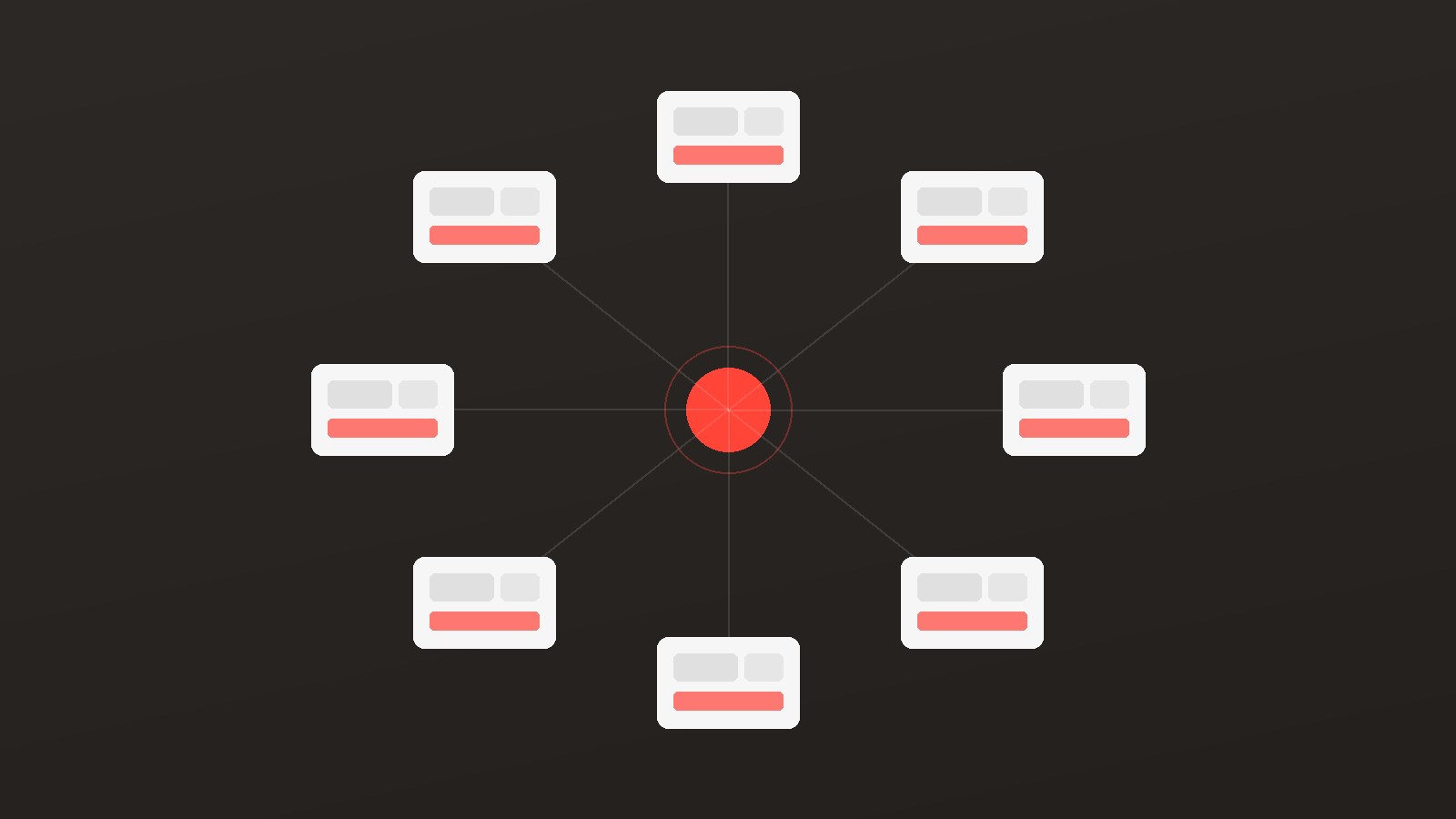
To scale affiliate into a primary revenue channel, you need three layers working in concert: Affiliate Management Platform (track affiliates, manage commissions, automate payouts), Storefront/Landing Page Layer (convert traffic once it arrives), and Attribution & Analytics (understand which creators drive revenue). CreatorCommerce serves as the storefront layer, while platforms like Refersion or Social Snowball handle affiliate management. These three layers working together produce the conversion gains that separate primary revenue programs from stalled ones.
Layer 1: Affiliate Management Platform
Purpose: Track affiliates, manage commissions, automate payouts, enforce fraud rules.
Examples: Refersion, Social Snowball, Superfiliate, GRIN, Impact.
This layer answers the operational questions: Who are your affiliates? How much do they earn per sale? When do they get paid? Is the traffic legitimate?
Key decisions:
- Flat commission vs. tiered commission vs. hybrid
- Individual payout minimums ($25? $100? $500?)
- Frequency of payouts (weekly, monthly, quarterly)
- Clawback rules (are returned orders deducted from affiliate earnings?)
This layer is table stakes. Most DTC brands on Shopify already have this via Refersion or Social Snowball.
Layer 2: Storefront / Landing Page Layer
Purpose: Convert traffic once it arrives.
This is where most brands are blind. They invest heavily in affiliate recruitment but treat the destination as an afterthought. A co-branded creator storefront in CreatorCommerce features curated product selections, displays creator identity, includes personal testimonials, and maintains brand aesthetic while living on your domain.
Why this matters: A shopper landing on a storefront that says "John's Favorite Running Shoes" (with John's face, his curation, his story) will convert at a fundamentally different rate than landing on your generic homepage with the same products.
The main platforms for this layer are CreatorCommerce (brand-owned, co-branded focus) and Superfiliate (affiliate management + storefront together). Critical principle: Don't outsource the storefront to a third-party platform that owns the customer relationship. You need a branded, owned destination that you control.
Layer 3: Attribution & Analytics
Purpose: Understand which creators drive revenue, how much, and which tactics scale.
Key metrics:
- Revenue per creator (not just clicks, but actual sales attribution)
- AOV and CVR per creator
- Repeat purchase rate from each creator's audience
- Cost per acquisition (affiliate commission / new customer acquisition cost)
This is where strategy lives. By understanding which creators drive real revenue per visitor, not only traffic,, you can increase commissions for top performers, experiment with new creator types systematically, phase out low-performing affiliates, and build data on which audience types convert best.
Designing the Commission Strategy That Drives Primary Revenue
Most affiliates are paid one of three ways: Flat Rate ($10 per sale, 10% of AOV), Tiered Commission (5% for first $10K, 8% from $10K-$50K, 12% above $50K), or Performance-Based (commissions vary by conversion rate or category). For a program targeting primary revenue status, tiered commission with a creator-specific twist works best.
Recommended Structure
Tier 1 (Recruit): 5-8% for new creators during onboarding (0-3 months)
Goal: lower barrier to entry, recruit broad creator base. You're taking a small hit to get them in the door and producing storefronts.
Tier 2 (Prove): 10-15% for creators hitting $5K-$25K monthly revenue
Goal: creators proving audience quality and traction. This tier usually captures 60-70% of your affiliate base. The sweetspot for effort-to-economics.
Tier 3 (Scale): 15-20% for creators exceeding $25K monthly revenue
Goal: keep your power performers maximally motivated. These 5-10% of creators often drive 40-50% of affiliate revenue. Slight margin hit is worth it to retain top talent.
Bonus Multiplier: Top 5% of creators get 20-25% + bonus for milestones
- $50K monthly = $1K bonus
- $100K monthly = $5K bonus
Creates aspirational targets and rewards scale.
Commission Psychology
The commission structure you choose signals what you value. High commissions say: "We care about creators and will share revenue generously." High-performing affiliate programs use tiered commissions to align creator growth with brand goals. For primary revenue programs, you're competing for top creator attention with every other brand. Your commission needs to be competitive enough that creators will prioritize your program over their 47 other affiliate partnerships.
The Creator Recruitment and Retention Flywheel
Affiliate programs grow through two independent loops: Self-Recruitment (existing creators recruiting their peers because it's profitable and easy) and Direct Recruitment (your team actively recruiting creators aligned with brand values). <a href="/brand-blog/how-to-build-creator-affiliate-program">Cozy Earth and Electro, through CreatorCommerce storefronts, achieved primary revenue status by enabling self-service creator onboarding. Most brands focus only on Direct Recruitment. The programs that scale to primary revenue do both.
Enabling Self-Recruitment
Self-recruitment happens when the affiliate platform is intuitive (creators set up in less than 10 minutes), the commission is compelling enough to mention to peers, the brand handles all the hard stuff (tracking, payouts, attribution), and creators feel supported (onboarding calls, content guidance, product resources).
<strong>How Electro and Cozy Earth built scale:<br>
- Cozy Earth scaled to 600+ creators in the first year by making it insanely easy to spin up a co-branded storefront. Creators could recruit their friends. Self-service onboarding meant no bottleneck.
- Electro achieved 81% affiliate revenue by investing heavily in creator experience: handpicked product kits, custom photography for creators to use in content, weekly performance insights.
Your job: Build a creator program so good that participating creators naturally recruit their friends.
Retaining Top Creators
Top creators account for 40-50% of affiliate revenue. Losing them is catastrophic. Retention happens through predictable growth (show creators their revenue is increasing month-over-month), commissioned support (assign a creator success manager to top 10-20 creators, check in monthly), exclusive access (early access to new products, special pricing), and public recognition (feature top creators on your social channels and newsletters).
How to Scale Your Program From Side Channel to Primary Revenue
The jump from 20% affiliate revenue to 50%+ requires a deliberate shift in strategy. Understanding your current conversion metrics and attribution accuracy is the foundation for everything that follows.
Phase 1: Diagnose Your Current Stack (Weeks 1-4)
1. Audit your affiliate platform. Do you have proper tracking? Is attribution accurate? Can you pull creator-level revenue reports?
2. Map your current creators. How many do you have? What's the revenue distribution? (Usually 5-10 creators drive 50%+ of affiliate revenue.)
3. Identify your conversion bottleneck. Pull data on click-to-conversion rate for affiliate traffic vs. organic traffic. Is the gap wider than expected?
4. Benchmark against competitors. What's the affiliate revenue % for your main competitors? What commission are they paying?
Deliverable: A one-page "Affiliate Health Check" documenting your current state.
Phase 2: Upgrade the Storefront Layer (Weeks 5-12)
If you're relying on generic homepages or basic landing pages for affiliate traffic, upgrade to co-branded creator storefronts. CreatorCommerce provides Shopify-native platform for co-branded creator storefronts on your own domain without engineering required.
Expected impact: 2-3x CVR lift on affiliate traffic once creators start launching storefronts. <a href="/brand-blog/best-shopify-affiliate-app-stack-2026">Cozy Earth saw a 214% CVR increase by switching to co-branded landing pages</a>. Healf saw a 40.8% increase. These are baseline outcomes, not outliers.
Phase 3: Restructure Commission Incentives (Weeks 13-16)
Review your commission against the tiered structure above. If you're flat at 10%, you're likely leaving top creators undercompensated and new creators underincentivized.
- Communicate the new tiers to existing creators. Frame it as "rewarding our top performers."
- Grandfather top creators at their current rate if increasing would create friction.
- Use the new structure to attract ambitious creators into your program.
Phase 4: Creator Recruitment Sprint (Months 4-6)
Now that your conversion layer and commissions are right, recruit creators systematically:
1. Identify 50 creator targets in your category (Instagram, TikTok, YouTube, newsletters)
2. Build a creator brief outlining the program, expected earnings, and success stories
3. Pitch directly: Email, DM, or outreach through talent agencies. Don't wait for inbound.
4. Offer first-month incentives: "Launch in your first 30 days, earn 2x commission." Reduces friction.
5. Onboard intensively: Personal 15-min kickoff call per creator. Provide product shots, copy templates, brand guidelines.
Expected outcome: 50-100 creators onboarded within 6 months. 20-30 generating meaningful revenue within 12 months.
Phase 5: Measure, Optimize, Repeat (Ongoing)
Run weekly metrics reviews:
- Total affiliate revenue ($ and % of ecommerce)
- Creator count and distribution (top 10 creators' revenue %)
- Cohort retention (% of Q1 creators still active in Q2)
- Commission spend as % of affiliate revenue (target: 60-75% margin)
- Repeat purchase rate from affiliate-driven customers
Monthly themes:
- Month 1: Identify top performers. Give them stars.
- Month 2: Figure out why some creators stalled. Support or phase out.
- Month 3: Test new commission tiers or recruitment tactics.
- Month 4: Celebrate wins with creators. Build momentum.
Why Storefront Quality Separates 20% Programs From 80% Programs
The single most important insight: affiliate revenue scales with destination quality, not just traffic volume. A creator with 50K followers driving traffic to a generic homepage might generate $2K monthly in affiliate revenue. The same creator driving traffic to their own co-branded storefront might generate $5K-$8K monthly. You're not getting 3x more traffic. You're getting the same traffic converted at a 3x higher rate.
This is why large affiliate programs have a ceiling without the storefront layer. You can recruit 1,000 creators, but if they all land on the same homepage, conversion doesn't scale beyond a baseline. Add co-branded storefronts, and suddenly every creator has an optimized landing page, improving conversion rates, repeat purchase rates, and AOV. And here's the beautiful part: creators can self-service. This is how you scale from 20 creators to 600. This is how you get to 1,700 storefronts. This is how affiliate revenue becomes your primary channel.
Partner Platforms for Affiliate Management
The affiliate management layer is complementary to the storefront layer. You might use Refersion or Social Snowball for affiliate tracking and payouts, then layer CreatorCommerce on top for the storefront experience.
Refersion. One of the most popular Shopify affiliate apps. Intuitive onboarding, flexible payouts, strong affiliate marketplace for recruitment. Integrates cleanly with any storefront layer.
Social Snowball. Designed for Shopify. Converts customers into affiliates post-purchase via a widget. Particularly effective if you have a large customer base to activate. Strong fraud detection.
Superfiliate. Purpose-built for DTC creator and affiliate programs on Shopify. Combines affiliate management + co-branded landing pages in one platform. Integrates with CreatorCommerce for enhanced storefront capabilities. Deep-dives: Superfiliate Analytics and Klaviyo integration.
GRIN. Enterprise influencer marketing platform. Creator management, campaign tracking, reporting. Best for brands managing 100+ creators and complex relationships.
Impact. Enterprise affiliate and partnership platform. Deep Shopify integration, multi-touch attribution, strong automation. Overkill for SMB brands starting out.
Simple Affiliate. Shopify-first affiliate app from the Snow.dog team, positioned at the low end of the market. Fast install, UTM tracking, fraud rules, and Klaviyo-friendly customer events. Deep-dives: Simple Affiliate Analytics and Klaviyo integration.
GoAffPro. Scale-focused affiliate platform with deep MLM/tier structures and product-curation features. Strong fit for brands running tiered ambassador programs. Deep-dives: MLM affiliate scaling and GoAffPro vs UpPromote vs Social Snowball.
The key: pick one for affiliate management, then layer storefront capability on top. They work together.
Related Articles
- A retrospective before the outcome: What the TikTok ban saga will teach us
- Affiliate Marketing Lived in the Cracks of Instagram. That Era Is Over.
- Connect multiple affiliate platform tiers to a single CreatorCommerce campaign
- How to Build a Creator Affiliate Program for Beauty Brands
- How to Use GoAffPro Creator Drops to Drive Higher AOV and Conversion
- How agencies can & should craft services for TikTok Shops
- How IOS17'S UTM Parameter Slicing (Link Tracking Protection) Cuts Back Affiliate Links
- Introducing CreatorCommerce: Powering the Future of Creator-to-Consumer
- The Great Channel Diversification: How to Thrive in the Ecosystem Amidst Rising Ad Costs
- Turn brand loyalists into brand advocates with the new Tapcart integration
- How to turn a recipe post into a high-conversion funnel for your CPG brand
- Unlocking the Secrets to Success for Creators and Brands: The Creator Rosetta Stone
- Why fashion brands are finally falling in love with affiliate marketing
- Win the Heart of Your Affiliates: Fireside chat with Healf
FAQ
Q: What commission rate should I start with?
A: Start at 10-12% flat for all creators, then transition to tiered (5% recruit, 10-15% prove, 15-20% scale) after you have 30+ active creators generating revenue. This balances accessibility for new creators with margin protection while you're scaling.
Q: How many creators do I need to hit primary revenue status?<br> A: You don't need thousands. Electro achieved 81% affiliate revenue with a focused set of high-performing creators. Cozy Earth's 600+ creators include many generating less than $100/month. Expect 5-10% of your creator base to drive 40-50% of affiliate revenue. Target recruiting 50-100 creators in year one; expect 20-30 to be meaningful revenue drivers.
Q: Should I build my own storefront or use a third-party platform?
A: Use a third-party platform if you want speed and no engineering overhead. CreatorCommerce is designed specifically for this use case; it's the fastest path to co-branded storefronts at scale without rebuilding from scratch.
Q: How do I prevent affiliate link leaks and coupon code abuse?
A: Move from promo codes to automated discounts applied at checkout to eliminate leaks entirely. A good storefront layer handles this: no code sharing, no SEO-diluting coupon sites. Pair with fraud detection rules in your affiliate platform.
Q: What's a realistic timeline to hit 50% affiliate revenue?<br> A: Assuming you have product-market fit and existing affiliate program: 6-9 months if you upgrade the storefront layer, invest in creator recruitment, and restructure commissions. Some brands do it faster (Cozy Earth scaled fast), others take 12-18 months. The bottleneck is usually creator recruitment and onboarding, not technology.
Q: How do I measure ROI on affiliate marketing?
A: Track: (1) Affiliate revenue in $ and % of total ecommerce, (2) Commission spend as % of affiliate revenue (target 60-75%), (3) CAC from affiliate channel (affiliate commission / new customer acquisition), (4) Customer LTV from affiliate channel (repeat purchase rate, AOV, retention). Compare against your other acquisition channels. If affiliate LTV is 3x your CAC, you have a winner.
Q: Can I run affiliate and paid ads to the same creators simultaneously?
A: Yes. Many brands run Partnership Ads (paid ads under a creator's handle) alongside their affiliate program. They're complementary: affiliate drives organic shares, paid amplifies top performers. Just ensure attribution is clean so you don't double-count the same customer.
Where can I find step-by-step setup documentation?
CreatorCommerce's Help Center has detailed guides for every step. Start with Connect an enrollment/recruitment integration and Affiliate link tracking reference for the implementation specifics covered in this article.
Q: What happens if a top creator leaves to join a competitor's program?A: It happens. Mitigate by: (1) paying competitive commissions, (2) recognizing and rewarding top performers publicly, (3) building genuine relationships with your top 10-20 creators, (4) continuously recruiting new creators so no single creator is irreplaceable, (5) building creator community (events, exclusive access, etc.) that creates stickiness beyond commission alone.
Ready to Build Your Affiliate Program Into Primary Revenue?
<p>The brands dominating affiliate revenue didn't stumble into it. They built the infrastructure: the right affiliate platform, the right storefront experience, the right commission incentives, and the right creator recruitment and retention playbook. You now have the roadmap. The infrastructure exists. You have proof that this works: Electro's 81% affiliate revenue, Cozy Earth</a>'s 214% CVR lift, Healf's 1,700+ creator storefronts.The only variable left is execution.
Next step: Audit your current affiliate program using the Phase 1 framework above. Identify your biggest bottleneck (usually the storefront layer). Pick one platform upgrade and commit to it for 90 days. Then measure the shift in conversion rate and affiliate revenue.
Ready to see how it works? Book a demo with CreatorCommerce to explore how co-branded storefronts layer on top of your existing affiliate stack.
Related reading
Most brands will see a 2-3x lift in affiliate revenue within 6 months of implementing co-branded storefronts. That's the data, not a prediction.



%201.png)
%201.png)
