


Choosing the right Shopify affiliate app isn't about picking one tool, it's about stacking them. The most profitable DTC brands in 2026 combine affiliate management platforms with conversion-layer technology and lifecycle marketing.
This guide walks you through the actual architecture that works: which platforms handle recruitment and tracking, which handle conversion optimization, and which run retention campaigns. You'll see exactly where Social Snowball, Refersion, Simple Affiliate, and CreatorCommerce fit. We've included the comparison matrix you need to make the decision now.
Quick Comparison: Top Shopify Affiliate Tools at a Glance
Most brands find they need 2-3 core tools to operate effectively. The following table highlights the essential platforms for quick reference.
| Platform | Best For | Pricing | Rating |
|---|---|---|---|
| Social Snowball | Auto-recruitment, viral growth | $199-$499/mo + 3% rev share | 4.8★ |
| Refersion | Scalable management, multi-channel | $0-Custom | 4.7★ |
| Simple Affiliate | Small-to-mid market entry | Free-$189/mo | 5.0★ |
| UpPromote | Budget-conscious brands | Free-$299/mo | 4.9★ |
| CreatorCommerce | Conversion optimization, AOV | Custom | 4.9★ |
Pricing verified as of March 2026. Check each platform's website for current rates.
Detailed Platform Comparison Matrix
For a comprehensive look at all features and specifications, review the full comparison below.
| Platform | Best For | Pricing | Key Differentiator | Setup Difficulty | Marketplace Size | Best Paired With |
|---|---|---|---|---|---|---|
| Social Snowball | Auto-recruitment, viral growth | $199-$499/mo + 3% rev share | Post-checkout affiliate conversion | Moderate | Your audience | CreatorCommerce |
| Refersion | Scalable management, multi-channel | $0-Custom | 3.5M+ affiliate marketplace | Low | 3.5M+ network | CreatorCommerce, Klaviyo |
| Simple Affiliate | Small-to-mid market entry | Free-$189/mo | 5.0 stars, easiest onboarding | Very Low | Your network | CreatorCommerce, email |
| UpPromote | Budget-conscious brands | Free-$299/mo | 4.9★ (4,200+ reviews), flexible | Low | Medium | CreatorCommerce |
| GRIN | Enterprise, product seeding | ~$25K/yr | Creator CRM, influencer management | High | Curated | In-house ops |
| Shopify Collabs | Getting started for free | Free | Built into Shopify admin | Very Low | None | Refersion, Social Snowball |
| CreatorCommerce | Conversion optimization, AOV | Custom | Co-branded storefronts on your domain | Moderate | N/A | Any affiliate manager |
What Is a Shopify Affiliate App Stack?
An affiliate app stack is a layered tech architecture where different platforms own different parts of the creator monetization funnel. Instead of relying on one tool to do everything, high-performing brands use specialized solutions at each stage: recruitment, management, conversion, and retention. This modular approach lets each tool do what it does best.
Social Snowball: The Auto-Recruitment Winner
Social Snowball converts your customers into affiliates automatically at checkout, requiring no manual recruitment. You set a referral reward, customers see the offer at the point of purchase, and those who accept become live affiliates instantly. This post-purchase friction removal drives higher affiliate program adoption rates compared to manual outreach approaches.
For small-to-mid market brands with strong post-purchase traffic wanting viral affiliate growth without heavy manual recruitment effort, Social Snowball is the right entry point.
Pricing: $199-$499/month + ~3% revenue share. Shopify-native.
Key feature, coupon leak protection: Unlike coupon codes, Social Snowball's dynamic rewards can't be leaked because they're tied to affiliate identity. Prevents the race-to-bottom on your brand's margins.
Real proof: Healf saw 40.8% higher conversion rates when combining Social Snowball with co-branded creator storefronts (CreatorCommerce). The pairing works because Social Snowball recruits the affiliates, and CreatorCommerce gives them a merchandising channel.
The tradeoff: You're relying on your existing customer base to fuel affiliate growth. If you have lower purchase frequency or smaller audiences, growth can plateau. That's why mature brands layer in Refersion's 3.5M marketplace.
Refersion: The Established, Multi-Channel Powerhouse
Refersion grants access to a marketplace of 3.5M+ vetted affiliates who actively search for brand campaigns to promote. You post a campaign, affiliates discover it, they apply, and setup takes days, not weeks. This removes the recruitment bottleneck for scaling brands that need access to established creator networks beyond their existing customer base.
For brands that want a full-featured affiliate platform with access to a massive affiliate network, plus Shopify flexibility without being locked into only Shopify, Refersion is the established choice.
Pricing: Free for stores under $2K/month; then scaled pricing. Also works with WooCommerce and BigCommerce.
Why brands trust it: Established since 2014. Used by thousands of DTC leaders. Simple commission structure, transparent reporting, 1099 payments automated.
The tradeoff: Fewer advanced features than Social Snowball for viral recruitment. If you want post-checkout conversion or anti-coupon-leak tech, you'd layer it with Social Snowball or CreatorCommerce. Refersion excels at managing existing affiliate relationships at scale.
Simple Affiliate: The Underrated Mid-Market Gateway
Simple Affiliate powers growing brands like Gorilla Mind and Ippodo Tea by giving them 100% control of affiliate relationships from day one with a free-to-low-cost entry point. You own your affiliate data, set commissions entirely, and avoid marketplace cuts. Within 2 hours, you're live with full management capabilities, making it the fastest path to affiliate program professionalization.
For brands under $5M ARR that need to get live fast with full relationship ownership and zero marketplace middlemen, Simple Affiliate is the best-in-class solution.
Key metrics: 5.0-star rating. 2,500+ merchant users. Starts at free tier, scales to $189/month.
Why it wins at the entry level: You own 100% of your affiliate relationships from day one. No marketplace cuts, no rev-share percentages to fight. You're paying a flat platform fee and controlling commission structure entirely.
Proven by: Gorilla Mind (fitness supplements) and Ippodo Tea (premium tea) both use Simple Affiliate as core infrastructure.
The tradeoff: Doesn't have Social Snowball's post-checkout recruitment. No built-in marketplace like Refersion. But if you have a community or existing creator relationships, Simple Affiliate gives you the lowest-friction way to formalize them.
UpPromote: The Review Darling (4.9★ / 4,200+ Reviews)
UpPromote achieves the highest review volume in the affiliate category by optimizing user experience over complex feature bloat. Free tier includes basic recruiting and tracking, paid plans top out at $299/month, and onboarding is intuitive enough for single-person ops teams. For cost-conscious brands needing professional tooling without enterprise pricing, UpPromote delivers exceptional unit economics.
For cost-conscious brands and those prioritizing ease of use, especially bootstrapped companies that can't justify higher monthly spend, UpPromote provides professional-grade affiliate management at accessible prices.
Pricing: Starts free. Free tier includes basic affiliate recruiting and tracking. Paid plans top out at $299/month, lower than Refersion's mid-tier.
Why the reviews: UpPromote optimizes for user experience over advanced features. Onboarding is intuitive. Support responds quickly. For simple affiliate programs, it's the best bang for dollar.
The tradeoff: Less suitable for enterprises needing deep customization. Marketplace is smaller than Refersion. But as a second affiliate tool layered with CreatorCommerce for conversion, it's a cost-efficient choice.
GRIN: The Enterprise Creator Marketing Platform
GRIN manages the entire creator relationship lifecycle, seeding, campaign coordination, performance analysis, payment, at an enterprise scale with dedicated support and customization. Deep Shopify integration means affiliate data flows into their creator CRM automatically, preventing the data silos that plague larger operations with 50+ concurrent campaigns.
For brands spending $100K+ on creator partnerships annually with complex product seeding requirements and need for integrated performance analytics across 50+ creators, GRIN prevents ops chaos.
Pricing: ~$25K/year and up.
Why it's an upgrade: You're paying for a dedicated creator ops team condensed into software. If you're running 50+ concurrent creator campaigns, GRIN prevents chaos.
The tradeoff: Expensive. Requires heavy setup. Not suitable for brands under $10M ARR unless creator monetization is a core business unit.
Shopify Collabs: The Free Foundation (With Limits)
Shopify Collabs is built directly into your Shopify admin at zero additional cost, making it the fastest path to inviting your first 10-50 creators. However, the 100-invites-per-7-days cap limits scaling velocity, and lack of conversion tools means you're not optimizing what those creators actually drive. Use Collabs to validate affiliate-driven growth, then graduate to dedicated platforms once validated.
For brands just starting their affiliate program and testing affiliate-driven growth before committing budget, Shopify Collabs is a valid starting point.
The advantage: Built into Shopify admin. Zero additional cost. Good enough for inviting 10-50 micro-influencers.
Limitation you must know: Max 100 creator invites per 7 days. If you're growing faster than that, you'll outgrow Shopify Collabs quickly.
Real situation: Shopify Collabs is where you start, not where you stay. Use it to validate the strategy, then graduate to Social Snowball or Refersion once you have 20+ active affiliates.
CreatorCommerce: The Conversion Layer You Didn't Know You Needed
CreatorCommerce replaces generic affiliate links with co-branded storefronts on your domain where the creator's identity is central to the sales experience. Instead of followers seeing your brand marketing, they see the creator's name, photos, and curated recommendations. This trust transfer closes the persuasion gap that generic links create, driving measurable 2-3x conversion and AOV improvements.
For DTC brands that have affiliates or creators but want to optimize transaction conversion and order value, CreatorCommerce is the conversion-layer upgrade that compounds with any affiliate manager.
Pricing: Custom, based on transaction volume and creator count.
Why this matters: Cozy Earth saw a 214% increase in conversion rate and 67.37% increase in average order value after launching co-branded storefronts via CreatorCommerce. Healf saw 40.8% higher conversion rate (using Social Snowball + CreatorCommerce together).
The mechanism: A creator's followers trust the creator more than your brand. A co-branded storefront, where the creator's identity is central, closes that trust gap. You're not hiding behind brand marketing. You're letting the creator's credibility do the selling.
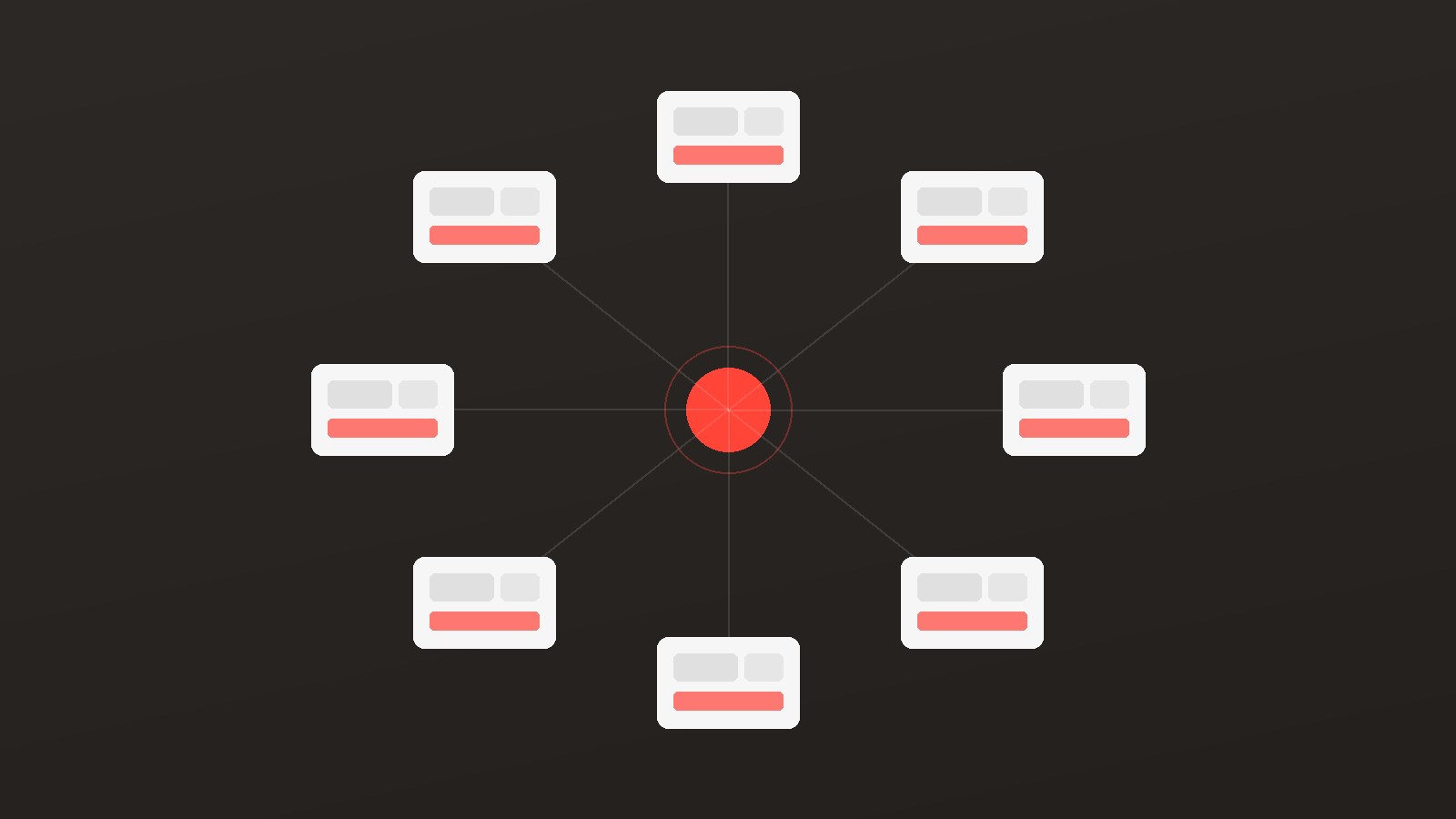
The architecture: Social Snowball or Refersion handles recruitment and tracking. CreatorCommerce handles the conversion layer (storefronts). Klaviyo handles retention (email sequences). This is the winning 2026 stack.
Why the Best Brands Use a Stack, Not a Single Tool
The winning pattern across Cozy Earth, Healf, and Buttah Skin is systematic: recruitment (Social Snowball or Refersion) → conversion optimization (CreatorCommerce) → retention (Klaviyo email). Single-platform solutions lack the conversion layer needed to maximize transaction value per affiliate traffic unit. Result: 2-3x improvements in unit economics.
Full Stack in Action: Healf's Example
Healf (a supplement brand) combined Social Snowball + CreatorCommerce and achieved:
- 40.8% higher conversion rate on creator traffic
- Automatically converted customers into affiliates at checkout
- Gave those affiliates co-branded storefronts to drive sales
The sequence: Customer buys. Offered affiliate opportunity. Accepts. Gets branded landing page. Drives followers to that page. Pages convert at 40.8% higher rate than generic links. This is 2026 affiliate strategy.
How to Choose: The Decision Tree
- Are you starting your affiliate program? Start with Shopify Collabs (free) or Simple Affiliate ($0-$189/mo). Test with 10-20 creators first.
- Do you have strong post-purchase traffic and want viral growth? Add Social Snowball ($199-$499/mo). It converts customers into affiliates automatically.
- Do you want access to a large marketplace of ready-to-go affiliates? Use Refersion ($0-Custom). It has 3.5M+ in its network.
- Are your affiliates driving traffic but conversion is low? Layer in CreatorCommerce for co-branded storefronts. This is where most brands see 2-3x CVR lifts.
- Do you need to manage 50+ creators with seeding, performance tracking, and ops? Graduate to GRIN (~$25K/yr). It's an ops platform, not just affiliate tracking.
Next Steps: Building Your Affiliate Stack
- Week 1: If you're just starting, pick one affiliate manager. Refersion if you want marketplace access. Social Snowball if you have strong purchase frequency. Simple Affiliate if you're under $5M ARR.
- Week 2-3: Launch with 20-50 creators. Measure baseline CVR and AOV.
- Month 2: Once you've validated the channel works, layer in CreatorCommerce for co-branded storefronts. This is where 2-3x CVR lifts happen.
- Month 3: Set up Klaviyo sequences for creator-sourced customer retention. Close the loop.
If you want to evaluate CreatorCommerce's impact on your brand, schedule a demo. We'll show you the actual conversion and AOV lifts your creators can drive. You can also learn more about how creator storefronts compare to affiliate links or explore the differences between competing platforms. For deeper technical integration help, see our guide to Simple Affiliate + CreatorCommerce integration. If you're interested in how attribution works across platforms, check out our affiliate funnel tracking guide. For creators considering building affiliate programs as primary revenue, learn more about the creator perspective here.
Related Articles
- Issue Shopify store credit to affiliates who customize their shops
- Why fashion brands are finally falling in love with affiliate marketing
Frequently asked questions
Why can't one Shopify affiliate app do everything?
Affiliate apps specialize: Social Snowball excels at auto-recruitment; Refersion at scalable management; Simple Affiliate at accessible entry-point; UpPromote at budget pricing. No single app handles recruitment, tracking, conversion optimization, and retention well. The most profitable brands in 2026 stack 2-3 platforms: one for recruitment/tracking (GoAffPro, Refersion, Simple Affiliate), one for conversion optimization (CreatorCommerce), and one for retention (lifecycle email). Stacking compounds performance across the funnel.
What's the best affiliate app stack for a new DTC brand?
Start with Simple Affiliate ($0-$189/mo for tracking and basic payouts). Layer in CreatorCommerce when you have 5+ active creators (conversion optimization via co-branded storefronts). Add Klaviyo for post-purchase sequences. This trio covers recruitment, tracking, conversion, and retention. Total cost: $200-$500/mo. Brands using this stack see 3-5x higher revenue per affiliate within 90 days versus simple affiliate tracking alone. Upgrade the tracking layer later as you scale.
How do Social Snowball and CreatorCommerce work together?
Social Snowball handles viral recruitment and auto-enrollment (automatically add new customers as affiliates). CreatorCommerce provides the conversion destination (co-branded storefronts for recruited affiliates). Together, they create a growth loop: Social Snowball brings in new affiliates fast; CreatorCommerce gives them a high-converting page to promote. The combo works best for brands targeting high viral velocity (beauty, fitness, skincare). Social Snowball alone converts at 1-3%; add StoreFronts and jump to 5-15%.
Should you consolidate platforms or keep them separate?
Keep them separate if each tool solves a different problem. Simple Affiliate for tracking, CreatorCommerce for conversion, Klaviyo for retention. Consolidation sounds simpler but forces compromises: one platform won't excel at recruitment and conversion equally. The trade-off: more integrations to manage, but 40-60% higher affiliate ROI. Top DTC brands accept 2-3 platform complexity because the performance gain justifies it.
Do I need all five tools?
No. Most profitable stacks use 2-3: one affiliate management platform (Social Snowball, Refersion, or Simple Affiliate) + CreatorCommerce for conversion + Klaviyo for retention. GRIN and Shopify Collabs are optional depending on scale and budget.
What's the difference between Social Snowball and Refersion?
Social Snowball is recruitment-focused (converts customers into affiliates post-checkout). Refersion is management-focused (access to 3.5M marketplace affiliates, strong tracking and payouts). Both are excellent. Use Social Snowball if you want viral growth from existing customers. Use Refersion if you want scale from a marketplace.
Can I use Simple Affiliate and Refersion together?
Technically yes, but it's redundant. Both are affiliate management platforms. Layer one affiliate manager + CreatorCommerce + Klaviyo instead. That's the winning pattern.
Why do CreatorCommerce customers see 2-3x CVR lifts?
Co-branded storefronts remove friction. Instead of a creator sending followers to a generic brand homepage, followers land on a page branded with the creator's name and curated recommendations. Higher trust = higher conversion. Higher perceived exclusivity = higher AOV.
Does Shopify Collabs really cap you at 100 invites per week?
Yes. This is intentional on Shopify's side to prevent spam. If you're growing faster than 100 creator invites/week, you need Refersion or Social Snowball.
What should I expect to spend on an affiliate stack in 2026?
Budget $300-$1,500/month for the base stack (affiliate manager + CreatorCommerce). Simple Affiliate ($0-$189) + CreatorCommerce (custom, typically $500-$2K+) + Klaviyo ($20-$300). If you add GRIN, add $2,100/month (~$25K/year).



%201.png)
%201.png)
