
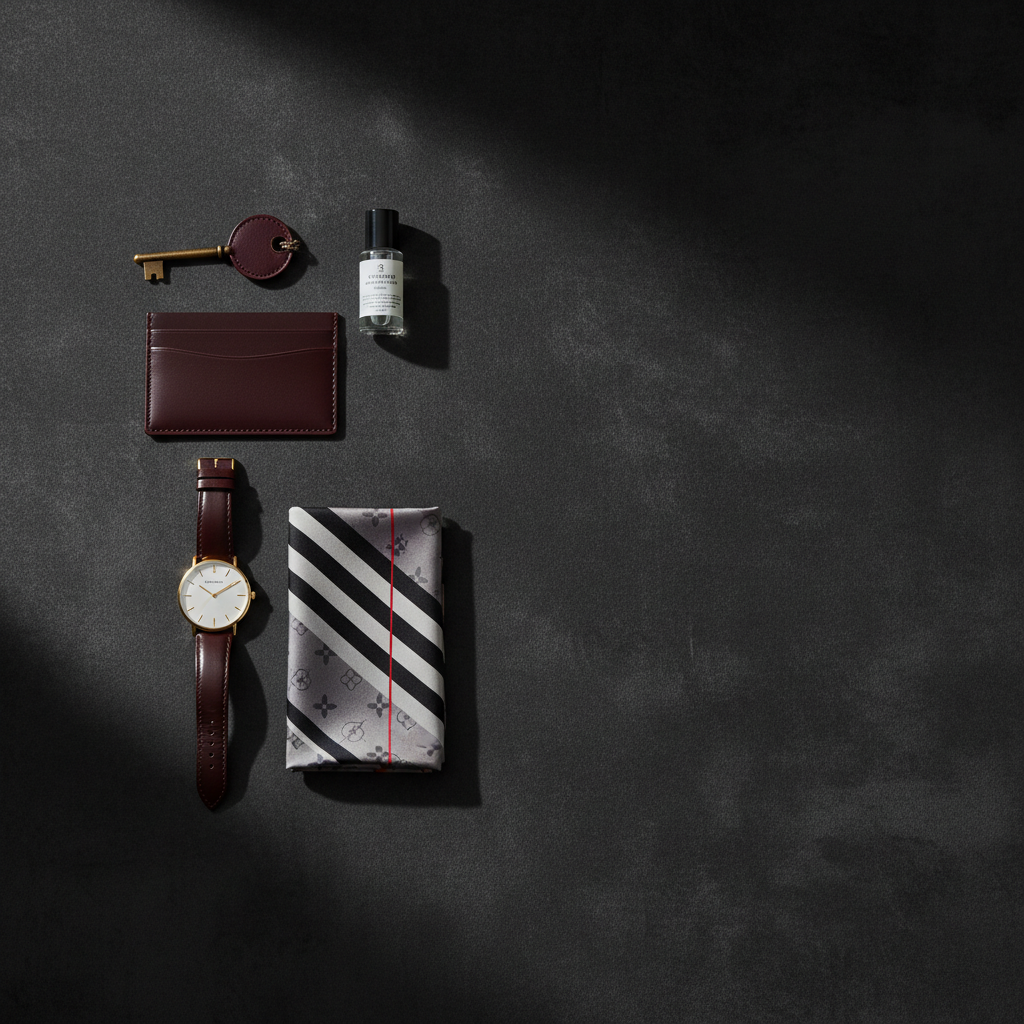
Luxury and designer is the vertical where creators are not selling products; they are conferring status. The buyer of a $4,200 handbag, a $9,800 watch, a $3,400 cashmere coat is not asking whether the product is good. They already know it is good. They are asking whether someone they trust, whose taste they respect, whose lifestyle they aspire to, would be seen with it. The creator is not a discount funnel. The creator is the cultural permission slip.
That makes luxury one of the most creator-driven categories in commerce, and simultaneously one of the most poorly served by the standard creator playbook. Generic affiliate links flatten the brand. Discount codes signal scarcity in the wrong direction. Linktree storefronts feel cheap next to the $4,200 product they're selling. The creator's cultural credit collapses the moment the buyer lands on a checkout that looks like a fast-fashion site with an upcharge. Brands lose the conversion the creator built, and lose the creator with it, because thoughtful luxury creators won't keep recommending brands whose downstream stack embarrasses them.
And yet most luxury brands still treat creator commerce as an afterthought. The brand site is a museum. The creator program lives in a separate, less-considered universe: affiliate links pasted onto landing pages built by a junior team, no white-glove service for creator-attributed buyers, no nurture sequence that respects a 90-day consideration window, no acknowledgment that the buyer who came through this specific creator deserves a different post-purchase experience than the buyer who came through paid search. The luxury experience the brand carefully engineers in their flagship store dies the moment the buyer arrives via a creator link.
This is the ninth installment in our vertical-tuning series. Each piece takes the creator-aware downstream stack we mapped in The Seven-Surface Creator-Aware Stack and tunes it for one category's specific economics, buying patterns, and creator dynamics. This one focuses on luxury, designer, premium accessories, leather goods, and fine watches.
What makes luxury and designer different
Five economic and behavioral patterns shape how creator-aware commerce should be tuned for this vertical:
The purchase is a status decision, not a utility decision. A $9,800 watch tells time the same as a $98 watch. The buyer is not paying for function. They are paying for cultural meaning, craftsmanship signaling, and self-image alignment. Creators provide the cultural meaning layer, and the storefront either reinforces it or commoditizes it.
Discounts are corrosive, not motivational. In fashion or beauty, a 15% creator code drives conversion. In luxury, the same 15% code signals desperation, devalues the brand, and erodes the creator's status credit. The lever in luxury is exclusivity, access, and gifting, not discount. Brands that try to run luxury programs on discount-code mechanics undermine both the brand and the creator.
The consideration window is long and emotionally weighted. A $4,200 handbag purchase often takes 3-8 weeks. The buyer reads, watches, saves, returns to the storefront 6-12 times, asks a friend, sleeps on it, watches the creator's video again. The brands that win engineer for the long, emotionally rich window, not for impulse conversion.
Returns are rare, but each return is high-stakes. Luxury return rates are typically 5-10%, far below fashion. But a $4,200 return mishandled (slow, friction-heavy, impersonal) destroys the customer relationship and gets recounted to the creator's audience. The brands that handle the rare return with white-glove care convert it into loyalty. The brands that treat it as a logistics ticket lose the customer permanently.
Lifetime value is concentrated in a small VIP segment. 5-10% of luxury customers drive 40-60% of revenue. These are the buyers who should receive radically differentiated treatment: early access, named relationship management, hand-written follow-up, invitations to events, gifting at appropriate moments. Most luxury brands know this in theory and fail at it in practice. The creator-aware stack makes the VIP layer operational because the buyers come pre-segmented by creator attribution.
Why does the standard creator program fail in luxury?
Because the standard creator program is built for fast conversion at low AOV, and luxury is the opposite of that. The standard program runs on discount codes, generic affiliate links, and short attribution windows. Luxury runs on cultural credit, long consideration, and lifetime relationships. When you apply the standard playbook to a luxury brand, you get worst-of-both-worlds outcomes: the discount erodes the brand, the generic landing page embarrasses the creator, the short attribution window misses the conversion that finally lands eight weeks later, and the post-purchase experience treats the $4,200 buyer like a $42 buyer.
The fix is the creator-aware downstream stack: every surface (storefront, reviews, email, attribution, returns, support, VIP) knows that this buyer came through a specific creator who conferred specific cultural credit, and the entire experience is tuned to honor that credit. The next eight sections walk through how to tune each surface for luxury economics.
What does "creator-aware" mean in luxury and designer?
Definition: Creator-aware commerce in luxury and designer means every shopper-facing system (storefront, post-purchase experience, white-glove customer support, VIP gifting flows, ambassador and event invitations, returns, repair and authentication services) is tuned for the specific creator and the cultural context that drove the visit, so the entire experience honors the creator's status credit and the buyer's premium-AOV decision.
Three patterns matter most in this category: editorial-quality storefronts that match the brand's flagship visual standard, access-and-gifting flows that replace discount-code mechanics, and white-glove service that treats every creator-attributed buyer as the start of a long-term VIP relationship.
Surface 1, Storefronts: editorial-quality, brand-flagship-matched, no discount mechanics
The storefront in luxury must do something no other vertical's storefront has to do: it must look as good as the brand's flagship site. A creator-aware luxury storefront cannot be a stripped-down affiliate page with the brand logo at the top. It must feel like an extension of the brand's most considered marketing surface: typography, photography, generous whitespace, narrative copy, no clutter.
What that looks like in practice:
Editorial-grade hero treatment. Not a product carousel. A single full-bleed hero image, the creator wearing or holding the product, shot at the brand's production quality. Copy reads like the brand's campaign work, not like an affiliate landing page: "Marina's pick for fall: the Constanza loafer in oxblood."
Curated edits, not catalogs. The storefront shows three to seven products, not thirty. Each product has narrative context: "Marina has worn this every Saturday since spring," not "Best seller in handbags." Luxury is curation. Catalog density signals fast fashion.
No visible discount, ever. No "15% off with code MARINA15." The creator's credit is the value, not a coupon. If incentive is needed for first-time buyers, it should be access-based (early-access drops, gifting tiers, complimentary engraving), not price-based. The moment a discount code appears, the entire luxury frame collapses.
Concierge contact integrated. Below each product, a soft prompt: "Questions about fit or style? Message our concierge team." Buyers in this category often want pre-purchase consultation. Brands that surface that option through the creator's storefront convert at meaningfully higher rates than brands that hide it behind "contact us" in the footer.
This pattern shows up across the customer base. Cozy Earth, premium home textiles at considered AOVs, saw 28% AOV lift after migrating creator pages from third-party affiliate platforms to dedicated, editorial-quality CC storefronts (per their results). In true luxury, where the AOV is 5-20× higher and the visual standard is even more demanding, the upside is correspondingly larger.
How do you avoid undermining the brand with a creator storefront?
The fear that drives most luxury brands to underinvest in creator commerce: "A creator storefront will make us look downmarket." This fear is justified for the standard affiliate-page approach. It is unjustified for the editorial-storefront approach.
The CC pattern is brand-controlled templates with creator-specific content, not creator-controlled templates with brand-supplied products. The brand defines the typography, the photography style, the color palette, the layout. The creator selects the products, writes the narrative captions, and provides the curatorial point of view. The result is a storefront that looks unmistakably like the brand, with the creator's voice layered on top. Buyers feel they are still in the brand's world. Creators feel they have authentic editorial expression. The brand retains visual control without flattening the creator.
For brands moving from generic affiliate landing pages to brand-controlled creator storefronts, the qualitative shift is dramatic, and the AOV impact follows. The buyer who arrives expecting a Linktree-grade page and finds a flagship-quality storefront converts at 2-4× the baseline rate.
Surface 2, Post-purchase experience: the unboxing is the marketing
In luxury, the moment the buyer opens the package matters as much as the moment they bought. Most brands engineer the flagship-store unboxing (the dust bag, the ribbon, the hand-written card, the embossed box) and then ship the creator-attributed online order in a cardboard mailer with a thermal label. The buyer feels the gap. The creator hears about it. The relationship erodes.
The fix is engineering the unboxing for parity with the flagship experience, with creator-aware additions:
Brand-standard packaging on every order, regardless of channel. No "e-commerce packaging" tier. The creator-attributed order arrives in the same dust bag, ribbon, and box as the flagship walk-in.
Creator-specific insert. A small printed card: "Marina chose this piece for her fall edit. Here's a note from her on how she styles it." The buyer feels the creator's presence in the unboxing, not just at the click. The card costs cents. The lift on customer affinity is meaningful.
Care instructions that match the price point. A printed care guide, not a sticker on the underside. For watches, fine jewelry, leather: a small accompanying booklet on care, conditioning, storage, and authentication. The buyer learns how to honor the purchase. The creator gets credit for setting up the relationship.
Surface 3, Klaviyo: long-form nurture for the long-form decision
Luxury buyers do not impulse-purchase. The buyer who clicks the creator's link today might convert in three weeks, or six, or never, and discount-driven re-engagement is exactly the wrong lever to pull. The flow that works in luxury is patient, editorial, and creator-anchored.
The flow:
Welcome sequence as editorial content. Email 1, two days after first storefront visit: "You came in through Marina's fall edit: here's the full edit with her notes on each piece." Email 2, day 7: "The story behind the Constanza, our atelier in Florence." Email 3, day 14: "Three women who've made it part of their lives, including Marina." The emails feel like reading a fashion magazine, not receiving promotional notifications.
Saved-item nurture, not abandoned cart. Luxury buyers save more than they cart. The flow on a saved item should be a story: "You saved the Constanza. Here's how Marina styled it. Here's how it's constructed. Here's how to know it's the right piece." The discount lever has no place. The conversion lever is conviction, not price.
Concierge invitation at week 3. If the buyer has visited the storefront 3+ times without converting, an invitation: "Would you like a 15-minute call with our styling concierge? They can help you decide if the Constanza is the right piece for you." A meaningful percentage of high-AOV buyers convert through this touch, and even those who don't feel cared for in a way that builds long-term relationship.
Post-purchase nurture as relationship building. Day 7 after delivery: "How is the Constanza wearing in?" Day 30: "Marina's styling notes for transitional weather." Day 90: "Care reminder: the rainy season is coming. Here's how to protect the leather." Day 180: "Marina's spring edit is live. See what she chose." The relationship continues. The creator stays embedded. The next purchase is a natural progression, not a re-acquisition.
For the long-form Klaviyo flow architecture, see How to Build Creator-Native Email Flows in Klaviyo.
Surface 4, Attribution: persist creator credit across the long window
Luxury attribution is hard for the same reasons as automotive and electronics (the consideration window is long, multi-device, and multi-touch) and harder for one additional reason: luxury buyers often complete the purchase in person, at the flagship boutique. The creator drives the awareness and the conviction; the buyer walks into the store on a Saturday and buys; the attribution model gives the credit to the boutique. The creator program reports near-zero ROI. The creator gets cut. The brand loses the channel, and the buyers who would have bought through the creator next time go elsewhere.
The fix is creator-aware attribution stored on the customer record, with a path for in-store attribution to bridge to it. Three components:
Customer-record-level creator attribution. When the buyer first visits via a creator link, write the creator ID to the customer's metafield. The value persists across sessions and devices once the buyer authenticates.
Boutique check-in bridges to the creator metafield. When a buyer walks into the flagship and is identified at the door (clienteling app, account lookup), the boutique system can see whether the customer is creator-attributed. The sale, even if completed in-store, can be partly credited to the creator who drove the consideration. This requires brand-side will, not technology. Most luxury brands already have the data and refuse to use it because the org chart treats e-commerce and retail as competing P&Ls.
Multi-touch attribution on the customer record, not the order. A buyer who interacts with three creators across a long consideration window should see all three reflected in the customer record. The brand gets a fairer view of the channel mix and can compensate creators with reference to the actual relationship, not the last-click cookie.
For the broader attribution thesis, see The Death of Last-Click Attribution in Creator Marketing.
Surface 5, VIP and access: the lever that replaces discount
If discount is wrong in luxury, what replaces it as the conversion and loyalty lever? Access. Specifically: early-access to drops, invitation to private previews, complimentary services (engraving, monogramming, alterations, authentication), and creator-led events.
The creator-aware brand makes these access levers operational by tying them to creator attribution:
Early-access drops via creator-attributed customer segments. When a new collection drops, the first 48 hours go to creator-attributed customers, branded with the creator's name in the email and on the storefront. Buyers feel they are part of the creator's inner circle. The creator's status credit grows. The drop sells through faster.
Complimentary services scaled by creator attribution. A $4,200 buyer who came through a top-tier creator gets complimentary engraving and concierge styling. A $4,200 buyer who came through paid search gets standard service. The difference reflects a real distinction: the creator-attributed buyer represents a longer relationship and a more valuable lifetime curve.
Creator-hosted events and trunk shows. The most engaged creators in the program are invited to host private events at the brand's flagship boutiques: small dinners, trunk shows, capsule launches. Creator-attributed customers in the local market get the invitation. The event itself becomes content; the content drives the next wave of attribution. The flywheel compounds.
None of this requires special technology: it requires brand will and creator-attributed customer data flowing from the storefront into the clienteling system. Most luxury brands have both and don't use them.
Surface 6, Returns: white-glove or lose the customer permanently
Luxury returns are rare and high-stakes. The buyer who returns a $4,200 piece will tell ten people about the experience, and one of those people might be the creator who drove the original sale. The brands that engineer the return as white-glove convert it into loyalty. The brands that treat it as a logistics ticket lose the customer for life and damage the creator relationship.
What white-glove returns look like:
Pre-return concierge call, not a portal. When a creator-attributed buyer initiates a return on a high-AOV item, the system flags it for human follow-up: "Before we process this return, would you like to talk to our concierge team about what didn't work?" A meaningful percentage of returns become exchanges, swaps, or kept-product transactions when handled this way. The buyer feels valued. The creator's recommendation is honored.
Pickup, not drop-off. The brand arranges pickup of the return at the buyer's home or office at a time of their choosing. The buyer never has to repackage the item, drive to a store, or stand in line at a shipping center. The cost is small relative to the AOV; the customer-experience differential is enormous.
Refund processed immediately on item receipt, not after inspection. Luxury returns are almost never fraud. Holding the refund pending inspection insults the buyer. Process the refund the moment the item is back in the brand's hands; handle inspection separately on the back end.
For more on the returns pattern, see How to Make Loop, Parcel Panel, and Aftership Creator-Aware.
Surface 7, Customer support: named relationships, not ticket queues
Luxury customer support cannot be a ticket queue. The buyer of a $9,800 watch expects to be known by name, expects continuity of relationship, and expects the person they speak with to know their history. Most brands fail this test entirely: every interaction is a fresh ticket, every agent is anonymous, every customer is treated as a generic inquiry.
The creator-aware approach:
Named concierge per VIP segment. Customers who pass an LTV or order-value threshold are assigned a named concierge contact. The concierge sees the customer's purchase history, the creators they've come through, the items they've saved, and the events they've attended. Every interaction is informed.
Creator context visible to every agent. When a ticket comes from a creator-attributed buyer, the agent sees the creator and the items the creator originally featured. The agent can speak the customer's language: "You came in through Marina's fall edit. Let me look at the Constanza you purchased." The buyer feels seen.
Hand-written follow-up at relationship milestones. First purchase: hand-written note from the brand, signed by the boutique manager nearest the buyer's zip code. Tenth purchase: hand-written note from the brand's creative director (yes, really, luxury houses have done this for centuries). The creator gets a copy of the note's sentiment in their next monthly creator brief, so they know their introduction is being honored.
For more on creator-aware support, see How to Make Gorgias Creator-Aware for Post-Purchase Support.
Surface 8, Authentication, repair, and resale: the long-tail relationship
Luxury has three quiet long-tail surfaces that no other vertical has at the same intensity: authentication, repair, and resale. Far from afterthoughts, these are the surfaces that distinguish a brand whose customers are owners from a brand whose customers are merely buyers.
| Long-Tail Surface | When It Matters | Creator-Aware Opportunity |
|---|---|---|
| Authentication | Resale, gifting, inheritance | Brand-issued certificates tied to customer record |
| Repair and refurbishment | 3-10 years post-purchase | Concierge-handled, creator-attributed service tier |
| Resale program | 5+ years post-purchase | Brand-operated, with creator-curated edits of vintage pieces |
| Trade-up program | 5+ years post-purchase | Customer trades old piece for credit toward new piece |
| Service appointments | Annual | Booked through concierge, creator-aware messaging |
The creator advantage in long-tail luxury surfaces: the creator who introduced the customer to the brand can be reactivated when the customer enters the long-tail relationship. "Marina's vintage edit", a curated selection of pre-owned pieces from the brand's resale program, is itself a content surface. Creators get fresh content; buyers get curated access; the brand monetizes the long-tail value of their own products. None of this happens if the creator program ends at first purchase.
Cross-vertical comparison: where does luxury sit?
To put luxury and designer in context, here's how each surface ranks in priority across the verticals we've covered in this series:
| Vertical | Top 3 Surfaces | Distinctive Pattern |
|---|---|---|
| Beauty | Storefronts, Reviews, Klaviyo | Routine-anchored bundles |
| Fashion | Storefronts, Returns, SMS | Fit-anchored, drop cycles |
| Food & Beverage | Subscriptions, Klaviyo, Reviews | Habit replenishment |
| Home Goods | Storefronts, Reviews, Klaviyo | Room-anchored, long consideration |
| Wellness | Subscriptions, Klaviyo, Reviews | Outcome-anchored, ingredient deck |
| Pet | Subscriptions, Storefronts, Klaviyo | Pet-profile-anchored |
| Baby & Kids | Storefronts, Klaviyo, Reviews | Stage-anchored, fast-decay |
| Outdoor | Storefronts, Reviews, SMS | Trip-anchored, gear systems |
| Fitness | Storefronts, Subscriptions, SMS | Goal-anchored, program nurture |
| Cannabis & CBD | Storefronts, Klaviyo, Reviews | Restricted SMS, condition-anchored |
| Jewelry | Storefronts, Reviews, Returns | Sizing, occasion-driven, gift |
| Hobby & Craft | Storefronts, Klaviyo, Subscriptions | Project-anchored, kit replenishment |
| Gaming | Storefronts, SMS, Ads | Drop-anchored, loadout bundles |
| Education & EdTech | Storefronts, Klaviyo, Reviews | Outcome-anchored, learning paths |
| Automotive & Powersports | Storefronts, Reviews, Klaviyo | Vehicle-anchored, install-timed |
| Consumer Electronics | Storefronts, Reviews, Ads | Comparison-anchored, ecosystem-aware |
| Luxury & Designer | Storefronts, Klaviyo, Customer Support | Editorial, white-glove, no discount |
Luxury is the first vertical in the series where Customer Support enters the top three, because the white-glove, named-relationship layer is the lever that distinguishes luxury operations from premium retail. It is also the only vertical where SMS, Ads, and Subscriptions all sit outside the top three: those tactics are either inappropriate (SMS feels promotional) or counterproductive (Ads erode exclusivity) or unnatural (subscriptions don't fit the deliberate purchase rhythm) at this AOV tier.
What about emerging luxury, contemporary designer, and accessible-luxury brands?
The luxury frame applies most cleanly to true heritage houses (LVMH, Richemont, Kering portfolios). Brands at the contemporary or accessible-luxury tier, where AOV is $300-$1,500 and the buyer is younger, more digital-native, and more discount-tolerant than the traditional luxury buyer, operate with a hybrid playbook.
Editorial-quality storefronts still apply. Even at $400 AOV, the storefront should look considered and brand-flagship-matched. Buyers in this tier are aspirational; they want the storefront to feel like the brand they aspire to, not the brand they can already easily afford.
Modest discount mechanics may apply, but reframed as access. A 10% first-purchase code can work in accessible luxury, but it should be framed as "welcome to the membership" not "discount." The framing matters more than the math.
White-glove service should be aspirational, not standard. At $400 AOV, full white-glove service per order is uneconomic. But the brand can still offer named concierge service to repeat buyers, gift-with-purchase at engagement milestones, and editorial post-purchase nurture that respects the buyer's aspiration.
The creator selection matters more, not less. In accessible luxury, the creator's aesthetic and audience must match the brand's positioning precisely. A creator whose other partnerships skew downmarket damages the brand more than they help.
FAQ
What's the biggest mistake luxury brands make with creator programs?
Treating creator commerce as a discount-coded affiliate channel rather than a cultural-credit channel. The standard creator playbook (affiliate links, discount codes, generic landing pages, short attribution windows) was built for fast-fashion economics and actively damages luxury brands. The fix is rebuilding every surface (storefront, post-purchase, support, attribution) for cultural-credit economics.
How do you keep a creator storefront from looking downmarket?
Brand-controlled templates with creator-supplied content, not creator-controlled templates with brand-supplied products. The brand defines typography, photography style, color palette, and layout. The creator provides the curatorial point of view and narrative captions. The result is a storefront that unmistakably looks like the brand, with the creator's voice layered on top, rather than a generic affiliate page with the brand logo at the top.
How do you measure ROI on a creator who drives walk-in boutique sales?
Customer-record-level attribution, with boutique check-in bridging to the creator metafield. When a buyer walks into a flagship and is identified through clienteling, the system reads their creator attribution and credits the in-store sale partly to the creator who drove the consideration. This requires brand-side will (e-commerce and retail must share the credit), not new technology. Most luxury brands already have the data infrastructure.
Should luxury brands use SMS at all?
Sparingly, and only for genuinely high-value moments: early-access drop notifications for VIP-tier customers, repair-pickup confirmations, event invitations. Promotional SMS in luxury reads as desperation and damages the brand. The presence of SMS in a luxury brand's marketing mix is a signal that the brand has begun to commodify itself.
How do you handle creators whose other partnerships dilute their luxury credibility?
This is the hardest creator-management question in luxury. The brand cannot police a creator's other partnerships, but it can be selective about who it onboards. The right pattern is qualitative review of each creator's overall partnership portfolio at intake, and ongoing review at renewal. Creators whose work skews increasingly downmarket should be respectfully transitioned out of the program before their dilution affects the brand.
Related Articles
- The Seven-Surface Creator-Aware Stack
- The Vertical Tuning Field Guide
- The Jewelry and Accessories Playbook for Creator-Aware Commerce
- The Fashion Playbook for Creator-Aware Commerce
- The Home Goods Playbook for Creator-Aware Commerce
- How to Build Creator-Native Email Flows in Klaviyo
- The Death of Last-Click Attribution in Creator Marketing
- How to Make Gorgias Creator-Aware for Post-Purchase Support
- How to Make Loop, Parcel Panel, and Aftership Creator-Aware


%201.png)
%201.png)
