

A creator storefront is a brand's product page personalized to a specific creator's audience: typically the creator's photo, hand-picked products, an auto-applied discount, and creator-driven copy, all hosted on the brand's own e-commerce site. Creator storefronts (also called influencer storefronts, branded storefronts, or co-branded storefronts) consistently outperform standard affiliate links by 30-214% on conversion rate across CreatorCommerce customers, because the trust signal that drove the click is preserved through checkout.
This guide explains exactly what a creator storefront is, how it differs from Amazon Influencer Storefronts and LTK shops, the seven benefits DTC brands see when they switch from affiliate links to creator storefronts, and how to launch one on Shopify.
What is a creator storefront?
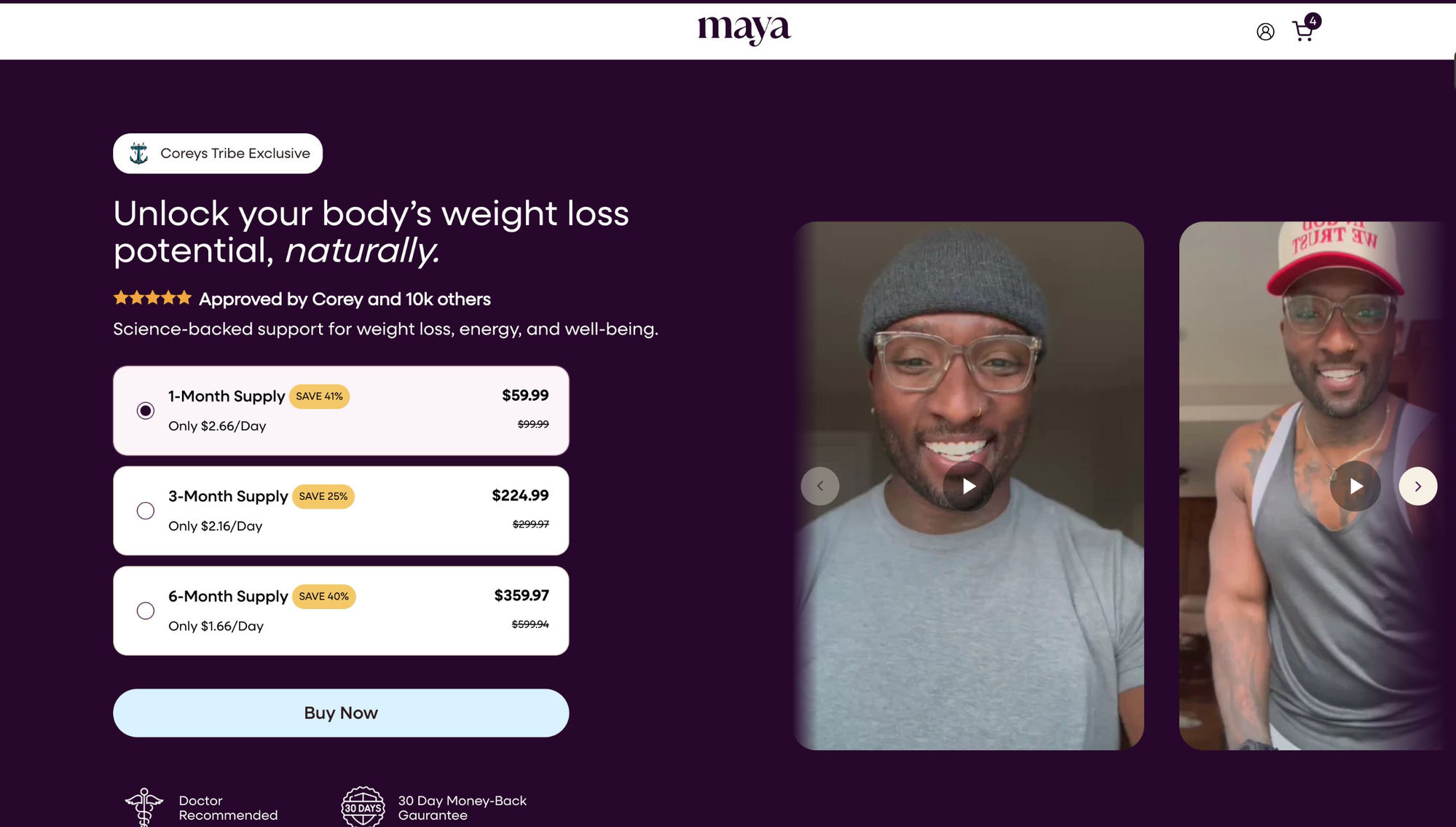
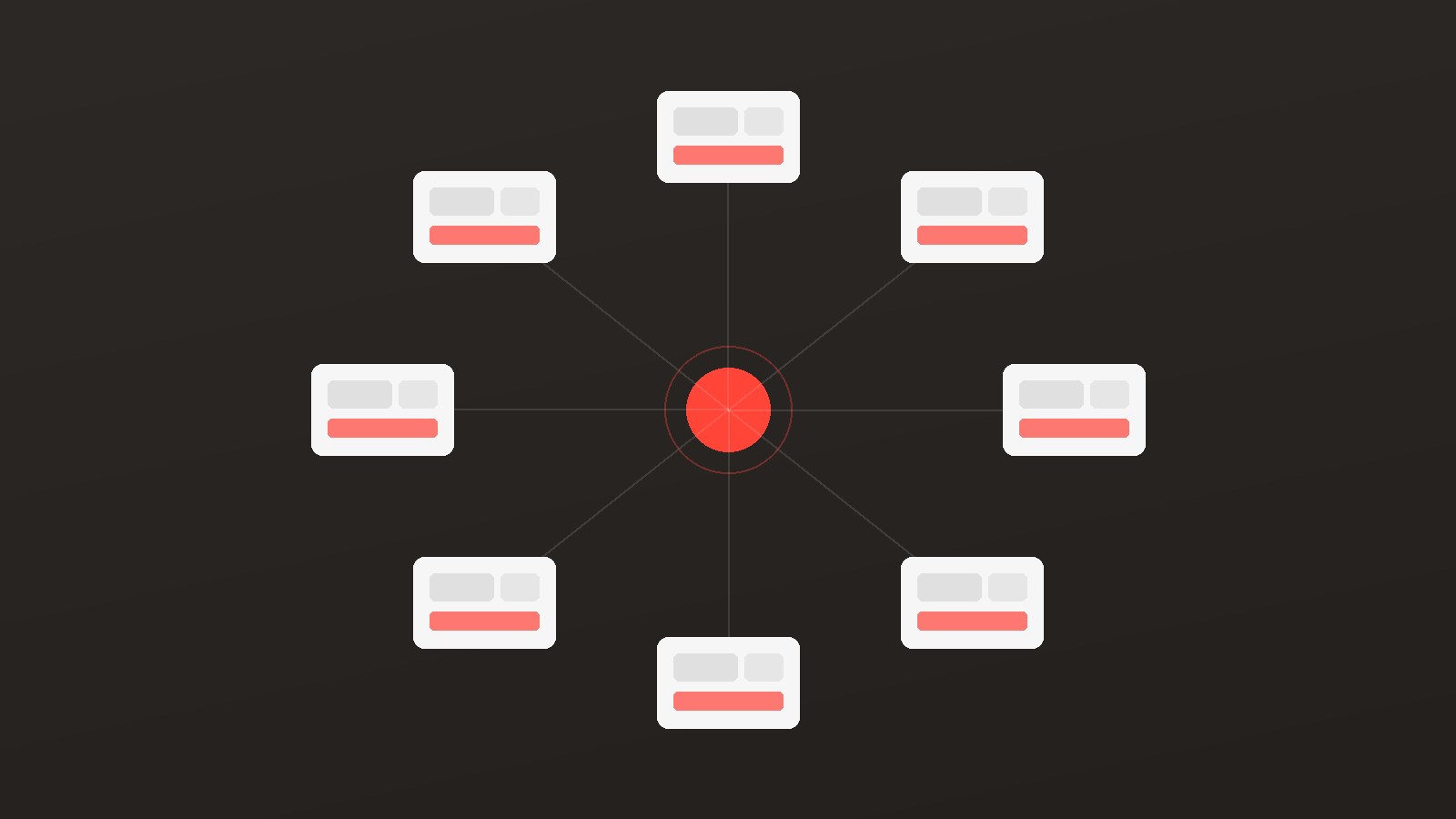
A creator storefront is a personalized commerce surface (a landing page, product page, or full mini-shop) that lives on a brand's own domain and is co-branded around a specific creator. The shopper sees the brand's products, but the experience is curated, narrated, and visually anchored to the creator who sent them there.
A typical creator storefront includes:
- The creator's name and photo
- A hand-picked selection of products the creator recommends
- An auto-applied discount unique to that creator (no codes for shoppers to remember)
- Creator-driven copy ("My favorites," "What I take daily," "My closet")
- The brand's checkout, on the brand's domain
- Per-creator attribution that doesn't depend on UTM parameters or cookies
The defining feature is that the on-site experience is co-branded: when a shopper clicks a creator's link, they land on a page that visually continues the trust signal that drove the click. The brand's site, but personalized around someone the shopper already trusts.
CreatorCommerce is the Shopify-native infrastructure that powers creator storefronts for brands like Cozy Earth, Healf, Crocs, Buttah Skin, and Electro, each running co-branded storefronts at scale on their own domains. (See getting started with co-branded landing pages for the technical setup.)
Creator storefronts vs Amazon Influencer Program: what's the difference?
The phrase "creator storefront" is often confused with the Amazon Influencer Program, which lets approved creators build an Amazon-hosted shop of curated products. The two are structurally different.
| Dimension | Amazon Influencer Storefront | Brand-owned creator storefront |
|---|---|---|
| Hosted on | amazon.com | The brand's own domain |
| Ownership of customer data | Amazon | The brand |
| Brand experience | Generic Amazon UI | Brand-specific design |
| Commission structure | Fixed Amazon commission rates | Brand-set per-creator commission |
| Email capture | None (Amazon owns the email) | Goes into the brand's CRM |
| Cross-sell / lifecycle | Limited to Amazon's tools | Full Klaviyo, Postscript, loyalty integration |
| Best for | Creators selling third-party products | DTC brands running their own creator program |
Both are useful in different contexts. Amazon Influencer Storefronts work for creators who promote a wide range of products from many brands. Brand-owned creator storefronts work for DTC brands that want creator partnerships to build their own customer base, retention, and brand equity rather than feeding Amazon's.
Creator storefronts vs LTK shops: how they compare
LTK (formerly LIKEtoKNOW.it) is a creator-facing platform where creators build product collections and shoppers browse via the LTK app. Like Amazon Influencer Storefronts, LTK is a third-party platform that owns the customer relationship.
The strategic difference comes down to who owns the customer:
- *LTK and Amazon storefronts* = creator-led, third-party-owned. The platform owns the customer data, the email, and the post-purchase relationship.
- *Brand-owned creator storefronts* = brand-led, brand-owned. The brand owns everything: customer data, email, lifecycle, retention.
For a DTC brand serious about long-term creator-driven growth, brand-owned creator storefronts on the brand's own domain are the higher-leverage play. The shopper journey, attribution, and retention all stay inside the brand's stack.
If you're already on Shopify Collabs, the Shopify Collabs + CreatorCommerce integration lets you turn each Shopify Collabs-recruited creator into a co-branded storefront automatically.
How does a creator storefront work?
A modern brand-owned creator storefront has four operational components:
- *A unique URL per creator*: for example, `brand.com/shop/jane-creator`. This is the creator's hub.
- *A discount layer*: the creator's commission percentage, plus an optional shopper discount, applied automatically when the storefront is visited.
- *An attribution layer*: a unique identifier (creator-specific, not UTM-dependent) gets stored at click time and persists through checkout. This survives device changes and browser-state tracking failures that break standard UTM-based attribution.
- *A content layer*: the creator's photo, name, hand-picked products, and creator-driven copy, typically managed through a creator portal or auto-pulled from the affiliate platform.
When a creator shares their storefront link on Instagram, TikTok, YouTube, or in their newsletter, every shopper who clicks lands on the co-branded experience. The brand sees creator-specific revenue without depending on cookies that get blocked or UTMs that get stripped.
Why creator storefronts outperform affiliate links
The headline result across CreatorCommerce customers: creator storefronts drive 30-214% higher conversion rates than standard affiliate links, plus 67-78% higher average order value. The mechanism is straightforward: the trust signal that drove the click is preserved through checkout.
When a shopper clicks an affiliate link to a generic landing page or homepage, the experience changes mid-funnel. The creator's voice disappears. The shopper has to rebuild context: what was the creator recommending? Why did I click? Is this the right product? Many shoppers drop off in this transition.
Creator storefronts collapse that transition. The creator's photo, voice, curation, and personal recommendation are still present at the buying moment. The shopper buys the products the creator just told them about, with the creator's discount, on a page that visually feels like a continuation of the creator's content.
Seven benefits of creator storefronts for DTC brands
The benefits compound. Across CreatorCommerce customers, creator storefronts solve multiple problems at once:
- *Higher conversion rate. Cozy Earth saw a 214% average CVR increase versus standard affiliate links. Healf saw 40.8% vs homepage traffic. Buttah Skin saw 30% with co-branded landing pages. (Source: Cozy Earth case study)*
- *Higher average order value. Cozy Earth saw 67.37% higher AOV. Buttah Skin saw 78% higher AOV*. Both came alongside their CVR lifts, a rare both-axes win in CRO.
- *Lower customer acquisition cost.* Creator storefronts replace paid impressions with borrowed trust. Cozy Earth's 600+ creator partnerships absorbed acquisition demand that would otherwise require significant paid media spend.
- *Repeatable program infrastructure. Healf scaled to 1,700+ shoppable creator storefronts* on a single infrastructure layer. Every new creator uses the same template. The marginal cost of adding the 1,701st creator is near zero.
- *A UGC content flywheel. Healf logged 1,200+ pieces* of creator-submitted content (reviews, photos, videos) as a byproduct of the storefront program. That content earns its own search traffic and fills out the brand's content library.
- *Clean per-creator attribution.* Each creator's storefront is its own URL with its own attribution. No UTM decay, no cookie-blocking issues. Brands can see which creators drive sales (not just clicks) and tune offers per creator in real time.
- *A primary revenue channel, not a side bet. Electro grew their creator storefront program into 81% of total e-commerce revenue. The unit economics work because the program scales as repeatable infrastructure. (Source: Electro case study)*
A strong recent example: how Bird&Be built a science-backed reputation with co-branded landing pages for their influencers and practitioners, turning invisible expert relationships into a brand moat that drives 10% monthly growth in practitioners applying to partner organically.
Real creator storefront examples from DTC brands
A few real-world examples of creator storefronts at scale:
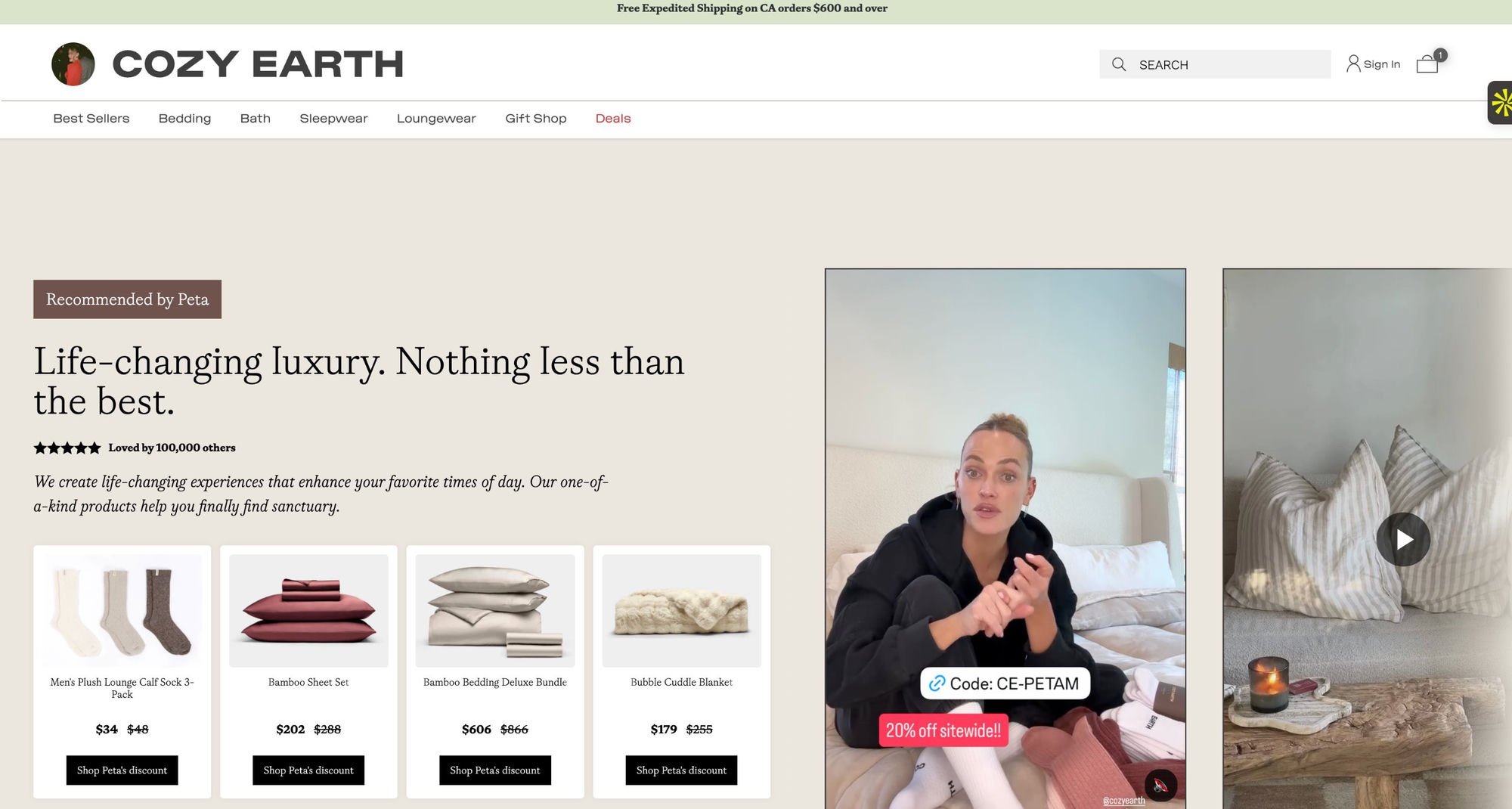
*Cozy Earth*: 600+ co-branded creator storefronts on cozyearth.com, each with the creator's photo, hand-picked products, and an auto-applied discount. Replaced a leaky promo-code-based influencer program. Result: 214% CVR lift, 67.37% AOV lift, 63.41% MoM increase in link sharing in the first four months.
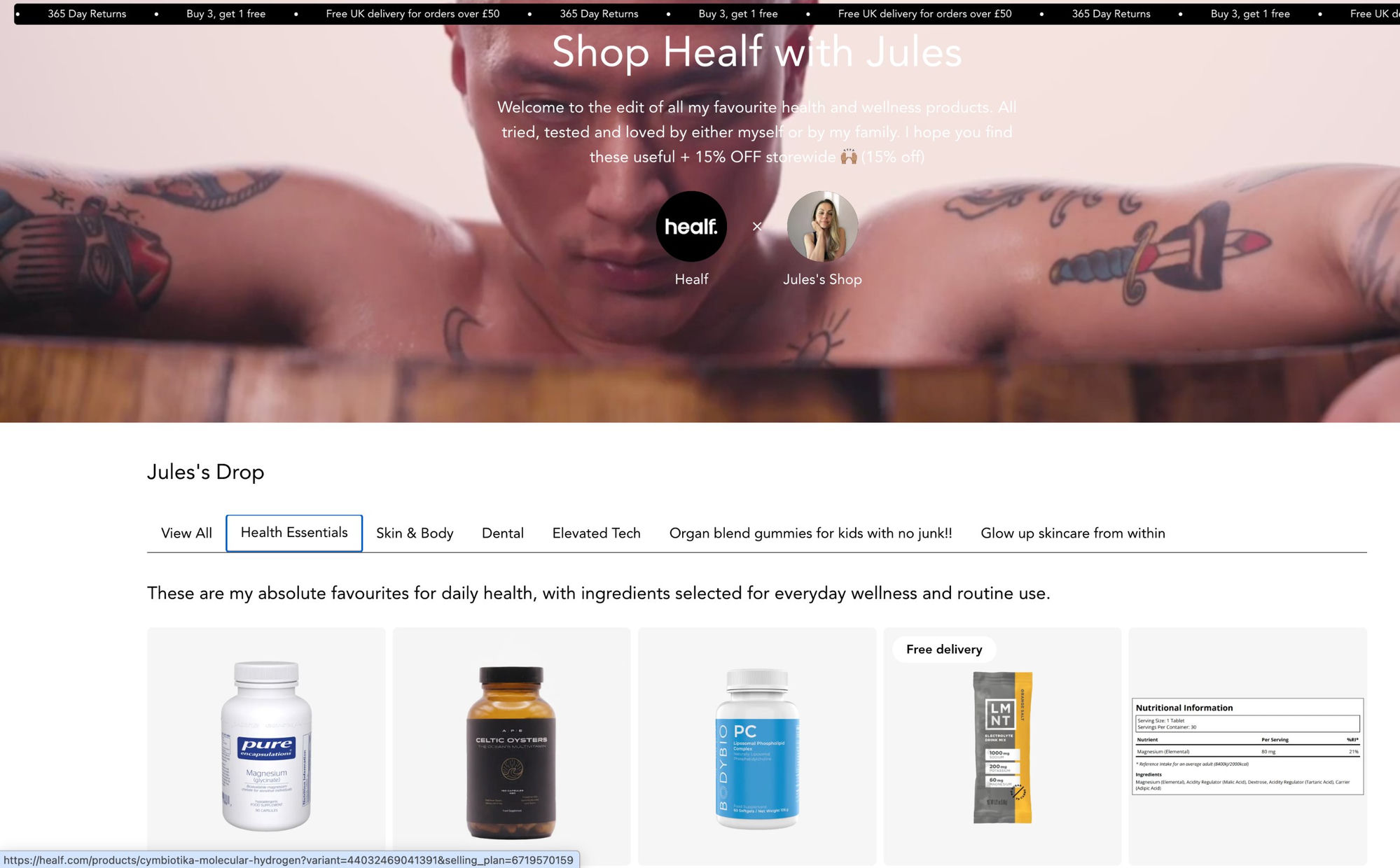
*Healf*: 1,700+ shoppable creator storefronts on healf.com, each combining a wellness practitioner's curation with Healf's catalog. "My Sleep Stack," "What I Take Daily," and similar storefronts solve large-catalog decision fatigue. Result: 40.8% CVR lift vs homepage traffic.
*Crocs: A limited-edition Kai Cenat creator storefront drove 350,000 sessions in a single drop. The "Crocs Your Way" program lets micro-influencers run their own personalized Crocs storefronts. (Source: Crocs case study)*
*Buttah Skin*: Co-branded creator landing pages drove the highest documented combined CRO+AOV lift in the CreatorCommerce customer set: 30% CVR + 78% AOV.
*Electro*: Built creator storefronts into 81% of total e-commerce revenue, treating creator-led commerce as the primary distribution channel rather than a supplemental one.
For an example of what the underlying infrastructure looks like end-to-end: how Zenbodi built three AI Shopify themes with CreatorCommerce and replaced their holding-page setup with creator-storefront infrastructure that saves $4,000/month in dev costs.
What makes a high-converting creator storefront?
Across the brands above, the high-converting creator storefronts share five elements:
| Element | What it does |
|---|---|
| Creator photo above the fold | Confirms the shopper landed on the right page; preserves the trust signal from the click. |
| Curated product selection (4-12 items) | Reduces decision fatigue. Shoppers convert faster on a curated set than on a full catalog. |
| Auto-applied discount | Removes the friction of code-pasting. Also eliminates code-leak problems. |
| Creator-driven copy | "My favorites," "What I take daily." Preserves the creator's voice through the funnel. |
| Brand's checkout, brand's domain | Owns the customer data, email, and lifecycle relationship. |
The lowest-converting creator storefronts share the opposite traits: generic header images, full catalog dumps, manual discount codes, no creator voice in copy, and third-party checkout flows that break the trust continuity.
Who should use creator storefronts?
Creator storefronts work for DTC brands across most verticals, but the conversion lift varies by category. The pattern from CreatorCommerce customer data:
- *Fashion and apparel* (Cozy Earth, Crocs): high lift on both CVR and AOV. Creator curation reduces size/style decision fatigue.
- *Health and wellness* (Healf): high lift on CVR especially when the catalog is large. Creator curation solves discovery.
- *Beauty* (Buttah Skin): high combined CRO+AOV lift. Trust transfers especially well in beauty.
- *Food and beverage* (Electro): can become a primary revenue channel. Creator authenticity matters in F&B.
Creator storefronts work less well for: pure utility products (where there's no curation value), single-SKU brands (no decision fatigue to reduce), and brands with no existing creator network to seed the program.
How to set up a creator storefront on Shopify
CreatorCommerce is the Shopify-native infrastructure for creator storefronts. The setup is built around Shopify Flow (no API keys, no custom development) and integrates with major affiliate management platforms: Refersion, Social Snowball, GRIN, Aspire, GoAffPro, Simple Affiliate, UpPromote, Superfiliate, and others.
The high-level flow:
- Install the CreatorCommerce app from the Shopify App Store
- Connect your existing affiliate management platform (or use CC's built-in creator portal)
- Configure your storefront template: visual style, header layout, product display
- Map your affiliate platform's groups/tiers to CC's storefront tiers (1:1)
- Each new creator added to your affiliate platform automatically gets a co-branded storefront
(For detailed setup steps, see the getting started with co-branded landing pages help article.)
The technical setup typically takes minutes for the first storefront. Most of the time is spent on customizing the template to match the brand's visual identity. Subsequent creators inherit the template automatically.
Measuring creator storefront performance
Per-creator attribution is the deepest infrastructure benefit of creator storefronts vs affiliate links. Each creator's storefront has a unique URL, which means every conversion through it is attributable to that creator without depending on UTM parameters or last-click cookies.
The four metrics that matter for measuring creator storefront performance:
- *CVR vs baseline*: is the co-branded experience converting better than a standard landing page? CC customers see 30-214% lifts.
- *AOV vs baseline*: are shoppers buying more per order? Cozy Earth saw 67% lift; Buttah Skin saw 78%.
- *Cost per acquisition*: is borrowed trust cheaper than paid impressions? Should be meaningfully lower than paid CAC.
- *Repeat purchase rate*: do shoppers acquired through the creator storefront come back? This is the durability test.
Creator storefront platforms in 2026
"Creator storefront" describes a category, not a single product, and a handful of platforms now build them in meaningfully different ways. The right choice depends less on a feature checklist and more on where your business lives: the ecommerce platform you run on, whether you want the storefront on your own domain, and how your existing creator and affiliate stack is set up. The table below compares three platforms that brands evaluate when they want co-branded creator storefronts: CreatorCommerce, LoudCrowd, and Anchor by Motom.
| Dimension | CreatorCommerce | LoudCrowd | Anchor by Motom |
|---|---|---|---|
| Best-fit brand | DTC brands running on Shopify | DTC through enterprise, across multiple ecommerce platforms | Enterprise retailers and large catalogs |
| Where storefronts live | Native on your own Shopify domain and theme | Rendered on LoudCrowd's own infrastructure | Within the retailer's enterprise commerce stack |
| Affiliate/commission stack | Bring your own. Works alongside Social Snowball, Refersion, GRIN, Superfiliate and others | Built-in ambassador and affiliate management | Integrates with affiliate networks (Rakuten, CJ, Impact, Awin, Partnerize) |
| Also strong at | Order and customer tagging, Klaviyo segmentation, per-creator LTV | Social listening, UGC rights, earned media value, community programs | Creator commerce across large retail catalogs and networks |
| Pricing model | Published monthly pricing, self-serve start | Free plan plus published paid monthly tiers | Demo-only, enterprise contracts |
| Getting started | Self-serve Shopify app; most brands live in about a week | App install plus guided onboarding | Sales-led, multi-month enterprise onboarding |
All three are credible ways to give creators a real shopping destination; any performance figures these platforms publish are vendor-reported and worth verifying against your own data. The honest summary: if you run on Shopify and want storefronts on your own domain that plug into the affiliate stack you already use, CreatorCommerce is purpose-built for that. For a closer look at the trade-offs, see the best creator storefront platforms, the CreatorCommerce vs LoudCrowd comparison, and our LoudCrowd alternative breakdown.
One more entrant to watch: at iPX 2026, impact.com launched its own Storefronts, creator-curated shopping destinations that follow the off-domain model, hosted on a separate creator-commerce domain rather than the brand's own store. It's a signal of how fast the category is validating. For how it works and how an off-domain storefront compares to an on-domain, Shopify-native one, see what impact.com Storefronts are and impact.com Storefronts vs CreatorCommerce.
Frequently asked questions
What is a creator storefront?
A creator storefront is a brand's product page personalized to a specific creator: typically including the creator's photo, hand-picked products, an auto-applied discount, and creator-driven copy, all hosted on the brand's own e-commerce site. Creator storefronts (also called influencer storefronts, branded storefronts, or co-branded storefronts) consistently outperform standard affiliate links by 30-214% on conversion rate across CreatorCommerce customers.
What's the difference between a creator storefront and an Amazon Influencer Storefront?
A creator storefront is hosted on the brand's own domain; an Amazon Influencer Storefront is hosted on amazon.com. The brand-owned creator storefront keeps customer data, email capture, and lifecycle relationships inside the brand's stack. The Amazon Influencer Storefront feeds Amazon's customer base. Both are useful in different contexts, but for DTC brands serious about owning their creator-driven growth channel, brand-owned creator storefronts are the higher-leverage play.
How is a creator storefront different from an affiliate landing page?
A standard affiliate landing page is generic: every creator's traffic lands on the same page, and the creator's voice disappears the moment the shopper clicks the link. A creator storefront is co-branded around the specific creator: their photo, their curation, and their voice are present from click through checkout. This preserves the trust signal that drove the click, which is why creator storefronts convert 30-214% better than affiliate landing pages across CreatorCommerce customers.
Do creator storefronts increase sales?
Yes, significantly. Across CreatorCommerce customers, creator storefronts drive 30-214% higher conversion rates and 67-78% higher average order values than standard affiliate links. Cozy Earth saw a 214% CVR lift across 600+ creator partnerships. Healf saw a 40.8% CVR lift across 1,700+ shoppable storefronts. Buttah Skin saw the highest combined CRO+AOV lift at 30% / 78%. The mechanism is straightforward: the creator's trust signal is preserved through checkout instead of disappearing at the affiliate-link click.
What's a creator storefront ROI for DTC brands?
The ROI compounds across acquisition, retention, and content. CreatorCommerce customers see lower CAC (borrowed trust replaces paid impressions), higher AOV (curated bundles increase basket size), better attribution (per-creator URLs survive UTM decay), and a UGC content flywheel (Healf logged 1,200+ pieces of creator content as a byproduct). Electro built creator storefronts into 81% of total e-commerce revenue. The unit economics improve, not degrade, with scale.
How do you set up a creator storefront on Shopify?
CreatorCommerce is the Shopify-native infrastructure for creator storefronts. Setup uses Shopify Flow (no API keys, no custom development) and integrates with major affiliate platforms like Refersion, Social Snowball, GRIN, Aspire, GoAffPro, Simple Affiliate, UpPromote, and Superfiliate. The first creator storefront is typically live within minutes once the template is configured; subsequent creators inherit the template automatically. See the getting started with co-branded landing pages help article for step-by-step setup.
Are creator storefronts the same as influencer storefronts or branded storefronts?
Yes, these are interchangeable terms for the same concept. "Creator storefront," "influencer storefront," "branded storefront," and "co-branded storefront" all refer to a brand's product page personalized to a specific creator's audience. CreatorCommerce uses "co-branded storefront" most often because it captures the bidirectional nature of the partnership, but in industry usage, "creator storefront" is the most common term, "influencer storefront" is close behind, and they all describe the same product category.
Is there a Shopify-native alternative to impact.com Storefronts?
Yes. impact.com Storefronts are hosted on a separate creator-commerce domain. CreatorCommerce is the Shopify-native alternative: it renders co-branded creator storefronts as native pages on the brand's own domain, where curation, cart, and checkout happen in one flow. See impact.com Storefronts vs CreatorCommerce.
Related Articles
- Co-Branding Will Eat the World: Why Collaboration Is the Future of Growth
- Creator Storefront vs Affiliate Link: Which Converts Better?
- How to Set Up Creator Storefronts on Shopify
- 7 Benefits of Co-Branding for DTC Brands
- Brand-to-Brand Partnership Examples: 12 Co-Branding Wins
- Creator Commerce Platform Comparisons: Every Head-to-Head in One Place



%201.png)
%201.png)
