

Fitness and athletic commerce is one of the few verticals where the creator and the product are functionally inseparable. A coach selling a supplement isn't endorsing a brand. They're extending their training relationship with their audience into a commerce relationship. A professional athlete selling apparel are selling membership in their performance identity, not doing a brand deal. That dynamic makes creator-awareness more than an optimization in this category; it's the operating system.
This post is the tenth in the seven-surface creator-aware stack series. Earlier vertical playbooks cover Beauty, Fashion, Food and Beverage, Home Goods, Wellness, Pet, Baby and Kids, and Outdoor and Adventure. The cross-vertical synthesis is in The Vertical Tuning Field Guide.
What makes fitness and athletic different
Fitness commerce has patterns that don't appear at this intensity in any other vertical:
First, creators are coaches, not influencers. The trust dynamic in fitness is closer to wellness than to beauty, but with an additional layer of performance accountability. A coach whose clients are hitting their goals is implicitly endorsing whatever supplements, apparel, and equipment they recommend. Their credibility is tied to their clients' outcomes, which makes their creator-aware storefronts function almost as prescriptions.
Second, the category is bifurcated into subscription supplements and non-subscription apparel. Protein powder, creatine, pre-workout, and other consumables run on subscription cadence (similar to wellness). Apparel, equipment, and accessories run on seasonal or goal-driven purchase cycles (similar to outdoor or fashion). Most fitness brands have both sides, and the playbook has to serve both.
Third, SMS is disproportionately effective. Fitness audiences are high-engagement on mobile, often check phones during training, and respond well to coaching-tone messaging. A creator-voiced SMS "day 4 of 7: crush your legs workout" lands in a way generic promotional SMS never does.
Fourth, programmatic content (workouts, meal plans, training cycles) drives purchase. Shoppers don't typically just buy a protein powder; they buy a protein powder as part of a program they're running with a creator. Storefronts that frame products as "kit for [program name]" convert much better than generic creator capsules.
Fifth, loyalty is extremely tribal. Fitness brands like Gymshark or Alphalete have customers whose identity is bound up with the brand in ways that rival outdoor or even religious-style brand affinity. Creator-cohort communities within these brands compound the tribal effect.
The seven-surface stack, tuned for fitness and athletic
The priority order in fitness is the most complex we've mapped so far because of the supplement/apparel split. The table below reflects the typical economics for a mixed brand with both consumable supplements and apparel/equipment.
| Surface | Priority in fitness | Why |
|---|---|---|
| Storefront | 1 (critical) | Program-anchored storefronts are the acquisition spine. Every creator's program needs its own store. |
| Subscriptions | 2 (critical) | Supplement subscription retention is where most of the LTV lives. Creator-aware cancel flows are load-bearing. |
| SMS (Attentive/Postscript) | 3 (critical) | Coaching-tone SMS is the highest-engagement channel in the category. |
| Email (Klaviyo) | 4 (high) | Program-cycle flows (pre-workout, deload, post-program) anchor brand presence. |
| CAPI / ads | 5 (high) | Creator-seeded lookalikes find performance-goal-aligned audiences well. |
| Loyalty | 6 (medium-high) | Tribal identity + streak rewards for training consistency. |
| Returns | 7 (medium) | Apparel sizing exchanges matter; supplement returns are rare. |
| Reviews (Yotpo) | 8 (medium) | Creator-attributed testimonials with goal-outcome context convert well. |
| Support (Gorgias) | 9 (medium) | Stacking, dosing, and training-protocol questions benefit from creator context. |
Storefront: program-anchored is the conversion model
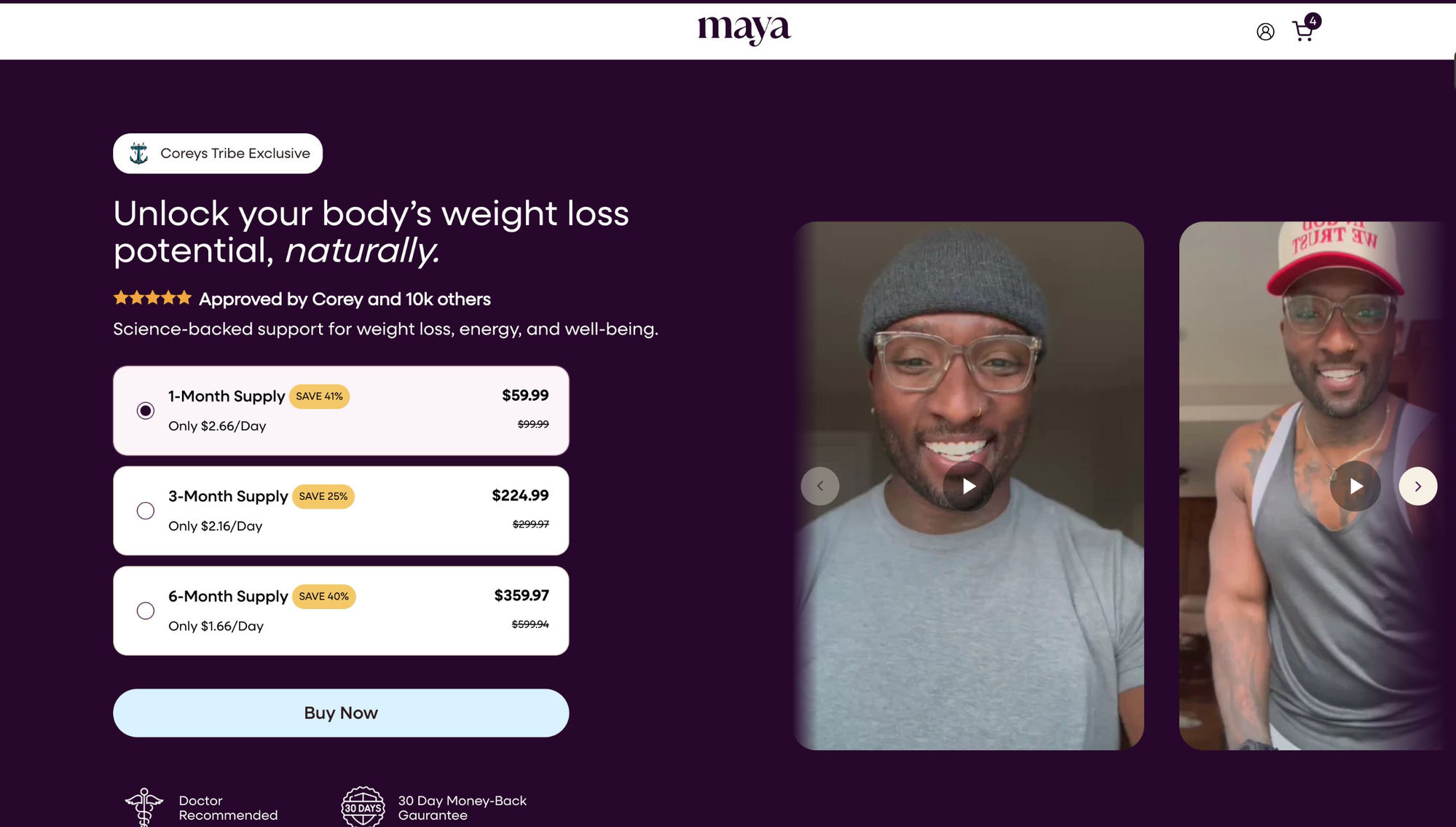
Fitness creator storefronts should be framed as programs, not as product capsules. A creator running a 12-week muscle-building program should have a storefront titled "Complete kit for Creator A's 12-week hypertrophy program", including the supplements, equipment, and apparel the creator personally recommends for that specific program.
This framing anchors the shopper to a commitment horizon (12 weeks) and gives them a clean mental model for what to buy. Generic storefronts ask the shopper to decide what they need; program storefronts decide for them. The difference in conversion between a program-anchored storefront and a generic creator capsule in fitness typically runs 2-3x.
Brands should build multiple program-anchored storefronts per top creator: a beginner program, an advanced program, a cutting program, a bulking program, a performance-specific program. Each one is a different entry point for a different shopper state. The setup is in How to Set Up Creator-Specific Storefronts in Shopify.
Subscriptions: supplement cancel flows are where LTV is decided
The economic math on a fitness supplement brand runs almost entirely through subscription lifetime value. Acquisition of a protein powder subscriber runs $40-80 CAC; the first few months break even or lose money; profitability comes from month 4 onward. A cancellation in month 2 is a losing trade. Creator-aware cancellation flows are the single biggest retention lever in the category.
A creator-aware cancel flow in fitness reads the creator metafield and surfaces creator-voiced save offers: "Creator A's about to launch their cutting cycle. Want to pause and restart with the new protocol?" or "Creator A's deload week is coming. Want to switch to the recovery stack for this month?" The mechanics are in How to Make ReCharge, Skio, and Ordergroove Creator-Aware. Fitness brands running creator-aware cancel flows typically see save rates 20-30 points above generic baselines.
SMS: coaching-tone is the highest-ROI channel
Fitness is probably the single best vertical for SMS in all of commerce. Audiences are high-engagement on mobile, respond well to concise coaching-tone messaging, and are conditioned to expect training reminders. Creator-voiced SMS (written as if the creator is messaging the customer directly) outperforms generic brand SMS by 3-4x in this category.
The highest-converting SMS patterns: program-phase nudges ("you're on day 14 of Creator A's 30-day program, don't skip legs today"), pre-workout timing reminders ("Creator A takes pre-workout 20 min before training. Reorder now"), and recovery-phase content drops ("Creator A's recovery stack is 15% off this week for the program cohort"). The setup is in How to Trigger Attentive and Postscript SMS Flows on a Creator Metafield.
Klaviyo: program-cycle email flows
Klaviyo in fitness is organized around program phases, not around generic marketing cadences. A flow for a 12-week program looks like: week 1 (setup), week 4 (adaptation check-in), week 8 (intensification), week 11 (taper), week 13 (next program preview). Each email is creator-voiced, references the program the shopper is actually on, and frames the next product as continuation of the training relationship.
Program-cycle flows also provide natural anchor points for cross-category expansion: "Creator A is adding a recovery stack to the program next cycle, order now." This pattern is how fitness brands turn supplement subscribers into accessory buyers and apparel buyers over time. The Klaviyo setup is in How to Build Creator-Native Email Flows in Klaviyo.
CAPI and ads: creator-seeded lookalikes by performance goal
Fitness CAC is high because the addressable audience is narrow (performance-oriented shoppers) and the product claims are regulated. Creator-seeded lookalikes work well because the creator's audience is already pre-qualified: if Creator A focuses on powerlifting, their cohort is powerlifters. Lookalikes seeded on that cohort find other powerlifters much more effectively than generic "fitness interest" lookalikes.
The implementation is in How to Pipe Creator Attribution Into Meta CAPI and Lookalikes. For fitness specifically, also fire subscription-paused and subscription-canceled events with creator tags: lapsed-subscriber retargeting with creator-voiced creative is the highest-ROAS ad channel in the category.
Loyalty: streak rewards and program completion
Fitness loyalty has natural engagement hooks that other verticals don't: training streaks and program completion. "You've been on Creator A's supplement for 6 months. Here's a bonus" works similarly to wellness, but "You completed Creator A's 12-week program. Welcome to the alumni tier" is unique to fitness.
Program-completion loyalty tiers give creators a way to reward their most committed followers and give brands a way to segment customers by real-world outcome, not just purchase frequency. Pair with creator-specific referral mechanics ("Refer a friend who also runs Creator A's program and you both get a bonus") and you have a tribal loyalty loop that compounds. See How to Make Smile, LoyaltyLion, and Yotpo Loyalty Creator-Aware.
Returns, reviews, support
Apparel returns in fitness are dominated by sizing: the fit on compression wear, lifting gear, and performance apparel is highly technical. A creator-aware returns flow should default to exchange with creator-specific sizing guidance: "Creator A recommends sizing down on the compression top. Want to swap?" The mechanics are in How to Make Loop, Parcel Panel, and Aftership Creator-Aware.
Reviews in fitness carry weight when they're tied to outcomes: "I ran Creator A's program and gained 8 pounds of muscle in 12 weeks" is dramatically more persuasive than a generic product rating. Yotpo setup is in How to Tie Yotpo Review Requests to Creator Storefronts. Trigger review requests at program-completion points, not at fixed post-purchase intervals.
Support tickets in fitness are dominated by stacking, dosing, and training-protocol questions. Creator context lets agents frame answers in the specific program the shopper is on: "Creator A recommends taking creatine post-workout in the hypertrophy phase. Here's the reasoning." See How to Make Gorgias Creator-Aware for Post-Purchase Support.
Cross-vertical comparison: where fitness sits
Fitness is the most multi-surface-dominant vertical we've mapped. It's the only one where SMS breaks into the top 3 at a coaching-tone level. Subscriptions climb to #2 because supplement LTV dominates; storefront stays at #1 because program-anchored storefronts are the acquisition spine.
| Vertical | #1 | #2 | #3 | #4 |
|---|---|---|---|---|
| Beauty | Storefront | SMS | Klaviyo | CAPI |
| Fashion | Storefront | Klaviyo | Returns | CAPI |
| F&B | Subscriptions | Klaviyo | SMS | Storefront |
| Home Goods | Storefront | Klaviyo | Reviews | CAPI |
| Wellness | Subscriptions | Klaviyo | Storefront | CAPI |
| Pet | Subscriptions | Klaviyo | Storefront | CAPI |
| Baby & Kids | Klaviyo | Storefront | Subscriptions | Returns |
| Outdoor | Storefront | Returns | Klaviyo | Reviews |
| Fitness (this post) | Storefront | Subscriptions | SMS | Klaviyo |
Fitness is the only vertical where all three of Storefront, Subscriptions, and SMS crack the top 3. That combination reflects the category's dual nature: part storefront-dominant (apparel and program kits), part subscription-dominant (supplements), with SMS layered on top as the coaching-communication medium.
What to do first if you're a fitness brand
Week 1: Ship the creator customer metafield.
Weeks 2-4: Build 3-5 program-anchored storefronts per top creator. Each program gets its own landing page.
Weeks 5-6: Fork the supplement subscription cancellation flow with creator-specific save offers.
Weeks 7-8: Build creator-voiced SMS flows tied to program phases. Start with 2-3 flows per creator.
Weeks 9-10: Build program-cycle Klaviyo flows for each top creator's signature program.
Month 3+: CAPI creator tagging, loyalty program-completion tiers, creator-aware returns, reviews clustering, Gorgias creator context.
A note on regulatory context
Fitness supplements are a regulated category. Structure/function claims, muscle-building claims, recovery claims, and weight-management claims all have compliance requirements. Creator-aware flows don't change your regulatory posture. The same claim limits apply across every email, SMS, storefront, and landing page. Your regulatory review process should govern copy across every flow, creator-aware or not. The playbook is operational; the compliance workflow sits on top.
A note on athlete-creator partnerships
Professional athletes as creators function differently from fitness influencers. Athletes bring implicit performance credibility but often don't have the time or inclination to run detailed programs with their audiences. The right creator-aware setup for athlete partnerships is lighter: a single storefront built around the athlete's day-to-day training stack, seasonal updates tied to their competitive schedule, and Klaviyo flows that share their actual training outcomes (with athlete sign-off).
Brands that treat athlete creators and fitness influencers identically leave significant creator-voice quality on the table. The infrastructure is the same metafield; the tuning downstream differs.
A note on CreatorCommerce
CreatorCommerce handles the creator metafield plumbing, the storefront experience, and the attribution layer. In fitness specifically, the program-anchored storefront builder is designed for exactly this pattern: multiple programs per creator, each with its own kit, each driving to its own subscription and SMS flows. Fitness brands running creator-aware stacks on CC typically see supplement subscription retention 35-50% higher than catalog baselines and apparel creator-cohort AOV 40-60% higher than generic.
Frequently Asked Questions
Does this work for fitness apparel brands without supplements?
Yes, with the priority order shifted. Without supplements, subscriptions drops out of the top 4 entirely and CAPI + Returns climb. Program-anchored storefronts are still #1 because apparel sales follow the same program-driven purchase pattern as supplements, just as a one-time buy rather than a subscription.
What about yoga, pilates, and low-intensity fitness?
The framework applies but the tone shifts dramatically. Coaching-tone SMS is less appropriate; recovery-tone Klaviyo is more appropriate. Program structures are longer-cycle (8-12 week programs vs. 4-6 week hypertrophy programs). Subscriptions matter less because the consumable component is smaller.
How do we handle the supplement/apparel split operationally?
Tag every order with the product line it represents. Creator-aware flows branch on both creator and product type the customer engaged with. ReCharge, Skio, and Ordergroove all support this natively. See the subscriptions playbook.
Is creator-program licensing a concern?
Programs themselves are often the creator's IP. The brand should have clear licensing on what can be distributed via brand flows vs. what must remain in the creator's own channels. Most brands running sophisticated creator programs in fitness have standing content-rights agreements that cover program distribution.
How do we measure creator-cohort retention in fitness?
Pull subscription tenure by creator metafield, supplement LTV by creator cohort, and program-completion rate by creator cohort. The benchmark to beat: 30%+ higher subscription tenure, 25%+ higher supplement LTV, 40%+ higher program-completion rate compared to generic acquisition cohorts.
Does this apply to equipment and hardgoods (weights, benches, rowers)?
Equipment buyers are closer to outdoor than to supplement buyers: high AOV, infrequent purchase, long consideration. The playbook adapts: storefront anchored to a training setup ("Creator A's home gym kit"), reviews climb higher, subscriptions drop to N/A. Read the Outdoor playbook for the equipment-style adaptation.
Is there a fitness-specific CC case study?
No public fitness case study has been published yet. The closest pattern-match from existing case studies is Healf for the wellness-overlapping dynamics and Cozy Earth for the apparel-side storefront dynamics.
How do we handle athlete seasonality?
Athletes have competitive seasons; their training focus shifts over the year. Creator-aware storefronts and flows should update seasonally: off-season building, pre-season intensification, in-season maintenance, recovery. SMS flows in particular should match the phase of the athlete's season, even if the shoppers aren't themselves competing.
Is SMS really that much more effective in fitness?
Yes. Fitness audiences are high-engagement on mobile, conditioned to expect training reminders, and respond to coaching-tone messaging in a way other categories don't. Across CC-instrumented data, fitness SMS consistently outperforms fitness email on click-through by 2-3x and on conversion by 1.5-2x.
How do we get started with CreatorCommerce?
Book a demo at creatorcommerce.shop. A fitness-focused implementation typically takes 6-10 weeks for program-anchored storefronts, creator-aware subscription cancel flows, and coaching-tone SMS. Remaining surfaces roll out over the following 2-3 months.
Closing takeaway
Fitness is the category where creator-awareness is not optional. Every revenue pathway in the category (program-driven acquisition, supplement subscription retention, SMS coaching) fundamentally depends on the creator voice showing up at every surface the shopper touches. Build program-anchored storefronts, fork supplement cancel flows, write creator-voiced SMS, and let the rest compound. That's the job.
Related Articles
- The Seven-Surface Creator-Aware Stack
- The Vertical Tuning Field Guide for Creator-Aware Commerce
- The Wellness Playbook for Creator-Aware Commerce
- The Outdoor and Adventure Playbook for Creator-Aware Commerce
- How to Make ReCharge, Skio, and Ordergroove Creator-Aware
- How to Trigger Attentive and Postscript SMS Flows on a Creator Metafield
- How to Build Creator-Native Email Flows in Klaviyo
- How to Set Up Creator-Specific Storefronts in Shopify
- How to Make Smile, LoyaltyLion, and Yotpo Loyalty Creator-Aware


%201.png)
%201.png)
