

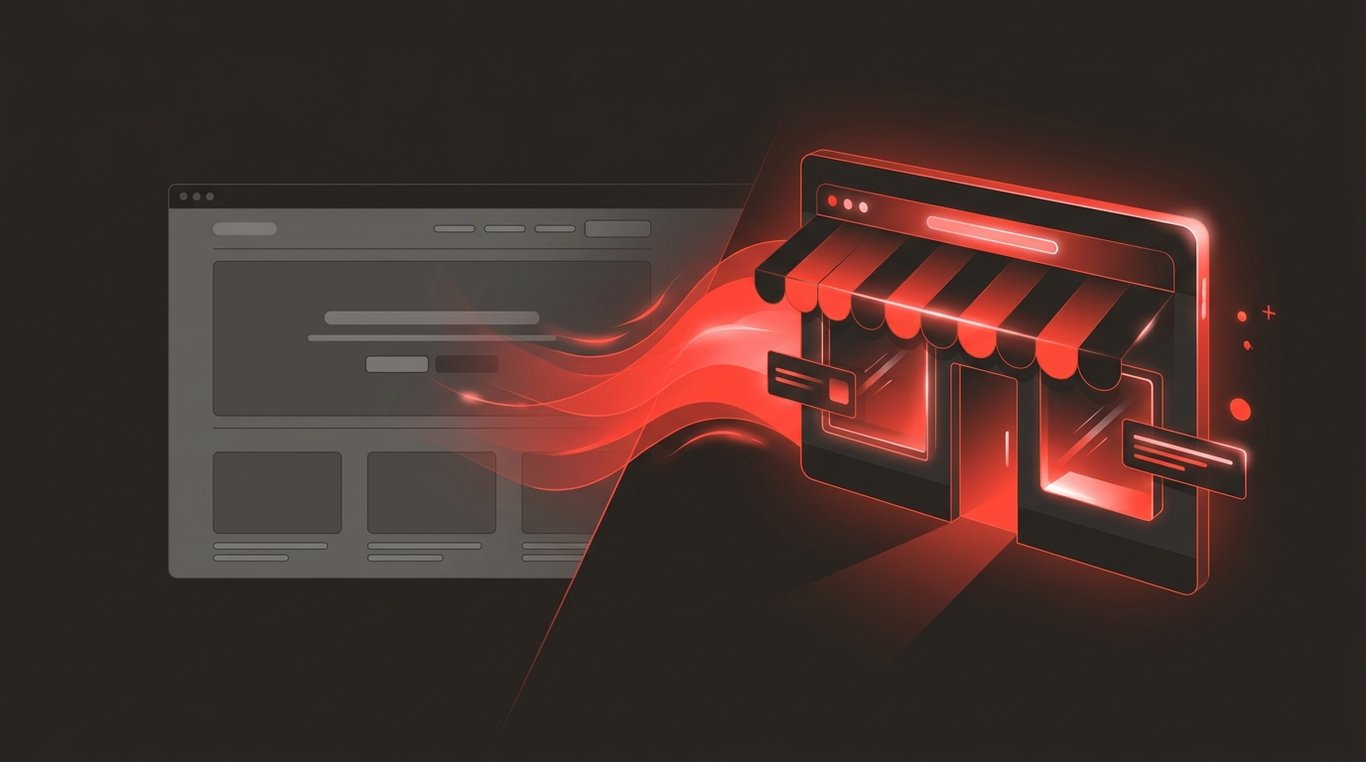
GoAffPro's Mirapage is an AI-powered "shop the look" page builder that lets affiliates curate product collections into shareable pages. It's a useful tool, especially for creators who want a quick, visual way to showcase products on social media. But there's a structural difference between a Mirapage page and a co-branded storefront that matters for conversion: Mirapage pages live on mirapage.com, not on your Shopify domain. CreatorCommerce is a Shopify-native platform that builds co-branded creator storefronts directly on the brand's own domain, using Shopify's native checkout, discount infrastructure, and attribution system. When the question is "does GoAffPro's Mirapage replace the need for co-branded storefronts?" The answer is no, and the data explains why.
This post breaks down what each tool actually does, where they overlap, and where the gap matters.
What Is GoAffPro's Mirapage?
Mirapage: An AI-enhanced page builder, available through GoAffPro's AI Tools suite, that allows affiliates to create "shop the look" product collection pages. Affiliates curate products from the store catalog and Mirapage generates a visual page they can share with their audience.
Mirapage is one of three AI tools GoAffPro launched recently, alongside Linkything (a link-in-bio tool on linkything.com) and Tryitpro (a virtual try-on tool). All three are enabled from the GoAffPro admin panel under the AI Tools tab.
What Mirapage does well:
- Gives affiliates a visual, shareable product page without requiring design skills
- AI-assisted curation makes page creation fast
- Useful for Instagram, TikTok, and social media link-in-bio use cases
- No additional cost, included in GoAffPro's plans
What Mirapage doesn't do:
- Pages are hosted on mirapage.com, not on the brand's Shopify domain
- Shoppers clicking through from Mirapage redirect to Shopify to complete the purchase, introducing a handoff that breaks the shopping experience
- No native Shopify checkout on the page itself
- No Shopify-native attribution (order tags, cart attributes, customer tags)
- No maintained discount protection: coupon codes must be manually applied
- No post-purchase email personalization with creator context
What Is a Co-Branded Storefront?
Co-branded storefront: A full-funnel shopping experience that lives on the brand's own Shopify domain, combining the brand's product catalog with a creator's identity: their name, photo, curated products, messaging, and UGC. The storefront uses native Shopify checkout, auto-applies discounts, and carries attribution through the entire customer journey via cart attributes and order tags.
CreatorCommerce builds co-branded storefronts using Shopify's native infrastructure: metaobjects for creator data, cart attributes for attribution, and Online Store 2.0 app blocks for rendering. The creator's page is the brand's store, co-branded.
How Do Mirapage and Co-Branded Storefronts Compare?
| Capability | GoAffPro Mirapage | CreatorCommerce Storefront |
|---|---|---|
| Where the page lives | mirapage.com (third-party domain) | Brand's Shopify domain (on-domain) |
| Checkout experience | Redirects to Shopify for purchase | Native Shopify checkout: shopper never leaves |
| Creator identity on page | Product curation only | Full creator profile: name, photo, message, UGC, curated products |
| Discount application | Manual coupon code entry | Auto-applied with maintained discount protection |
| Attribution | GoAffPro link/coupon tracking | Shopify order tags + cart attributes + CC web pixel |
| Post-purchase emails | Generic brand emails | Creator-contextualized emails via Klaviyo integration |
| Shopify Markets support | No | Yes: multi-currency, multi-region |
| Product pages | Product links redirect to store | Co-branded product pages with creator endorsements |
| Cost | Included in GoAffPro plans | CreatorCommerce starts at $500/month |
The cost difference is real and worth addressing directly. Mirapage is free with GoAffPro. CreatorCommerce is a separate investment. The question is whether the conversion lift justifies the spend, and the data from brands that have made the shift suggests it does, often within the first month.
Why Does On-Domain vs. Off-Domain Matter for Conversion?
This is the core of the comparison. It comes down to where the shopping experience happens and what that means for trust, conversion, and attribution, not whether Mirapage pages look good (they can) or whether CreatorCommerce storefronts are fancier (that's not the point).
Trust Doesn't Transfer Across Domains
When a shopper clicks a creator's link and lands on mirapage.com, they're on an unfamiliar domain. The brand's visual identity may be partially present, but the URL, the chrome, and the checkout process are all third-party. The same dynamic plays out with ShopMy, LTK, and any other off-domain affiliate page.
When that same shopper lands on a co-branded storefront at yourbrand.com/creator-name, they're on the brand's site. The trust signals are intact: the domain they expected, the checkout they recognize, the product pages they'd see anywhere else on the site, just personalized with the creator's identity.
The Redirect Tax
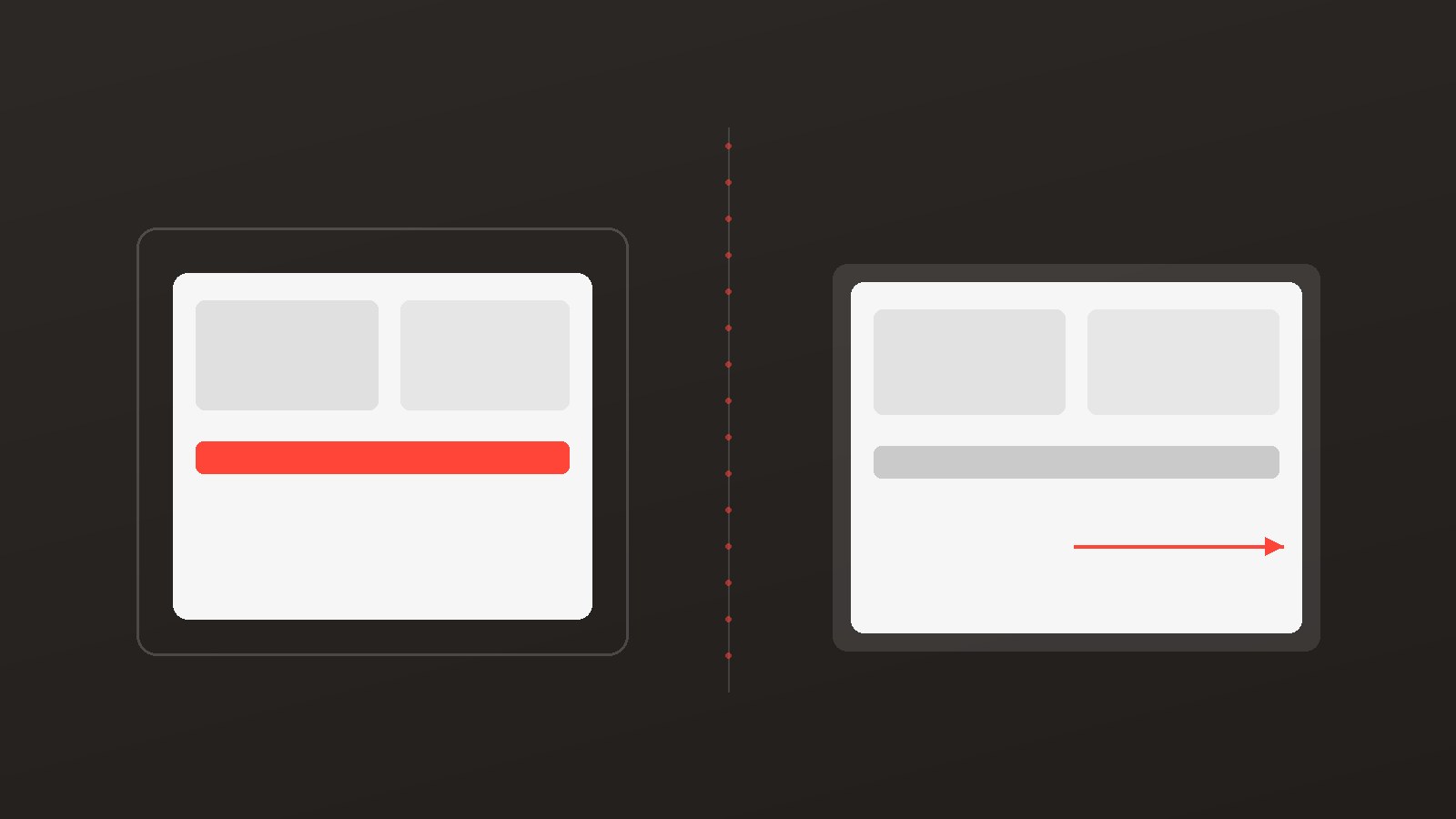
Mirapage pages display products, but to purchase, the shopper clicks through to the Shopify store. That redirect is friction. Every additional click between "I want this" and "I bought this" reduces conversion. Co-branded storefronts eliminate the redirect entirely. The creator's page is the store.
Attribution Depth
GoAffPro tracks referral links and coupon codes. That tells you which affiliate drove the sale. CreatorCommerce's attribution goes deeper: Shopify order tags, customer tags, cart attributes, and a web pixel that tracks the full funnel from page view through add-to-cart through purchase. This enables reporting that GoAffPro's analytics can't provide: conversion rate by creator, customer lifetime value by affiliate, and full-funnel drop-off analysis.
What Do the Conversion Numbers Look Like?
Brands that moved from standard affiliate links (comparable to Mirapage's redirect model) to on-domain co-branded storefronts have seen consistent results:
- Cozy Earth: 214% average CVR increase versus standard affiliate links, with 600+ creators launching their own storefronts
- Buttah Skin: 30% higher CVR and 78% higher AOV with co-branded landing pages
- Healf: 40.8% higher CVR versus homepage affiliate traffic, plus 1,700+ shoppable storefronts and 2,000+ creator-curated collections
These aren't comparisons against zero. They're comparisons against the affiliate link and coupon code model that Mirapage still operates within.
When Is Mirapage the Right Tool?
Mirapage has a genuine use case. It's not the right tool for every problem, but it's the right tool for some:
- Low-volume affiliate programs where the brand hasn't yet validated that affiliate traffic converts well enough to justify a storefront investment
- Multi-platform brands running GoAffPro across Shopify, WooCommerce, and BigCommerce simultaneously. Mirapage works across all of them
- Social-first creators who need a quick, visual product page to share on Instagram Stories or TikTok bios. Mirapage pages serve that purpose well
- Budget-constrained brands that aren't ready for a $500/month storefront tool but want to give affiliates something better than a raw link
Give Mirapage credit for solving a real problem at a price point ($0 additional) that makes it accessible to any GoAffPro user.
When Should You Upgrade to Co-Branded Storefronts?
The upgrade makes sense when:
- Your affiliate program is generating meaningful revenue and conversion rate improvement directly impacts the bottom line
- Brand consistency matters: you don't want creator traffic landing on third-party domains
- You need deeper attribution than visits and orders: you want full-funnel tracking, CLTV by affiliate, and Shopify order tagging
- You've scaled past 50+ affiliates and want to invest in the quality of the traffic destination, not just the quantity of traffic
- You're running on Shopify and want storefronts that use native Shopify checkout, Shopify Markets, and Shopify Flow
The GoAffPro + CreatorCommerce stack lets you keep GoAffPro for program management while adding CreatorCommerce for the storefront layer. Nothing changes in your GoAffPro setup: you're adding infrastructure, not replacing it.
Related Articles
FAQ
Does Mirapage replace the need for co-branded storefronts?
No. Mirapage creates off-domain product collection pages on mirapage.com. Co-branded storefronts live on the brand's Shopify domain with native checkout, attribution, and discount protection. They solve different problems at different levels of program maturity. Mirapage is a good starting tool; co-branded storefronts are the upgrade when conversion becomes the priority.
Can I use GoAffPro's Mirapage and CreatorCommerce at the same time?
Yes. Mirapage is useful for social sharing and quick product pages. CreatorCommerce storefronts are the primary destination for high-intent affiliate traffic. Some brands use Mirapage for casual social sharing and CreatorCommerce storefronts for the main affiliate links, getting the benefits of both.
How much does CreatorCommerce cost compared to Mirapage?
Mirapage is included free with GoAffPro. CreatorCommerce starts at $500/month. The ROI case depends on your affiliate traffic volume and current conversion rate: brands seeing 30-214% CVR improvements typically recover the investment within the first month.
What does a minimum viable co-branded storefront include?
Every co-branded storefront needs four core elements: a Creator Hero section (above-the-fold intro with photo, name, and value prop), a Product Showcase (the creator's recommended products with clear pricing), Discount Visibility (code prominently displayed with savings calculated), and a Clear CTA ("Shop [Creator]'s Picks" or similar). CreatorCommerce includes pre-built sections for each: CC Hero (Immersive or Minimal variants), CC Product Grid, CC Quote Badge, CC Banner, and CC Email Capture, all drag-and-drop on any Shopify Online Store 2.0 theme. For setup details, see the GoAffPro integration guide.
What about GoAffPro's Affiliate Page Builder, is that different from Mirapage?
Related reading
- How co-branded pages improve goaffpro conversion rates
- How to set up your first co-branded storefront
Yes. The Affiliate Page Builder lets affiliates create basic landing pages that the admin approves. It's a separate feature from Mirapage. Both are more limited than co-branded storefronts in terms of Shopify integration depth, attribution, and checkout experience.


%201.png)
%201.png)
