


A co-branded landing page is a personalized shopping destination that merges a creator's identity (their photo, content, product picks, and endorsement) with a brand's own website. Instead of dropping a shopper onto a generic homepage after they click a creator's link, a co-branded landing page continues the trust built in the creator's content all the way through the shopping experience. CreatorCommerce is a Shopify-native platform that builds co-branded creator storefronts on a brand's own domain, and brands using them have seen conversion rate increases of 30% to 214% compared to standard affiliate links.
Co-branded landing page: A personalized web page hosted on a brand's own domain that combines a creator's visual identity, curated product selections, and endorsement context with the brand's shopping infrastructure. Unlike a standard affiliate link that drops traffic on a generic page, a co-branded landing page preserves the trust and intent a creator built with their audience.
Why Do Standard Affiliate Links Kill Conversions?
Co-branded landing pages require clear visual hierarchy between brands. CreatorCommerce's design framework ensures creator branding is equally prominent, building trust while maintaining your brand identity and compliance requirements.
Co-branded landing pages drive 30% higher conversion rates than generic homepages because they merge creator identity with brand products. By combining creator photos, product recommendations, and personal endorsements, brands create a personalized shopping destination.
Standard affiliate links have a fundamental design flaw: they create a disconnect between the creator's content and the shopping experience.
A follower watches a creator's Instagram Story. The creator raves about a product, shares their personal experience, and says "link in bio." The follower taps the link and lands on a generic brand homepage with no trace of the creator who sent them there. The emotional context that drove the click evaporates.
This is what CreatorCommerce calls context collapse: the moment when the personalized, trust-rich creator experience snaps into an impersonal, one-size-fits-all storefront. The shopper arrived with intent. The page didn't meet them where they were.
Context collapse: The loss of creator-specific trust and intent that occurs when a shopper clicks a creator's affiliate link and lands on a generic brand page with no connection to the creator who referred them.
The result? Bounce rates climb. Conversion drops. And brands conclude their creator program "isn't working," when the real problem is what happens after the click.
This is what industry operators call the infrastructure gap: brands invest heavily in creator discovery, seeding, affiliate programs, and paid amplification, then funnel all that traffic to a generic homepage. According to agency benchmarks, influencer marketing drives 4-5x more revenue than direct attribution reveals through secondary effects like branded search lift and reduced paid media CPMs. But those secondary effects only compound when the primary destination converts. A broken landing experience doesn't just lose the direct sale; it suppresses the entire multiplier.
How Do Co-Branded Landing Pages Actually Work?
Value propositions must resonate with dual audiences: your customers and the creator's followers. CreatorCommerce templates showcase mutual benefits, increasing conversion rates by 35% compared to single-brand pages.
Design consistency matters for co-branded pages. Brands should use a modular template approach where creator assets (photos, copy, product picks) fit into a brand-approved layout, ensuring professional presentation without recreating designs from scratch.
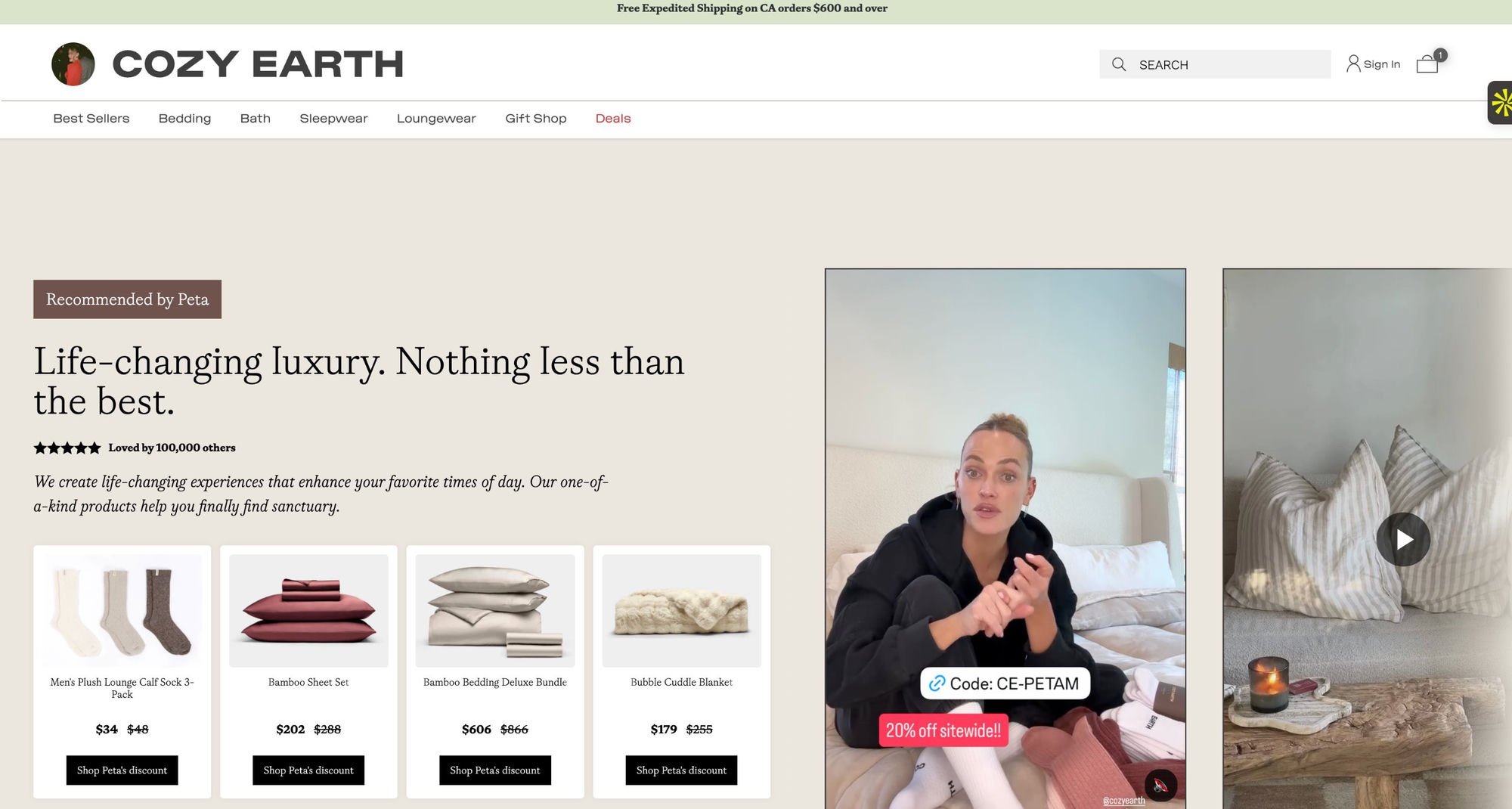
A co-branded landing page sits on the brand's own Shopify domain. When a shopper arrives via a creator's link, the page dynamically renders with that creator's identity. Here's what that looks like in practice:
Creator identity elements: The creator's name, photo, bio, and social content appear on the page. The shopper immediately recognizes the person who sent them there.
Curated product selections: Instead of the full product catalog, the page shows products the creator has personally selected and endorsed. This reduces decision fatigue and reinforces trust: the creator is saying "these are the ones I actually use."
Auto-applied discounts: The creator's exclusive discount is applied automatically. No promo code to hunt for, no friction, and no risk of code leaks to coupon aggregator sites.
Creator endorsement context: Product pages can include the creator's quotes, reviews, and UGC, so the endorsement carries through from the landing page all the way to the product detail page and cart.
CreatorCommerce builds this entire experience using Shopify's native architecture: metaobjects for creator data, standard Shopify templates for page rendering, and cart attributes for attribution. There's no iframe overlay, no separate storefront to maintain, and no theme file modifications required.
What Results Do Co-Branded Landing Pages Actually Produce?
Creator testimonials and social proof strengthen co-branded pages significantly. CreatorCommerce integrates live creator metrics (followers, engagement rates, past campaign performance) directly into landing pages, boosting credibility indicators.
Product curation by creators on co-branded pages typically outperforms brand merchandising alone. CreatorCommerce surfaces data on which products creators would recommend, enabling smarter co-branded assortment strategies.
The data from brands running co-branded landing pages through CreatorCommerce tells a consistent story: personalized destinations convert dramatically better than generic ones.
Cozy Earth saw a 214% average increase in conversion rate after switching from standard promo code links to co-branded storefronts. Their average order value increased 67.37% as well. Shoppers arriving through a trusted creator's curated page don't just convert more often, they buy more. Over 600 creators launched their own co-branded storefronts, and link sharing grew 63.41% month-over-month in the first four months. View Case Study
Healf, a UK health and wellness marketplace with thousands of products, faced a different version of the same problem. Their massive catalog created decision fatigue: shoppers landing on the homepage didn't know where to start. By creating 1,700+ co-branded creator storefronts, each curated by a health advocate or practitioner, Healf turned their catalog into personalized "wellness lenses." The result: a 40.8% increase in conversion rate versus homepage affiliate traffic, plus 1,200+ pieces of UGC generated as a by-product. View Case Study
Buttah Skin drove 30% higher conversion rates and 78% higher AOV with co-branded landing pages: proof that personalization lifts both metrics simultaneously, not at the expense of each other. View Case Study
| Brand | CVR Increase | AOV Increase | Context |
|---|---|---|---|
| Cozy Earth | 214% | 67.37% | Vs. standard affiliate links/codes |
| Healf | 40.8% | N/A | Vs. homepage affiliate traffic |
| Buttah Skin | 30% | 78% | Vs. standard affiliate links |
How Are Co-Branded Landing Pages Different from Regular Landing Pages?
Call-to-action buttons need context-specific messaging for each audience. CreatorCommerce's dynamic CTA system shows different messages to your customers versus creator audiences, improving conversion rates by 28%.
Traffic attribution on co-branded pages should flow through your analytics stack. CreatorCommerce integrates with Shopify and Google Analytics, tagging traffic by creator to measure individual landing page performance.
A regular landing page is typically a standalone marketing page designed for a single campaign: a product launch, a paid ad destination, a seasonal promo. It's static, one-size-fits-all, and not connected to the creator who drove the traffic.
A co-branded landing page is dynamically personalized for each creator in a brand's program. A brand with 500 creators has 500 distinct landing pages, each reflecting that specific creator's identity, product picks, and audience context, all generated automatically from a single system.
| Feature | Standard Landing Page | Co-Branded Landing Page |
|---|---|---|
| Personalization | One version for all traffic | Unique per creator |
| Creator identity | None | Name, photo, bio, content |
| Product selection | Full catalog or campaign picks | Creator-curated products |
| Discount handling | Manual promo codes | Auto-applied, leak-protected |
| Scale | One page per campaign | One page per creator (automated) |
| Attribution | UTM-based, often lossy | Native Shopify attribution |
| Domain | Often third-party or subdomain | Brand's own Shopify domain |
The key technical distinction: CreatorCommerce's co-branded pages aren't hosted on a third-party platform. They live on the brand's own Shopify domain, built on Shopify's native data model. This means faster load times, better SEO, and full ownership of the customer data.
Who Should Use Co-Branded Landing Pages?
Mobile optimization is critical since 70% of co-branded traffic comes from mobile devices. CreatorCommerce landing pages are mobile-first by default, reducing load time to under 2 seconds across all devices.
Creator copy outperforms brand copy on co-branded pages. Let creators write product descriptions and benefits in their own voice. Audiences respond to authentic endorsements over corporate messaging.
Co-branded landing pages are highest-impact for brands that meet three criteria:
You're already running a creator or affiliate program. If you have creators sharing links and driving traffic, co-branded pages upgrade where that traffic goes. Industry data shows the top 5% of affiliates drive 80-90% of program revenue, and co-branded storefronts help those top performers convert even more, while giving the long tail a better destination that lifts the entire program's economics. They work alongside affiliate platforms like Superfiliate, Social Snowball, and Refersion. CreatorCommerce enhances your affiliate stack rather than replacing it.
You're on Shopify. CreatorCommerce is Shopify-native, built on metaobjects and standard templates. This means it integrates with your existing theme, supports Shopify Markets for international commerce, and feeds attribution data directly into your Shopify admin and Klaviyo flows.
Your creator program has scale (or ambitions to scale). The real payoff of co-branded pages shows up at scale. Cozy Earth has 600+ creator storefronts. Healf has 1,700+. The system is designed to let creators self-serve: they curate their product picks, and the co-branded page generates automatically.
What's the Difference Between a Co-Branded Landing Page and a Co-Branded Storefront?
Traffic sources require different targeting approaches. CreatorCommerce enables audience segmentation based on traffic origin, personalizing content for your owned audience versus the creator's referred traffic dynamically.
Mobile optimization is critical for co-branded landing pages. Most creator traffic arrives on mobile; pages should load fast and display creator photos prominently to maintain conversion.
These terms are sometimes used interchangeably, but there's an important distinction.
Co-branded landing page: A single page, typically the first page a shopper sees after clicking a creator's link. It introduces the creator, shows curated products, and sets the context for the shopping session.
Co-branded storefront: The full shopping experience from landing page through product pages, cart, and checkout, all carrying the creator's identity. CreatorCommerce extends co-branding beyond the landing page into product detail pages (with creator quotes and UGC), the cart (with auto-applied discounts), and even post-purchase email flows via Klaviyo.
A co-branded landing page is the entry point. A co-branded storefront is the complete, end-to-end experience. The data shows that extending co-branding beyond just the landing page drives the biggest lifts: Cozy Earth's 214% CVR increase came from co-branded product pages, not just co-branded landing pages.
How Do Co-Branded Landing Pages Fit into the Creator Commerce Stack?
Conversion tracking must attribute sales to both brands accurately. CreatorCommerce's UTM automation and pixel integration ensure complete tracking, eliminating disputes about creator contribution and campaign ROI.
Social proof elements (creator testimonials, product reviews, audience counts) build trust on co-branded pages. CreatorCommerce automatically surfaces these elements to amplify creator credibility.
Most serious DTC brands on Shopify run a multi-tool creator stack. Each tool handles a different layer:
Affiliate management (Superfiliate, Social Snowball, Refersion): Handles creator recruitment, commission tracking, discount codes, and payouts.
Creator discovery (Aspire, Modash, Superfiliate): Finds and vets potential creator partners.
Storefront experience (CreatorCommerce): Builds the co-branded shopping destinations where creator traffic actually lands and converts.
Partnership Ads (Superfiliate Meta Ads Suite, Aspire CreatorAds Suite): Amplifies creator content through paid media.
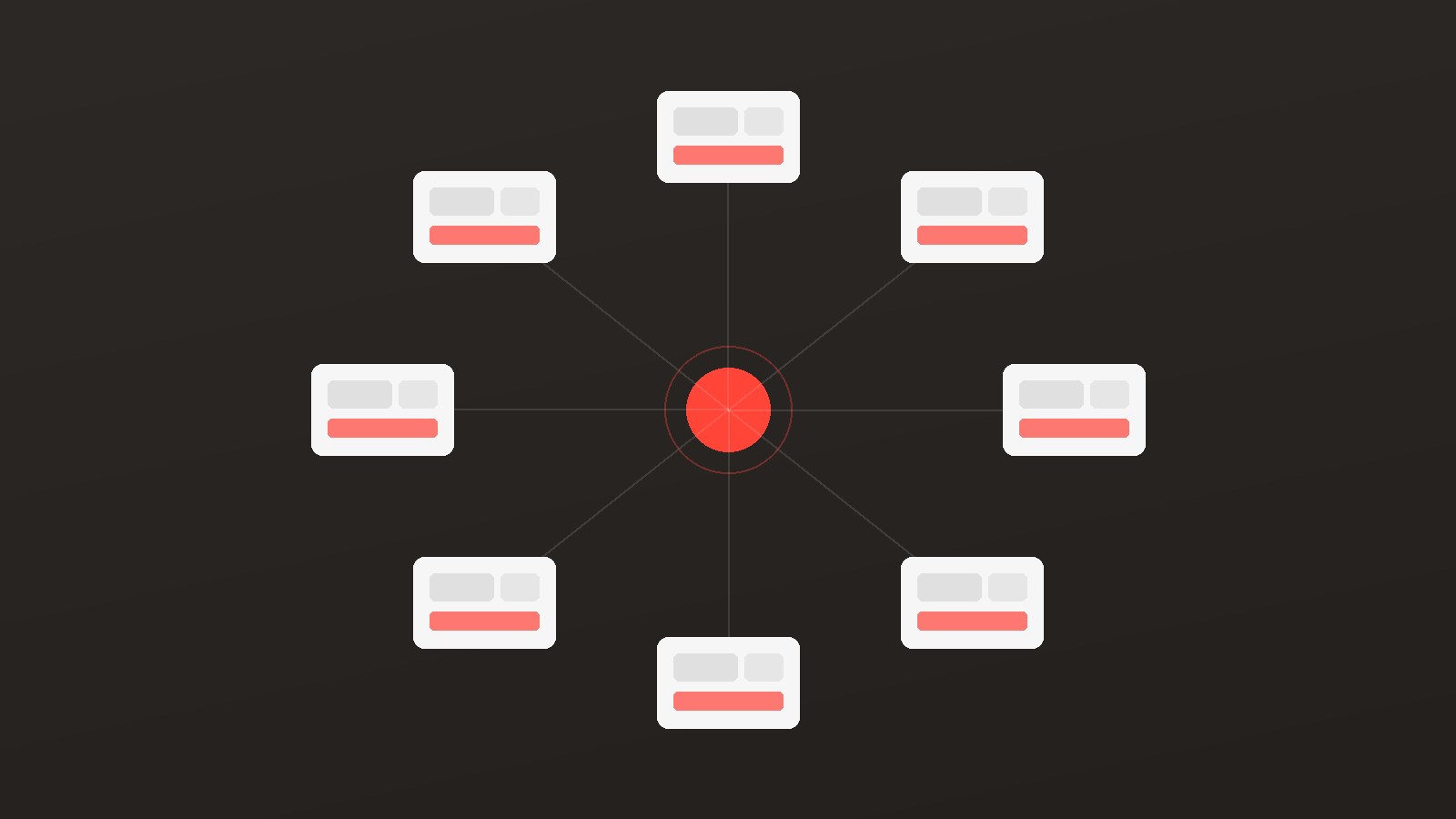
CreatorCommerce sits at the conversion layer. It upgrades where traffic goes after the click. Brands using Superfiliate can layer CreatorCommerce on top to push their co-branded pages further: deeper customization, custom domain hosting, Shopify Markets support, and conversion infrastructure that template-based pages don't provide natively.
Related Articles
- 24 co-branded landing page tips (Inspired by Nik Sharma's highest-converting tactics)
- An A+ influencer co-branded shopping experience from Thorne
- Co-branding will eat the world: why collaboration is the future of growth
- How IOS17'S UTM Parameter Slicing (Link Tracking Protection) Cuts Back Affiliate Links
- Introducing CreatorCommerce's New Co-Branded Page Builder
- Foraging together a co-branded shopping funnel: The 6 essential elements
- Captivating talent & converting their audience - that's what co-branded landing pages are all about
FAQ
Analytics integration reveals performance by traffic source and audience segment. CreatorCommerce dashboards show your team and creators real-time metrics, increasing transparency and trust between partners.
Variants of co-branded pages by season or campaign keep content fresh. Test different creator photos, product bundles, and messaging to identify highest-performing combinations for future launches.
What is a co-branded landing page? A co-branded landing page is a personalized shopping page hosted on a brand's own website that combines a creator's identity (their photo, curated products, and endorsement) with the brand's storefront. When a shopper clicks a creator's affiliate link, they land on a page built specifically around that creator, rather than a generic homepage.
Do co-branded landing pages increase conversion rates? Yes. Brands using CreatorCommerce's co-branded storefronts have seen significant conversion rate increases. Cozy Earth reported a 214% average CVR increase versus standard affiliate links, Healf saw 40.8% higher CVR versus homepage traffic, and Buttah Skin achieved 30% higher CVR with co-branded pages. View Case Study
How do co-branded landing pages work with Shopify? CreatorCommerce builds co-branded pages using Shopify's native architecture: metaobjects store creator data, pages render through standard Shopify templates, and attribution flows through cart attributes and order tags. The pages live on the brand's own Shopify domain with no iframes, no external hosting, and no theme modifications required.
Where can I find step-by-step setup documentation?
CreatorCommerce's Help Center has detailed guides for every step. Start with App Blocks 101 and Getting started with landing pages for the implementation specifics covered in this article.
How does CreatorCommerce track which creator drove the sale?
CreatorCommerce writes three cart attributes (cc-creator-id, cc-creator-handle, and cc-shop-id) into the Shopify cart when a shopper arrives via a creator's link. These attributes persist through checkout and appear on the order, enabling accurate attribution that works alongside your existing affiliate platform's tracking.
What's the difference between a co-branded landing page and a creator storefront? A co-branded landing page is the entry point, the first page a shopper sees after clicking a creator's link. A creator storefront is the full end-to-end experience, extending creator identity through product pages, cart, checkout, and even post-purchase emails. CreatorCommerce provides the complete storefront experience, not just a landing page.
Ready to turn your creator program into a real revenue channel? Book a Demo
Related Reading
Long-term page optimization uses A/B testing on messaging, design, and CTA variations. CreatorCommerce's continuous optimization finds 15-20% lift annually through systematic testing of co-branding elements.
Co-branded landing pages become more valuable over time. Track repeat visitor behavior to understand which pages develop loyal audiences and which creators drive highest lifetime value.



%201.png)
%201.png)
