

CreatorCommerce and LoudCrowd are both well-known names inside the creator marketing world, but they solve fundamentally different problems. LoudCrowd is built for tracking and activating the social side of creator programs: earned content, community engagement, UGC amplification. CreatorCommerce is built for the commerce side: Shopify-native co-branded storefronts, order and customer tagging, Klaviyo flows, and full-funnel revenue attribution.
Because the two tools live at different layers of the stack, picking between them isn't really a head-to-head contest. Most brands evaluating creator analytics are asking the wrong question when they compare CreatorCommerce and LoudCrowd: "Which tool should I pick?" The more useful question is "Which layer of my program needs more data right now: the social layer or the revenue layer?" This post walks through how each tool approaches creator analytics, where they overlap, where they don't, and how brands on Shopify typically evaluate between them.
The Two Different Problems CreatorCommerce and LoudCrowd Solve
Start here: LoudCrowd and CreatorCommerce are aimed at two different stakeholders inside a modern commerce brand.
LoudCrowd's primary user is the social/community team. The questions they try to answer are social questions: Who is posting about us? How many organic mentions are we getting? What's our earned media value from creators this quarter? Which loyalty members are becoming advocates? LoudCrowd's core data model is built around social activity: posts, mentions, follower impact, UGC rights.
CreatorCommerce's primary user is the growth and ecommerce team. The questions they try to answer are revenue questions: How much did this creator drive in first-order and repeat revenue? What's our co-branded storefront conversion rate versus our homepage? Which Klaviyo flow converts creator-referred shoppers better? What's our blended CAC once creator storefronts scale? CreatorCommerce's core data model is built around Shopify orders, customers, and cart attribution, with the creator mapped in as a first-class dimension.
Neither is wrong. Both matter. But if you try to answer a revenue question with a social-data-model tool, or a social question with a commerce-data-model tool, the analytics don't work. That's the lens this comparison uses.
Definition: Full-funnel creator analytics. Full-funnel creator analytics means tracking a customer from the moment a creator sends them to your store all the way through first purchase, repeat purchase, and lifetime value, with the creator attributed as a first-class dimension at every step. It requires four layers: the click (pixel + referrer), the cart (cart attributes), the order (order and customer tags), and the lifecycle (Klaviyo segments, repeat-rate cohorts, LTV). Any tool that covers fewer than four of these layers leaves a gap.
What LoudCrowd Excels At
LoudCrowd is one of the strongest platforms in the social-side creator toolkit. Its core strengths:
- Social listening across Instagram, TikTok, and YouTube. LoudCrowd finds every public mention of your brand from creators, customers, and ambassadors.
- Earned media value (EMV) tracking. It quantifies the dollar value of organic creator content using industry-standard multipliers.
- Ambassador program management. It supports tiered ambassador rewards, application flows, and community engagement.
- UGC rights management. It handles the operational workflow of requesting and securing rights to repost creator content.
- Loyalty-to-advocacy bridging. Brands use LoudCrowd to identify which loyalty program members are also active social advocates and reward them accordingly.
If your primary question is "What is our earned media footprint from creators this quarter, and how do we activate and reward our highest-performing social advocates?", LoudCrowd is a strong fit.
What CreatorCommerce Excels At
CreatorCommerce sits on the commerce side of the creator program. Its strengths live inside the Shopify storefront:
- Co-branded creator storefronts. Every creator gets a native Shopify storefront with their imagery, curated products, and content: rendered from the brand's theme, indexable by search, and built on real Shopify collection and product objects.
- Shopify-native order and customer tagging. Every referred order is tagged with
cc-{creator-handle}at the order level and the customer level. See the Shopify Order & Customer Tagging Reference for how this works. - Cart attribution that survives cross-session. Cart attributes capture the referring creator at add-to-cart time and persist even if the shopper leaves and returns via organic search, direct, or email days later.
- Klaviyo flows driven by creator attribution. Because the tags live in Shopify, Klaviyo inherits them automatically; you can fire lifecycle flows segmented by the original creator source. See the Klaviyo flows setup guide.
- Full-funnel attribution reporting. CreatorCommerce ties everything together into a brand-side dashboard that shows creator performance from click to first order to repeat rate to LTV.
If your primary question is "How much revenue did this creator drive, and how do we build programmatic Shopify and Klaviyo experiences that convert their audience?", CreatorCommerce is a strong fit.
Where the Analytics Overlap (and Where They Don't)
There is some overlap in what LoudCrowd and CreatorCommerce can report on. Both can show you a list of creators and the activity tied to each. Both have dashboards. Both integrate with Shopify at some level. But the data model underneath each dashboard is different, and that difference drives what questions you can answer.
| Analytics Dimension | LoudCrowd | CreatorCommerce |
|---|---|---|
| Social mentions & UGC | Core strength: tracks every public mention across platforms | Not tracked |
| Earned media value | Core strength: per-creator and per-campaign | Not tracked |
| Shopify order attribution | Limited: tied to codes, not storefront pixel or cart attributes | Core strength: every order tagged, every customer tagged |
| Co-branded storefronts | Offered, but rendered on LoudCrowd's own infrastructure, not native to your Shopify theme | Core strength: every creator gets a Shopify-native storefront |
| Klaviyo segmentation | Available via Shopify customer-tag sync, but tagging depth varies | Native: cc-{handle} tags sync automatically |
| Cross-session attribution | Relies on social click + discount-code capture | First-party pixel + persistent cart attributes |
| Full-funnel LTV view | Partial: limited to social-originated cohorts | Core strength: Shopify-native LTV segmented by creator |
The overlap is narrow. LoudCrowd is best understood as a social intelligence platform that touches commerce at the edges. CreatorCommerce is a commerce intelligence platform that leaves the social layer to other tools. That's why brands running both often get the best picture.
Full-Funnel Revenue Attribution: Side by Side
The clearest technical difference between the two tools sits in how they attribute revenue to creators. Here's the shape of that difference.
LoudCrowd's approach. LoudCrowd attributes revenue primarily through discount codes. When a creator posts and their audience uses the creator's code, the resulting Shopify order can be associated back to that creator through code-to-creator mapping. It's a clean model for campaign-style activations where codes are the primary trigger, but it inherits the same limits every code-based system has: if a shopper uses the link but forgets the code, if they come back later via organic search, if they share the cart with a friend who checks out without the code, the creator attribution breaks down.
CreatorCommerce's approach. CreatorCommerce attributes at four layers: a first-party pixel fires on creator-storefront arrival, cart attributes lock in the creator at add-to-cart, the order tag is written at checkout, and the customer tag persists beyond the first order. Because the tag lives on the Shopify customer object, every repeat purchase by that shopper inherits the creator attribution automatically. The affiliate link tracking reference walks through the mechanics in full.
This matters most for LTV reporting. If your goal is to compare the 12-month revenue from a creator's cohort against a baseline cohort, CreatorCommerce's persistent tagging is the model that answers the question. LoudCrowd's code-based model answers a narrower question: what happened during the campaign.
Shopify-Native Integration: Side by Side
Both tools integrate with Shopify, but "integrates with Shopify" means very different things in each case.
LoudCrowd pulls order and discount code data from Shopify to attribute social activity to revenue. Its UI lives outside Shopify. The creator storefront experience, if your program includes one, is hosted on separate infrastructure, not inside your Shopify theme.
CreatorCommerce is a Shopify app. Creator storefronts are native collection and product pages inside your Shopify theme. Order and customer tags are native Shopify tags, visible inside Shopify Admin and queryable with ShopifyQL. Integration points include the Shopify Web Pixel, the cart webhook, the order webhook, and the customer object. Klaviyo inherits tags automatically via the standard Shopify → Klaviyo sync. This means everything you build in Shopify (Shopify Segments, ShopifyQL dashboards, Klaviyo flows, Shopify Flow automations, post-purchase offers, customer accounts) inherits creator attribution without any additional middleware.
For a brand whose growth stack is already oriented around Shopify Admin plus Klaviyo, this is the structural reason CreatorCommerce plugs in without much lift.
Case Study: What a Shopify-Native Attribution Setup Looks Like in Practice
The best way to see what full-funnel creator analytics looks like is through a real implementation. Buttah Skin, the skincare brand founded by Dorion Renaud, runs its creator program on top of CreatorCommerce and saw measurable conversion-side outcomes that trace directly to the Shopify-native attribution model.
Buttah's co-branded creator storefronts convert at 30% higher than the homepage and lift average order value by 78%. The mechanism: every creator storefront is a real Shopify collection page with curated product selection, the creator's aesthetic layered over the Buttah theme, and a persistent attribution pixel. When a creator's audience lands, the pixel fires. When they add to cart, the creator is written to the cart attributes. When they check out, whether that's immediately or three days later via organic search, the order is tagged with cc-{creator-handle}. Buttah's team segments those customers in Klaviyo for lifecycle flows tuned to each creator's audience. (Source: Buttah Skin case study.)
This is the pattern CreatorCommerce is built around: every creator becomes a native segment inside your Shopify data stack, not a dashboard row inside a separate platform. A similar stack is used by brands scaling creator partnerships into a primary revenue channel.
LoudCrowd + CreatorCommerce: Can They Work Together?
Yes, and for large brands running both social-first community activation and commerce-first creator storefronts, the two tools are genuinely complementary. A stack that uses both looks like this:
- Discovery and listening: LoudCrowd surfaces the creators and customers already posting about your brand, ranks them by reach and EMV, and flags candidates to promote into your ambassador program.
- Social activation: LoudCrowd manages the ambassador experience: application flows, rewards, community engagement, UGC rights.
- Commerce activation: The ambassadors and top-tier creators graduate into CreatorCommerce, where they get a co-branded Shopify storefront, a persistent attribution link, and full-funnel revenue tracking.
- Unified reporting: LoudCrowd tells you the EMV story. CreatorCommerce tells you the revenue story. Together, you get both sides of the creator ROI equation.
The rule of thumb: if the question is about social mentions, UGC, or EMV, go to LoudCrowd. If the question is about Shopify orders, customer LTV, or co-branded storefront performance, go to CreatorCommerce. Both tools respect their own scope.
Decision Framework: Which Tool for Which Brand
| Your Primary Need | Better Fit | Why |
|---|---|---|
| Track organic UGC and EMV | LoudCrowd | Purpose-built social listening and EMV quantification |
| Run Shopify-native co-branded storefronts | CreatorCommerce | Storefronts render from your Shopify theme; pixel + cart + order tagging native |
| Segment customers by creator in Klaviyo | CreatorCommerce | cc-{handle} tags sync to Klaviyo automatically |
| Bridge loyalty members into advocacy | LoudCrowd | Loyalty-to-advocacy flows are a core LoudCrowd strength |
| Attribute repeat orders to the original creator | CreatorCommerce | Customer-level tag persists across every repeat order |
| Run both UGC amplification and revenue programs | Both | Complementary: different data models, different user roles |
The decision usually isn't "LoudCrowd or CreatorCommerce." It's "which layer of the creator program has the bigger data gap right now?" Brands that are already generating strong organic social content often need the revenue layer more. Brands that are running paid and affiliate creator programs but want to capture the social halo often need the listening layer more. Both gaps are worth closing, just not at the same time.
Looking for a LoudCrowd Alternative on Shopify?
Some teams reach this comparison evaluating LoudCrowd as the commerce layer of their creator program (the place creator storefronts and revenue attribution live) rather than as a social-listening tool. If that's the lens you're using, the deciding question is where the shopping experience should live.
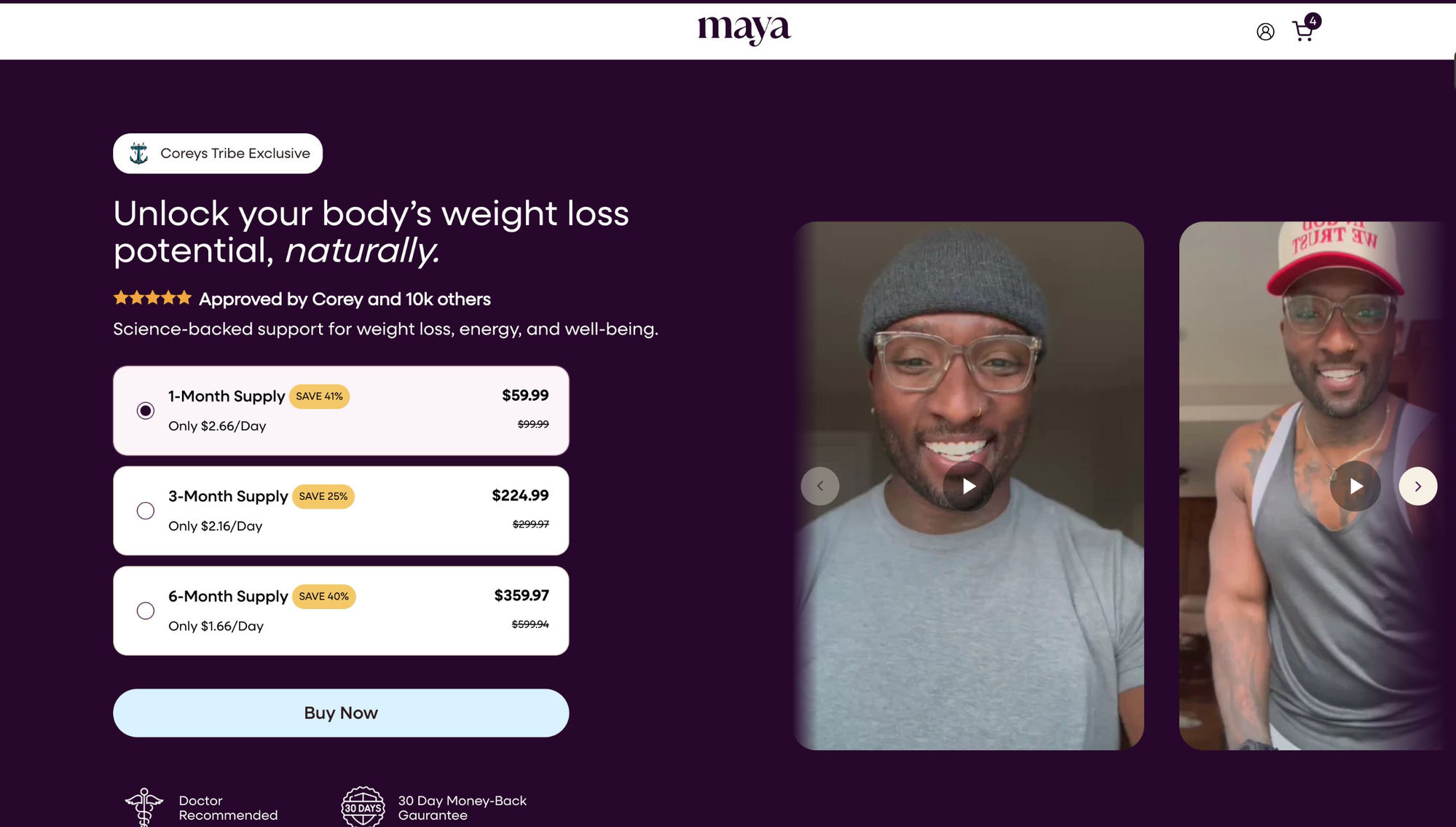
LoudCrowd does offer creator storefronts, but they're rendered on LoudCrowd's own infrastructure. CreatorCommerce takes the opposite approach: every co-branded storefront is a real Shopify collection page rendered from your own theme, on your own domain, indexable by search, with first-party pixel, cart, order, and customer tagging built in. For a Shopify-native DTC brand, that difference shows up in three places:
- On-domain, on-theme storefronts. Creator pages are native Shopify objects, so they inherit your theme, your checkout, and your SEO; there's no separate hosting layer to manage.
- Bring your own affiliate stack. CreatorCommerce is platform-agnostic on commissions and runs alongside Social Snowball, Refersion, GRIN, Superfiliate, and others rather than replacing them. You keep the program you already run; CreatorCommerce adds the storefront and tagging layer on top.
- Attribution that persists. Because tags live on the Shopify order and customer objects, every repeat purchase inherits the original creator, and flows straight into Klaviyo segments.
For a deeper side-by-side on this specific question, see our LoudCrowd alternative breakdown and the guide to what a creator storefront is. To see a live storefront rendered on your own theme, book a demo.
Frequently Asked Questions
Is CreatorCommerce a replacement for LoudCrowd?
No. CreatorCommerce is built for Shopify-native co-branded storefronts, order and customer tagging, and full-funnel revenue attribution. LoudCrowd is built for social listening, UGC rights, EMV quantification, and ambassador community management. The two tools solve different problems and often live in the same stack.
Does CreatorCommerce track social mentions or earned media value?
No. CreatorCommerce's scope is the commerce side of the funnel: click, cart, order, customer, LTV. It does not track organic mentions on Instagram, TikTok, or YouTube. If social listening is your primary need, LoudCrowd is the right fit for that job.
Does LoudCrowd track revenue per creator the way CreatorCommerce does?
LoudCrowd tracks revenue primarily through discount-code attribution. That works for campaign-style activations. For persistent attribution that follows the shopper through repeat orders and into Klaviyo segments, CreatorCommerce's Shopify-native tagging model is the more durable approach.
Can I use both tools without double-counting revenue?
Yes, because they attribute in different dimensions. LoudCrowd reports earned media value and social-originated order associations. CreatorCommerce reports Shopify-native tagged revenue. Most reporting teams treat them as separate views (one for the social story, one for the revenue story) with a reconciliation step if a creator appears in both.
Do I need Klaviyo to benefit from CreatorCommerce?
Klaviyo is the deepest integration, but it's not required. The cc-{handle} tags live on Shopify orders and customers, so any tool that reads Shopify tags (Shopify Email, Attentive, Postscript, or any ESP with a Shopify sync) can use them for segmentation. Klaviyo is the most common pairing, and the Klaviyo flow setup guide covers the standard implementation.
What affiliate platforms does CreatorCommerce integrate with?
CreatorCommerce is platform-agnostic on the commission side and works alongside Social Snowball, Refersion, GRIN, Roster, UpPromote, GoAffPro, Simple Affiliate, SARAL, LeadDyno, Superfiliate, and Shopify Collabs. Your affiliate platform handles commission calculation and payouts; CreatorCommerce handles the storefront, tagging, and Klaviyo layer on top. See the affiliate enrollment reference for the full list.
How long does a Shopify-native CreatorCommerce setup take?
Most brands go live in under a week. The CreatorCommerce Shopify app installs in minutes, theme configuration takes a few hours, and affiliate-platform enrollment is template-driven. For an existing creator roster, most brands can launch co-branded storefronts in a batch rather than one at a time.
What's the right starting point if I'm evaluating both?
Start by asking which question your team is currently unable to answer. If you don't know your EMV or can't track UGC, start with LoudCrowd. If you can't report revenue per creator or segment creator customers in Klaviyo, start with CreatorCommerce. If both gaps exist, most brands close the revenue gap first: it's the one that scales the program, which then creates more social activity worth listening to.
Related Articles
- A new era for CreatorCommerce: Self-serve, custom forms, and a Shopify-native dashboard built for scale
- Showcasing CreatorCommerce at Shopify Editions
- How to Build a Creator Affiliate Program That Becomes a Primary Revenue Channel on Shopify
- GRIN Analytics: How to Track the Full Creator Funnel on Shopify
- Modash Analytics: How to Track Creator Discovery All the Way to Shopify Revenue
- Roster Analytics: How to Track Your Full Ambassador Funnel on Shopify
- Social Snowball Analytics: How to Track the Full Affiliate Funnel on Shopify






%201.png)
%201.png)
